







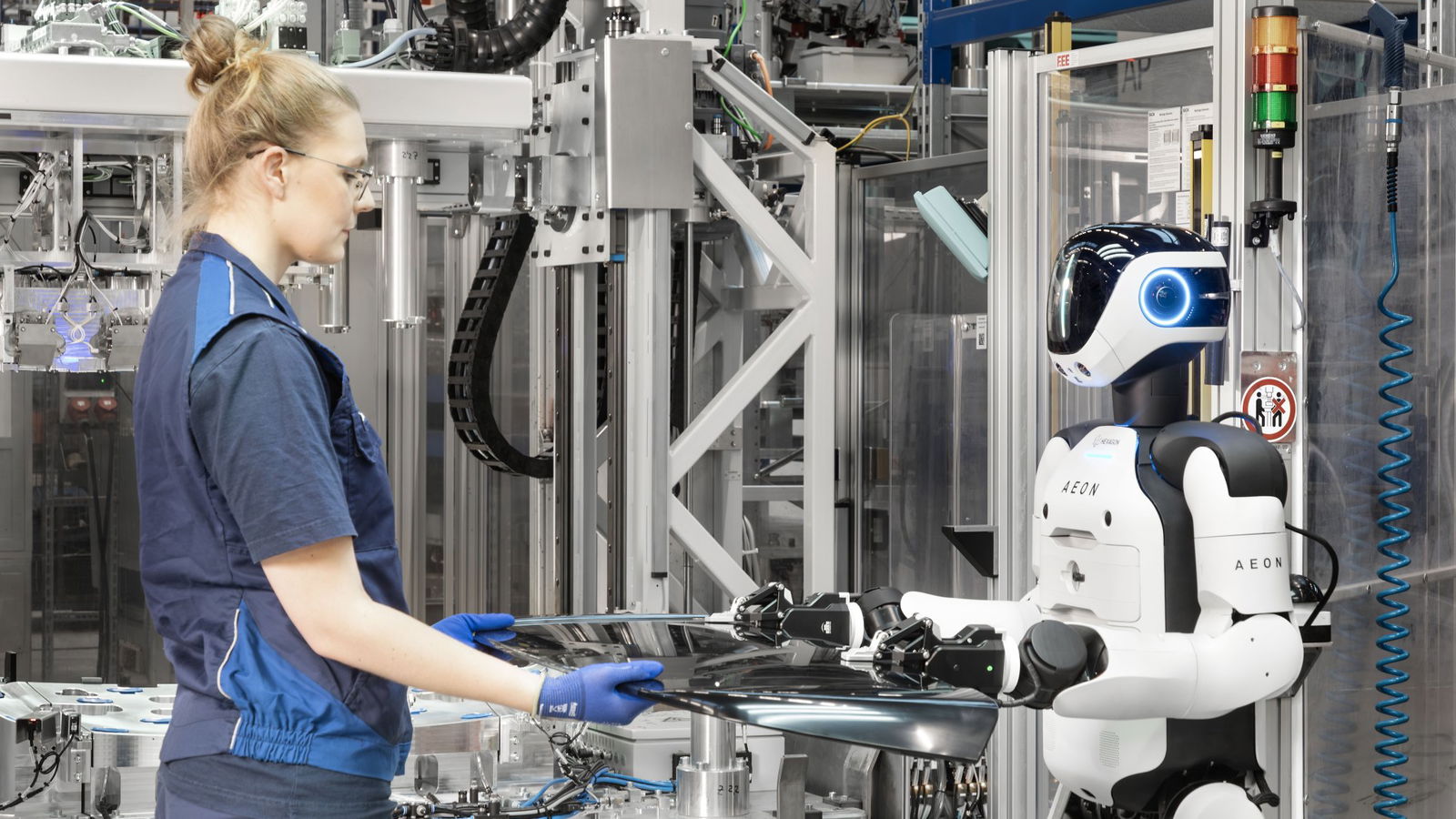
BMW is bringing humanoid robots to its production line in Europe, marking the next step in the company’s increasingly AI-driven factory strategy. And while we’re probably still a few years away from a scene straight out of Terminator 2, the German brand is now testing machines that wouldn’t look entirely out of place in a sci-fi film.
The pilot programme is taking place at BMW’s Leipzig plant, where a humanoid robot will be introduced into real-world vehicle production for the first time in Europe. The aim is to see how so-called “Physical AI”, a blend of digital artificial intelligence and real-world robotics, can slot into the existing manufacturing process.
“Hasta la vista, baby.”
The Leipzig plant employs around 6,600 human workers and produces more than a quarter of a million new cars a year. Models produced there include the BMW 1 Series, BMW 2 Series Gran Coupe, BMW 2 Series Active Tourer and the MINI Countryman. The sprawling facility is also one of BMW’s hubs for electric mobility, making the move to integrate humanoid robots into the workflow less than surprising.
BMW says the project is designed to explore where these robots can actually add value. It claims these will be for repetitive, physically demanding or safety-critical tasks, rather than replacing workers entirely. In other words, it’s less like a Skynet uprising and more like a helpful Metal Mickey lending a hand on the shop floor.

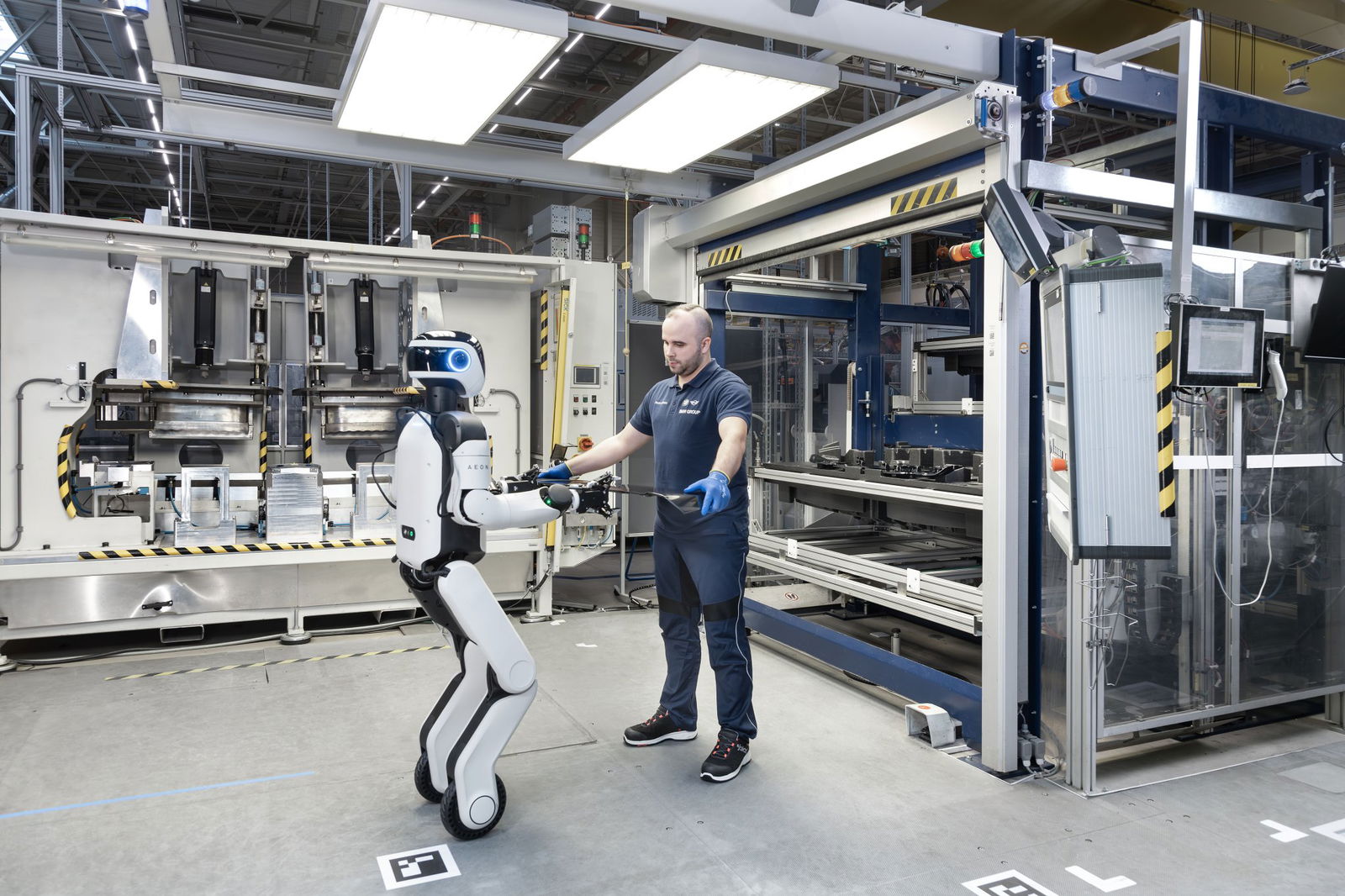
“Come with me if you want to live”
The robot being tested is called AEON and comes from robotics firm Hexagon. Unlike the giant fixed arms already common in car factories, AEON has a humanoid shape and moves around on wheels, allowing it to operate in spaces originally designed for human workers. Its arms can be fitted with different tools, meaning it can adapt to a variety of jobs – we sincerely hope there is a hook attachment and eye patch provided.
During the trial phase, it will assist with assembling high-voltage batteries and help out in component manufacturing. Those are both areas where precision is crucial, and the work can be repetitive, exactly the sort of job robots tend to excel at.
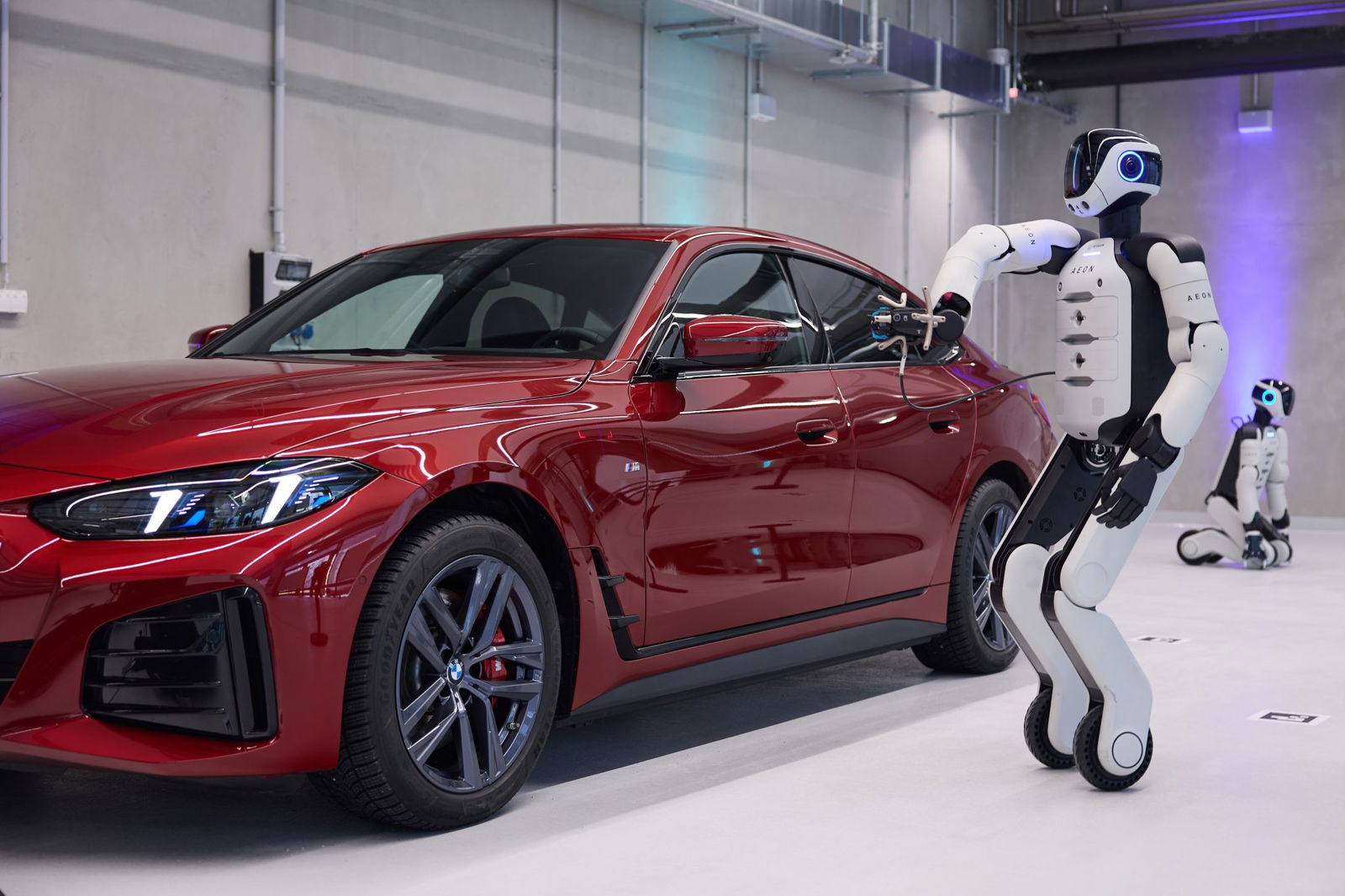
“No key? No problemo.”
The Leipzig project builds on earlier experiments in the United States. In 2025 BMW tested another humanoid robot at its Spartanburg plant in South Carolina. That machine, called Figure 02, spent ten months helping build more than 30,000 BMW X3 models.
Its job was to handle sheet-metal parts used in the welding process, a task requiring millimetre-level precision and a fair bit of stamina. Over the course of the pilot, it moved more than 90,000 components while clocking up around 1.2 million steps during roughly 1,250 hours of operation.
Humanoid robots are just one part of a broader digital push inside BMW’s manufacturing network. The company already uses artificial intelligence in areas such as quality control, virtual factory planning and autonomous transport robots that move parts around production lines. All of it feeds into what BMW calls its “iFACTORY” strategy, which is essentially a fully digital, data-driven production system where machines, software and logistics all talk to each other.
Read the full article here


