







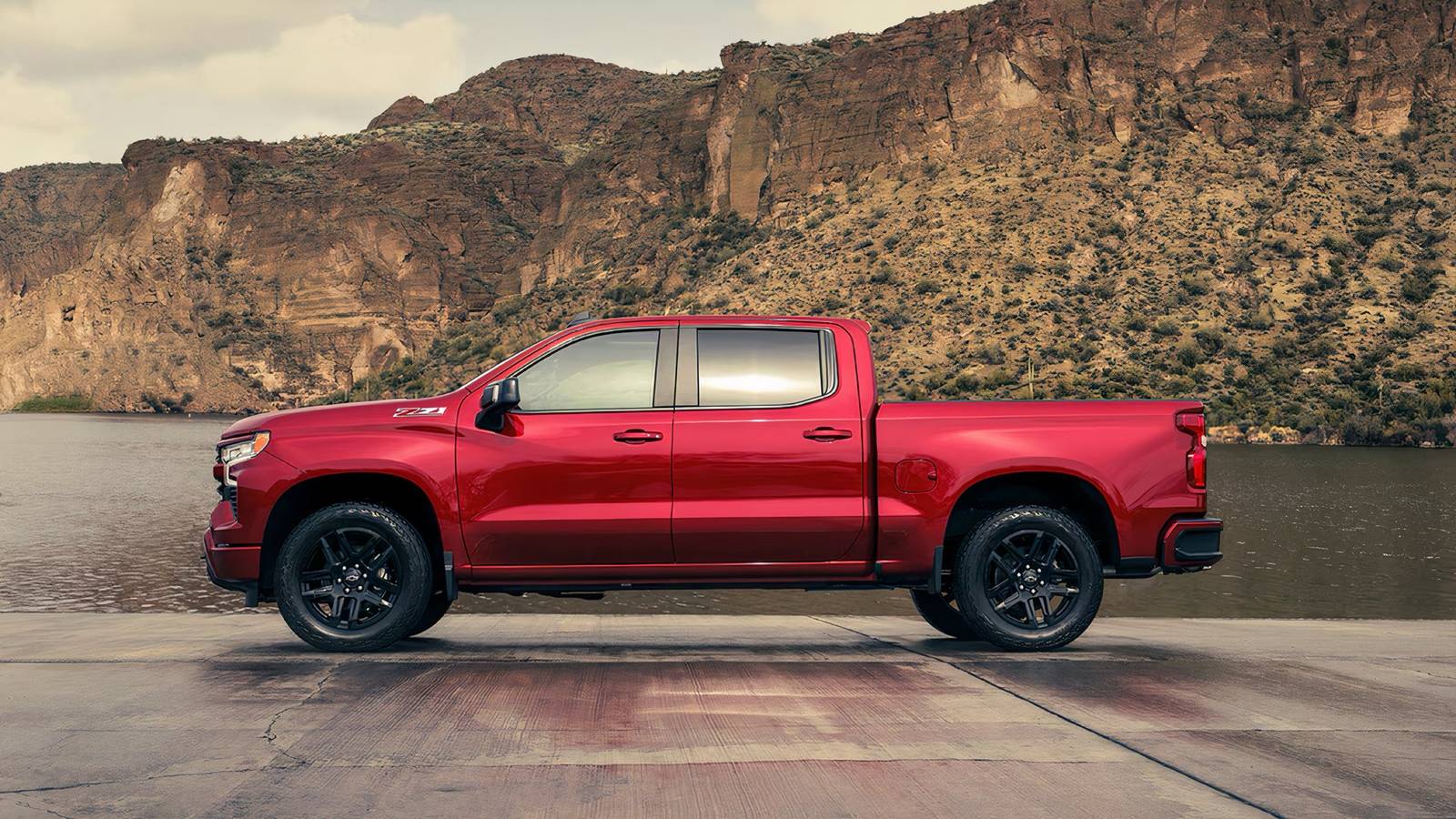
General Motors closes out 2025 with plans to launch all-new full-size Chevrolet Silverado and GMC Sierra pickups later this year, while expanding availability of its Super Cruise hands-off highway assistant and maintaining its long-term pursuit of leadership in a fluctuating market for battery-electric vehicles.
Despite the commitment to EVs, the coming year will also reveal more about GM’s fully redesigned sixth-generation small-block V8, which is expected for the 2027 model year, aligning with the full-size truck launch. More so than its crosstown rivals, GM relies heavily on V8 engines for its lucrative big pickups.
More Capacity For Trucks
In recapping GM’s financial performance for 2025 and outlook for 2026, CFO Paul Jacobson sees headwinds of about $1.5 billion associated with onshoring certain vehicle production to the US (such as Buick Envision from China, beginning in 2028), as well as investments to “enhance supply chain resiliency” and support internal software development.
“While these initiatives create near-term pressure, they will increase capacity of our highly profitable full-size pickups and SUVs, as well as to help further mitigate tariff costs, beginning in 2027,” Jacobson says in a webcast on GM’s 2025 earnings.
SUVs Will Follow Pickups
This will be the fifth-generation Silverado pickup, which first arrived in name in 1999 on the GMT800 platform, shared with the GMC Sierra pickup. The fourth-generation trucks (from T1XX platform) launched in 2019 so they’re due for re-engineering, and they’ve been manufactured in tandem across multiple plants.
New to the manufacturing footprint will be the Orion, Michigan, assembly plant, which has been bleeding money that GM hopes to start recouping when that underused assembly line starts churning out both Silverado and Sierra, in early 2027, as well as full-size SUVs on the same platform.
ICE Vehicle Sales Should Be Flat
While light-vehicle sales across the U.S. totaled 16.2 million vehicles in 2025, Jacobson says GM expects a similar overall result this year, “in the low 16-million unit range,” while sales of gasoline-powered GM vehicles across North America will be “flat to up modestly.”
He says GM production volume for internal-combustion-powered vehicles this year is “constrained due to portfolio shifts, including the ending of the Cadillac XT6 and some expected downtime ahead of the new Silverado and Sierra launches.” In addition to lost sales volume while truck plants transition to the new model, GM will also lose sales from the discontinued Chevy Malibu and Cadillac XT4.
It’s All About The Launch
Downtime is never good for the bottom line, so it can’t be overstated how important it is to have a smooth, problem-free launch for the light-duty Silverado 1500, which is far and away GM’s highest-volume U.S. seller, reaching 362,909 new owners in 2025 (up 1.2 percent over 2024). The Sierra 1500 wasn’t far behind, with 230,156 deliveries in 2025, representing 7.1-percent growth over 2024’s pace.
While the internal-combustion trucks contributed significantly to GM posting $12.7 billion in 2025 earnings before interest and taxes (and $10.6 billion in adjusted automotive free cash flow), the all-electric Silverado and Sierra were a drain on assets.
BrightDrop Is Only EV Ditched
Yes, GM recorded $45 billion in 2025 revenue, but GM also recorded second-half charges in 2025 totaling $7.6 billion as the automaker “reassessed our EV capacity and manufacturing footprint to better align with softer than expected consumer demand,” Jacobson says.
Part of the write-down is $1.8 billion associated with discontinuing production of the BrightDrop electric cargo van. Besides BrightDrop, Jacobson says GM is standing firmly behind its existing EVs, from the Chevrolet Equinox, Blazer and 2027 Bolt to a raft of Cadillac SUVs.
Improving EV Profitability
“We are working to improve the profitability of these vehicles through new battery technologies, engineering improvements and operational efficiencies, along with a more rational EV market,” he says. “As consumer adoption of EVs increases, albeit at a slower pace than previously anticipated, we expect to achieve the necessary scale to deliver EVs profitably over time.”
On the pricing front, Jacobson says he expects North America vehicle pricing “to be flat to up 0.5% as we realize the full year benefit of model year 2026 price increases.” And with the Trump administration softening fuel-economy requirements, Jacobson says he anticipates “a benefit in the range of $500 to $750 million” because GM won’t have to purchase compliance credits any longer.
Offsetting Tariff Costs
In 2026, GM expects gross tariff costs in the $4 billion range, “slightly higher than 2025 due to an additional quarter of tariff exposure,” Jacobson says.
“The team did a great job offsetting over 40 percent of our gross tariff costs in 2025 through go-to-market strategies, footprint changes and cost efficiencies,” he says. “As we look ahead to 2026 we expect these cost savings to be sustained, and believe there are additional actions that can help mitigate our tariff impact.”
Saving Warranty Costs
GM’s also seeing positive trends in warranty costs, “which are expected to deliver a $1 billion benefit versus 2025,” Jacobson says.
And he says the automaker is counting on “around $400 million of high-margin revenue generated from the expansion of OnStar software and services, including Super Cruise,” the hands-free highway assistant that grew its base to 620,000 GM vehicle owners in 2025.
A next-generation version allowing eyes-off driving will launch first on the all-electric Cadillac Escalade iQ in 2028, relying on lidar, radar and cameras.
Source: General Motors
Read the full article here


