





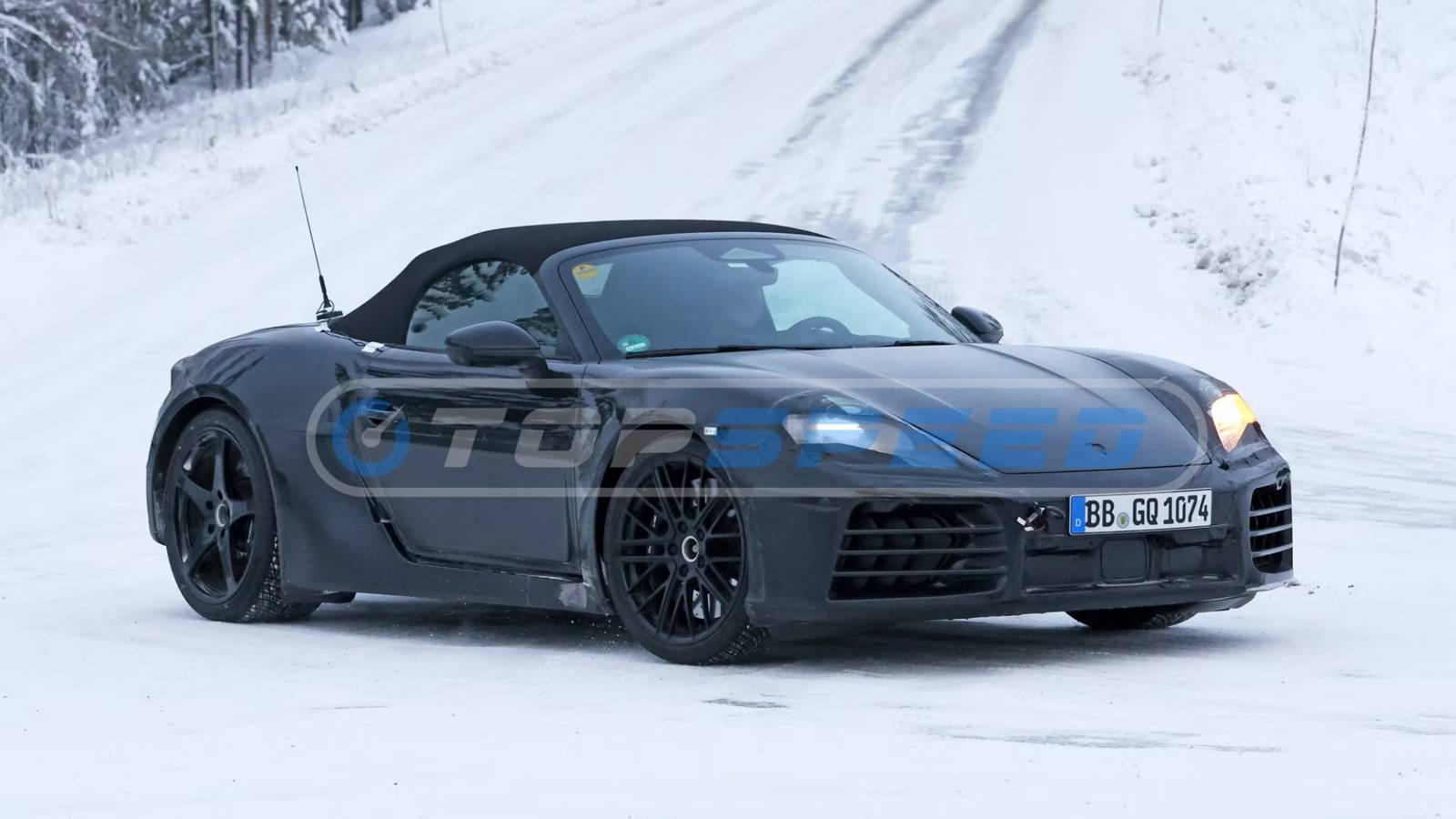
Electric versions of the Porsche 718 Boxster and Cayman have been under development for a long time. The first time we mentioned them here on TopSpeed was back in early 2021. After a long gestation period and winding down production of the current gas-powered models, Porsche is on schedule to debut its new electric sports cars sometime next year. Except, things have changed; the excitement around EVs has more than waned, which has Porsche rethinking its all-electric strategy for the Boxster and Caymen entirely.
According to Autocar, Porsche is planning to convert the all-electric platform that was painstakingly developed for these cars into one that accommodates gas engines. It will take some time, probably close to the end of the decade, before they’re ready, so Porsche is also planning to continue selling the top variants of the current Boxster and Cayman models, which are the gas-powered RS and GT4 RS versions, alongside the new electric models. Weaker EV demand wasn’t the only motivating factor, either; the European Union has significantly weakened its original Euro 7 emissions regulations and created an e-fuel exemption to keep the internal combustion engine (ICE) going after 2035.
This Is Going To Be Really Hard
Porsche has not made it easy on itself by deciding to offer ICE powertrains in the 718 Boxster and Cayman this late in the development of the electric versions. The PPE Sport platform that will underpin the next-gen cars has been designed specifically to be an EV. Converting it for gas duty will require major repackaging of internal components, not the least of which is the battery pack, which is a structural component of the EV version.
Doing so reportedly requires creating a bolt-in structural floor section that will replace the battery pack and maintain the car’s structural rigidity. Autocar has also learned a redesigned rear bulkhead and rear subframe will be added to accommodate the engine and transmission. Even then, engineers still have to find room for a fuel tank, fuel lines, an exhaust system, and more.
Porsche being Porsche, it also wants the gas-powered versions of these cars to be as dynamically exciting as the electric models. That’s a tall order, especially considering the ultra-low center of gravity that a heavy battery pack provides and the instant torque available from electric motors. There’s no word yet regarding what gas engine will be used, but speculation suggests it will be a version of the car’s 4.0-liter flat six-cylinder engine that could make nearly 500 horsepower.
TopSpeed’s Take
It’s tough to be an automaker these days, what with the see-saw nature of government policy regarding electric vehicles and the fickle nature of a buying public that doesn’t know what it wants. This isn’t the first time Porsche has decided to backtrack on EVs, either. Earlier this year, it decided to abandon an all-electric future for the Macan, Cayenne, and Panamera and commit to bringing back gas engines and hybrid powertrains to their lineups.
Porsche isn’t even the first automaker that’s reverse-engineered its own EV platform to accommodate a gas engine. Fiat did it with its current 500 city car. Originally developed as a pure electric, the company modified it to accept a small engine and mild hybrid powertrain. It’s even got a manual transmission.
Unfortunately, all of this extra development costs a lot of money, which means Porsche is taking a big hit to its bottom line. During the announcement of its “strategic realignment” earlier this year, the company admitted it’s facing an $8.9 billion hit. No one said the car business was easy.
Source: Autocar
Read the full article here


