




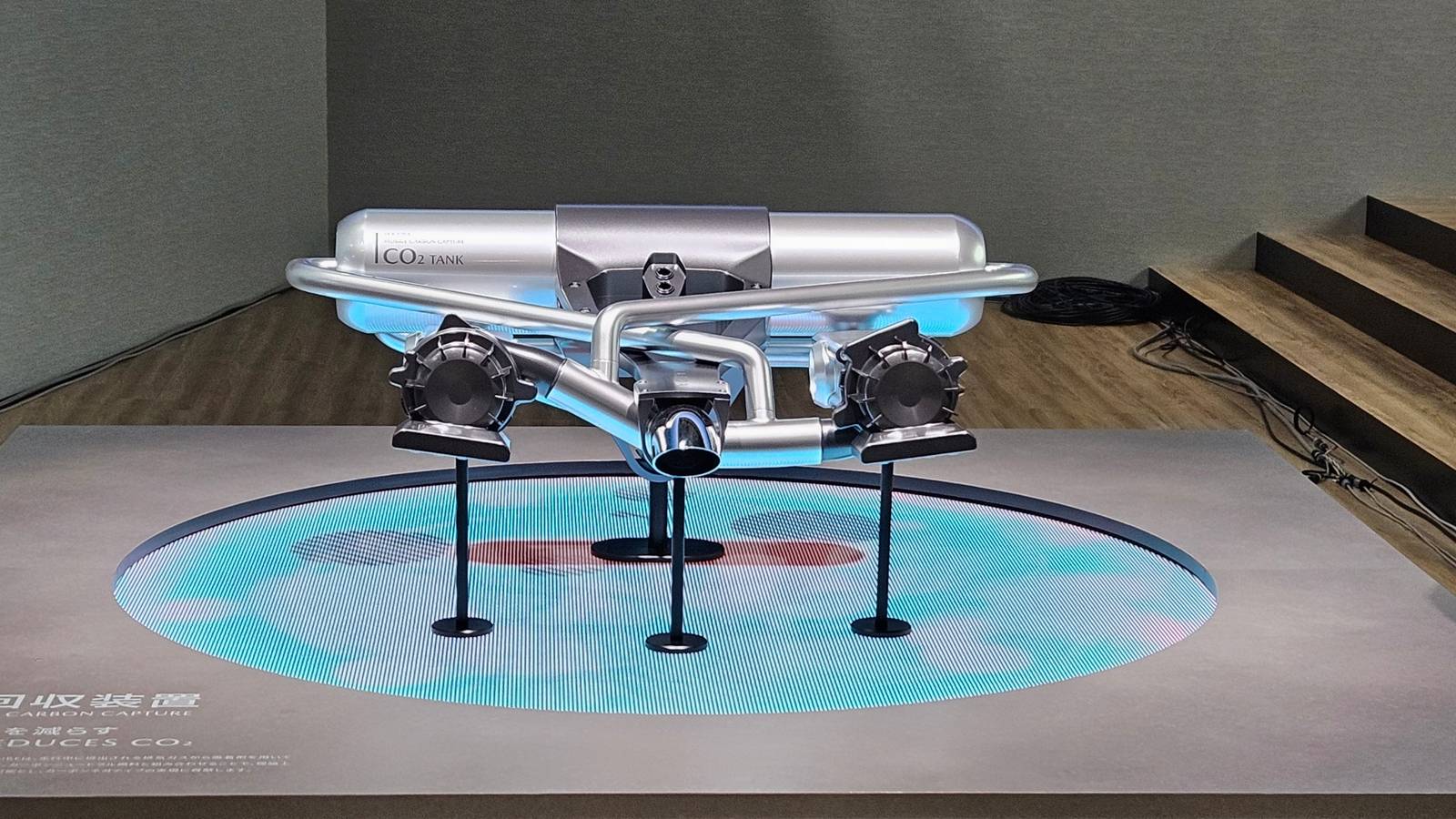
Mazda just did something few expected in 2025: it made the internal combustion engine cool again—and possibly cleaner than ever. The Japanese automaker, long known for betting against convention, has revealed new carbon-capture technology that could make its next generation of gas-powered cars carbon negative. That’s right—Mazda claims its engines could actually clean the air as you drive.
Japanese Sports Cars To Save The World
The concept sounds almost sci-fi, and it might be a little bit. Still, Mazda’s Chief Technology Officer Ryuichi Umeshita put it plainly during an October 21 briefing: “The more you drive, the more carbon you reduce.” The plan revolves around a carbon-capture system attached to the exhaust that traps carbon dioxide before it ever reaches the atmosphere. Pair that with a rotary engine running on biofuel, and Mazda says it could reach an effective 10 percent negative offset in carbon emissions.
At first glance, it feels like a bold counterpunch to the EV revolution. While most automakers are sprinting toward full electrification, Mazda’s taking a “multi-solution” approach, exploring everything from hybrids and clean diesel to biofuels and rotary-based plug-ins. The company argues that internal combustion doesn’t have to die—it just has to evolve.
Mazda Vision Model Coupe
Mazda’s carbon-capture idea debuts in the Vision-X Coupe, one of two new concepts unveiled at the Japan Mobility Show. The sleek, 510-horsepower grand tourer is a statement car: clean doesn’t mean slow. It uses a plug-in hybrid system mated to a twin-rotor, turbocharged rotary engine, good for about 100 miles of electric-only range and 500 miles total. On paper, it blends sustainability with sport, a Mazda signature.
The real magic, though, is in chemistry. Mazda’s system theoretically works by burning carbon-neutral biofuel—made from algae, for instance—that absorbs as much carbon while growing as it emits when burned. The carbon-capture tech then traps those emissions before they leave the tailpipe, storing them for later disposal or conversion. The result: a car that could remove more CO₂ than it produces.
Of course, there’s a giant “if” attached to this dream. Mazda’s plan depends on the large-scale availability of carbon-neutral fuels, which are still rare and expensive compared to regular gas. It also assumes the company can revive the rotary engine for real-world production and find a way to sequester captured carbon safely. For now, this technology is in its test phase; Mazda plans to trial it in a Japanese endurance race next month.
Can Mazda Succeed Where Toyota Failed?
Still, this isn’t a lone effort. Toyota tested something similar last year with a hydrogen-powered GR Corolla that scrubbed CO₂ from the air as it lapped Fuji Speedway. The experiment worked—barely. It captured about 20 grams of carbon over 20 laps, or roughly the output of a teaspoon of gasoline. But progress has to start somewhere, and Mazda’s betting on iteration.
If the system works even marginally better than Toyota’s, it could redefine what “clean driving” means in a world that’s still figuring out how to balance sustainability with infrastructure and cost. Electric cars might dominate headlines, but internal combustion isn’t done fighting for relevance.
Mazda’s gambit is part idealism, part engineering curiosity, and all Mazda—a company that built its reputation on making small engines do big things. If it can now make them clean the air while doing it, that might just be the boldest twist of all.
Read the full article here


