





The Volkswagen Group was no stranger to unusual engines in the 1990s and 2000s, a time when, under the stewardship of chairman Ferdinand Piëch, there seemed to be no limit to the company’s ambitions and how much it was willing to spend to achieve them.
It had its W-layout motors, ranging from the 8.0-litre W16 found in the Bugatti Veyron down to the 4.0-litre W8 which, in a particularly bizarre move, ended up in the VW Passat. There was the world’s only roadgoing diesel V10, as fitted to the VW Phaeton and Touareg, which seemed like it would be the pinnacle of oil-burners until the Audi Q7 V12 TDI came along a few years later.
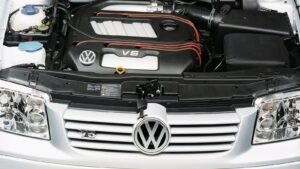
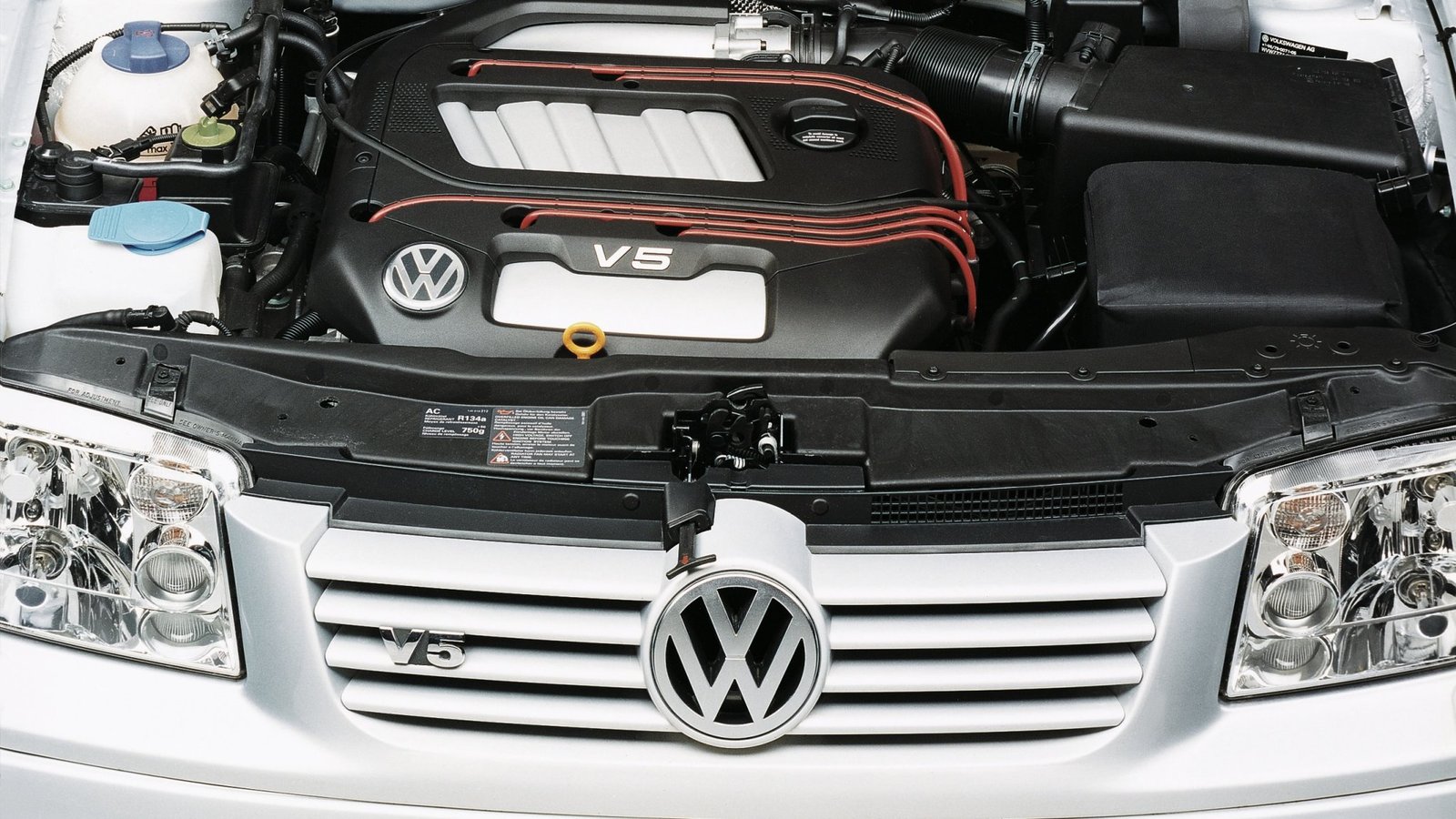
But arguably none of these powerplants were quite as downright conceptually weird as one that found its way into some much more humble, mass-market vehicles – the world’s only roadgoing V5.
A V5? How Does That Even Work?
Volkswagen VR6 engine in a Golf R32
To explain the V5, we must first look at the two most common layouts of six-cylinder engines, the V6 and the straight-six, and why VW rejected them both. There are far more in-depth explanations out there, like this one, but briefly, both offer advantages and disadvantages for manufacturers looking to put a six-pot in their car. A straight-six is smoother and more balanced; a V6 is easier to package.
When VW set about developing its new six-cylinder engine, it asked itself whether it should go down the route of a V6 or straight-six, and the answer was simply ‘yes’. The result was the famous VR6 engine, with its two banks of cylinders staggered so that if you looked at it overhead and drew a line between each cylinder, you’d get a pleasing zig-zag pattern. It had a single cylinder head, like a straight-six, but was closer in dimensions to a V6, combining elements and advantages of both layouts.
The VR6 was a popular and successful engine, in production in various forms from 1991 until 2024 and winning plenty of fans for its unique soundtrack and general dependability. VW perhaps should have left it there, but instead, it decided in 1997 to lop off one of the VR6’s cylinders to create a 2.3-litre VR5, which it simply called a V5.
And when we say ‘lop off’, that’s literally what VW did – a guide to working on the engine, published by the manufacturer, simply says that “The V5 was derived from the VR6 by removing the first cylinder from the latter.”
Why Did it Exist?

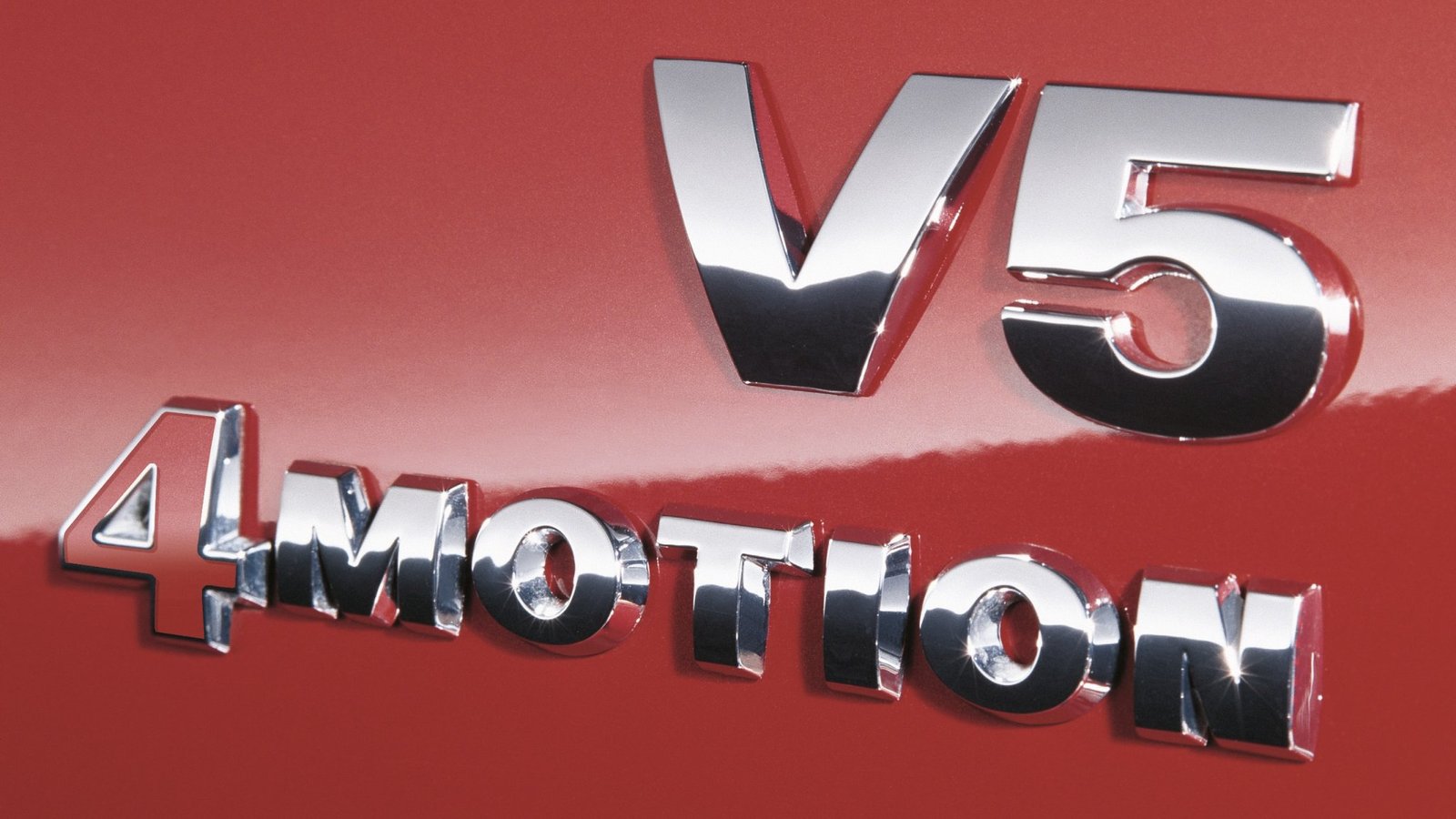
Volkswagen V5 badge detail
Erm, honestly, it’s hard to say for sure. VW’s idea was that the V5 would be a sort of mid-point between its four-cylinders and the VR6 in terms of power and performance. This rather ignores the fact that VW already had a perfectly good engine that filled that niche in the form of its beloved ‘1.8T’ turbocharged inline-four, an engine that also had the advantage of not drinking the extra fuel that a five-cylinder did.
But this was the company that was willing to attempt everything from building a car that’d do 200mpg to one that would hit 250mph – chopping a cylinder off an existing engine to create a new one was likely pocket change in this era of VW, even if the resulting engine arguably didn’t really need to exist.
Besides, despite similar specs, the V5 and 1.8T didn’t quite have the same target audiences. The V5 was supposed to be a more laid back, luxurious engine for cruising while the smaller but turbocharged four-cylinder had sportier aspirations.
What Were the Specs Like?
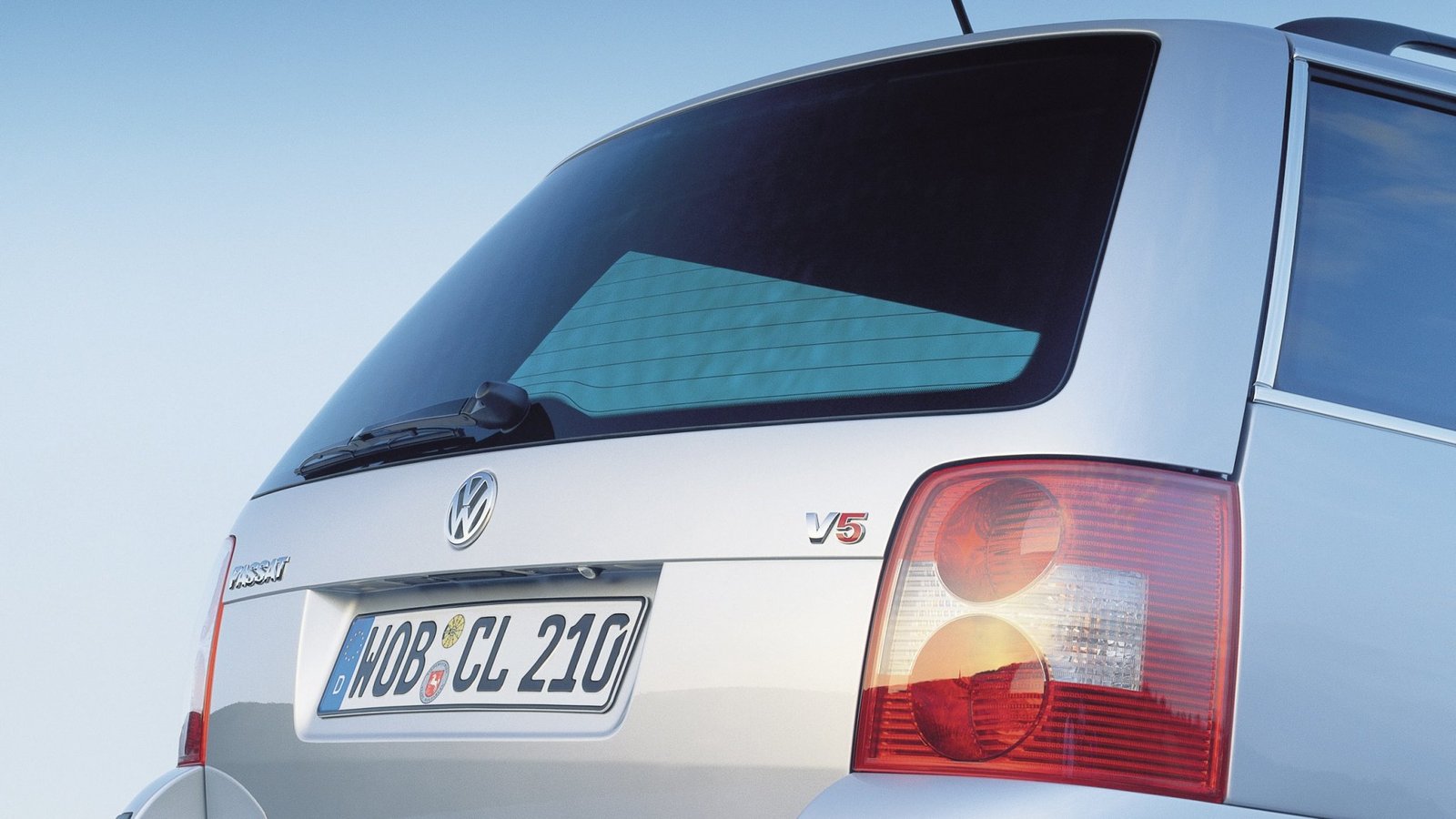
Volkswagen Passat V5 rear detail
Primarily offered in the European and Asia-Pacific markets, the V5 launched in 1997 in the B5 Volkswagen Passat, before subsequently arriving in the Mk4 Golf, the Bora and the Seat Toledo. In this initial guide, it used two valves per cylinder for a 20-valve layout, and produced 148bhp and 151lb ft of torque, and in some markets, could be paired with 4Motion all-wheel drive in the Golf, Passat and Bora.
And yes, with the exception of the Toledo, all of these cars were either already available, or soon would be, with the 1.8T engine, which made… 148bhp and 155lb ft of torque. In other words, VW was offering three of its models with two completely different petrol engines with near-identical specs, one of which was noticeably heavier and thirstier than the other. It’s no great surprise that sales weren’t particularly strong for the V5.
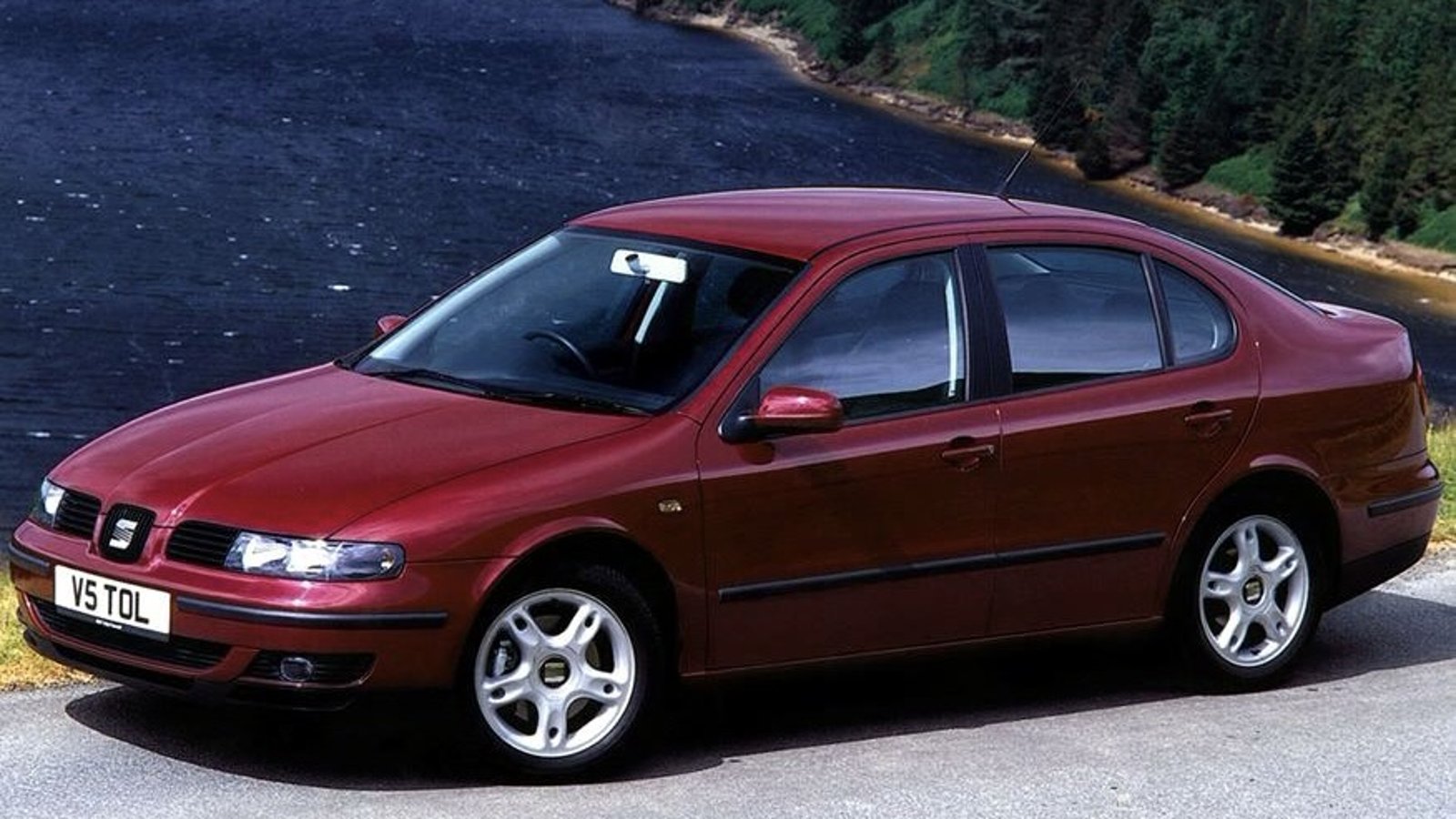
Seat Toledo V5
Those who did take the plunge were at least treated to one of the most unique-sounding engines ever – something not too dissimilar to the already charismatic rasp of the VR6, but with a throaty, Audi Quattro-ish warble overlaid on the top.
VW at least tried to give the VR5 a bit more of a reason to exist in 2000 when it upgraded it to a 20-valve setup, complete with variable valve timing. This saw power lifted to 168bhp and torque to 162lb ft. In this form, the engine also found its way into the New Beetle, where it was the most powerful motor offered besides the VR6 in the ultra-rare RSi performance model.
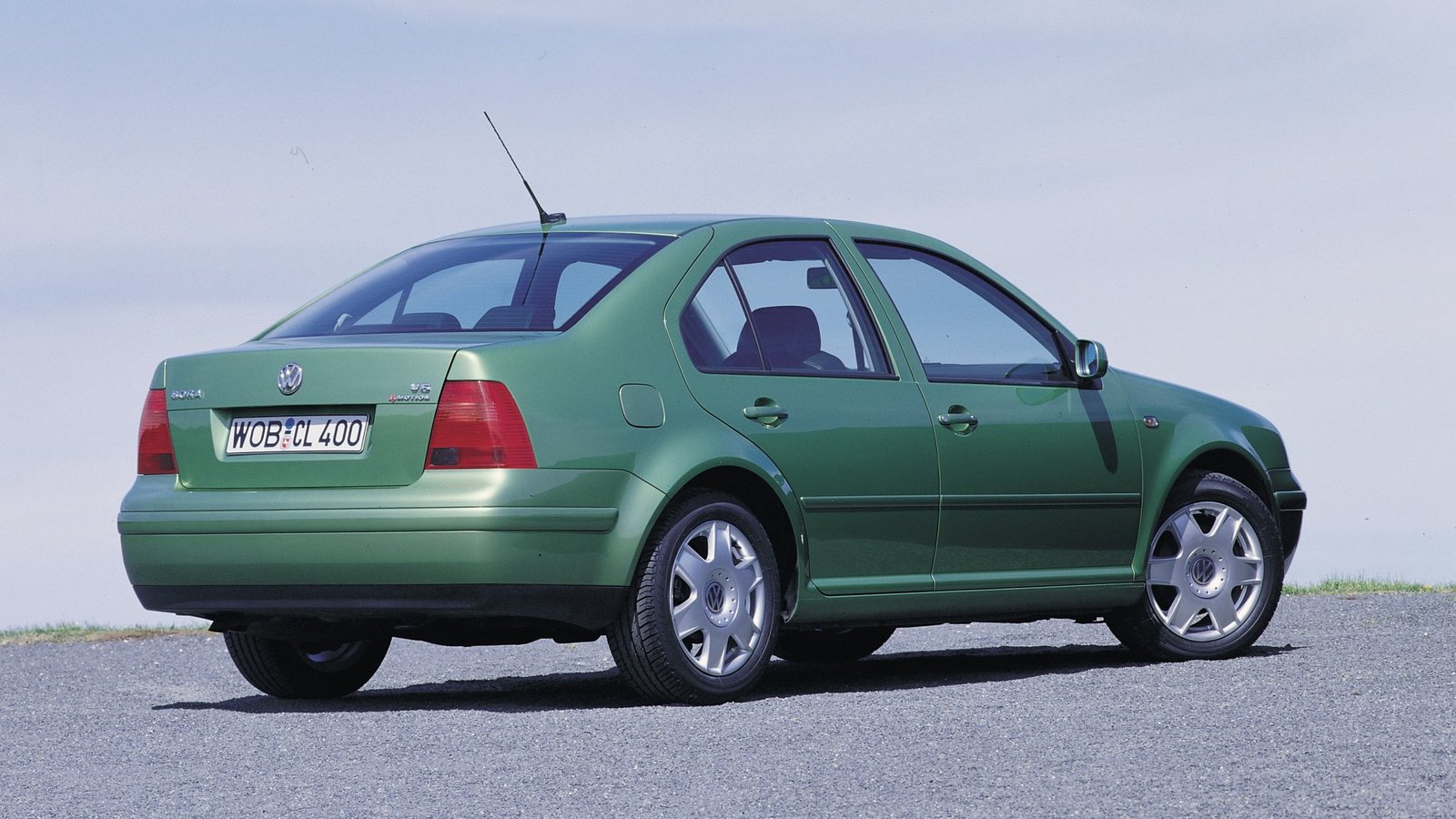
Volkswagen Bora V5
Despite the extra power, takeup remained slow, and by 2003, it had been dropped from the Golf, Passat, Bora and Toledo. It hung on in the Beetle for another couple of years before being discontinued there too, thus bringing an end to one of the weirdest engines ever fitted to a road car.
Should I Buy One?
If you’re drawn to unique, interesting engines, then there’s a lot to be said of the Volkswagen V5. There’s that one-of-a-kind soundtrack, for a start, best enjoyed with an aftermarket exhaust. Contemporary reviews also praised the V5 for its smoothness, response and broad torque range, noting that it was a more relaxed, cruising-oriented engine than the perkier 1.8T that offered near-identical specs. A trawl through various VW forums suggests that it’s a durable engine, too, as long as it’s been well cared for, although the later 20v version can suffer from a stretched timing chain, making for an unsurprisingly expensive fix.
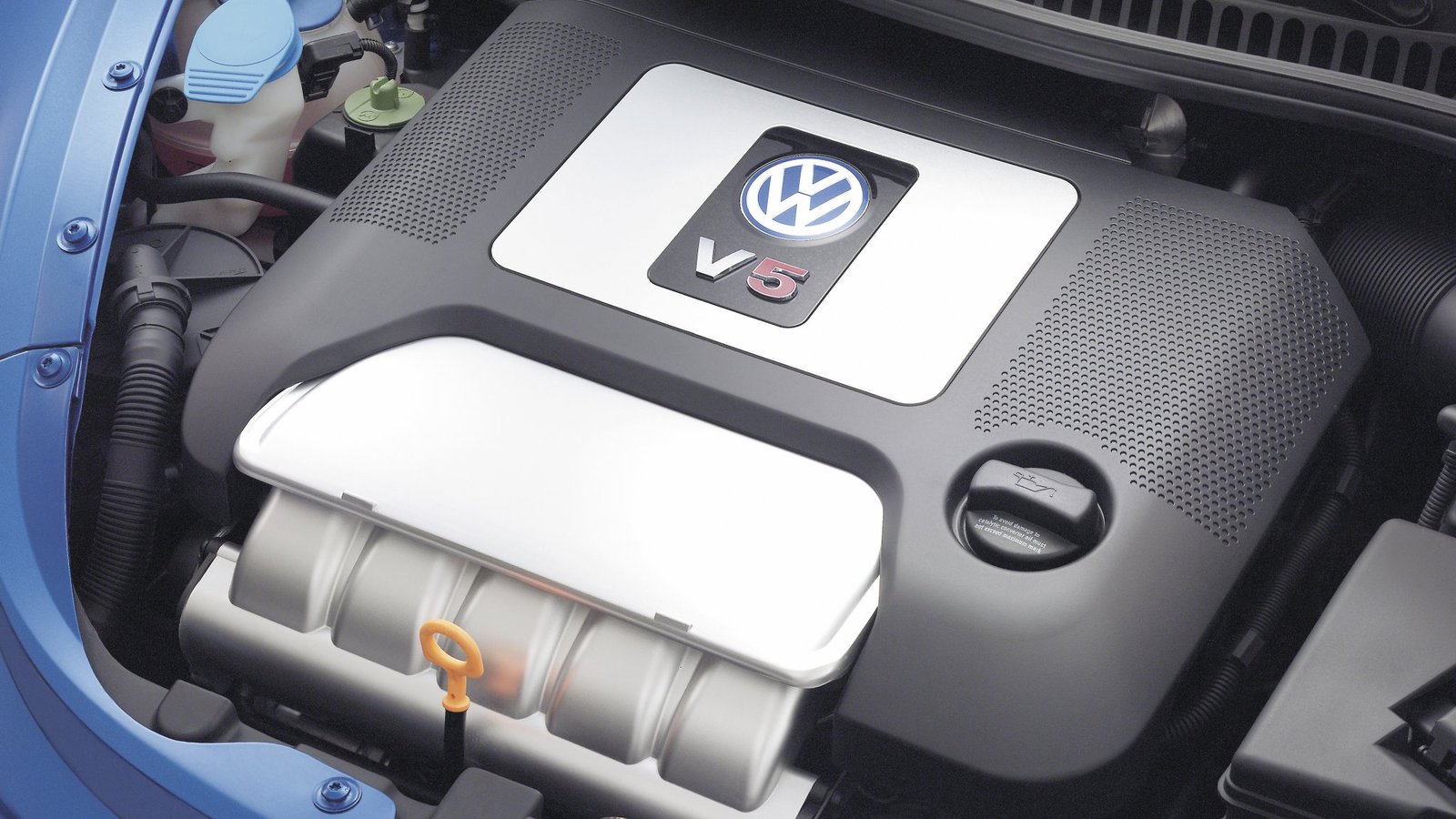
Volkswagen V5 engine in a Beetle
The more immediate expense, though, is going to come at the petrol pump. Using the later 20V V5 Golf as an example, the test cycle of the time puts the official figures at an optimistic 32mpg for the manual and 28mpg for the auto. Drive a bit more enthusiastically and you can expect that to drop into the mid-20s. Those looking to squeeze more power out of their car are best served by the famously tuneable 1.8T too, rather than the naturally aspirated V5.
If it sounds like your sort of engine, though, your next challenge is actually finding one. Never particularly popular in-period, cars with this engine are naturally even harder to track down over 20 years after it left production. Your best bet is looking for it in a Golf, which was by far the most common model found with it Britain. Nowadays, prices range from as low as around £1,000 for particularly well-used examples to roughly £8,000 for minters.
Has There Ever Been Another V5?
Not in a road car there hasn’t. In the ’80s, General Motors experimented with a 2.5-litre diesel V5 engine, going as far as building a prototype, but it never got further than that.

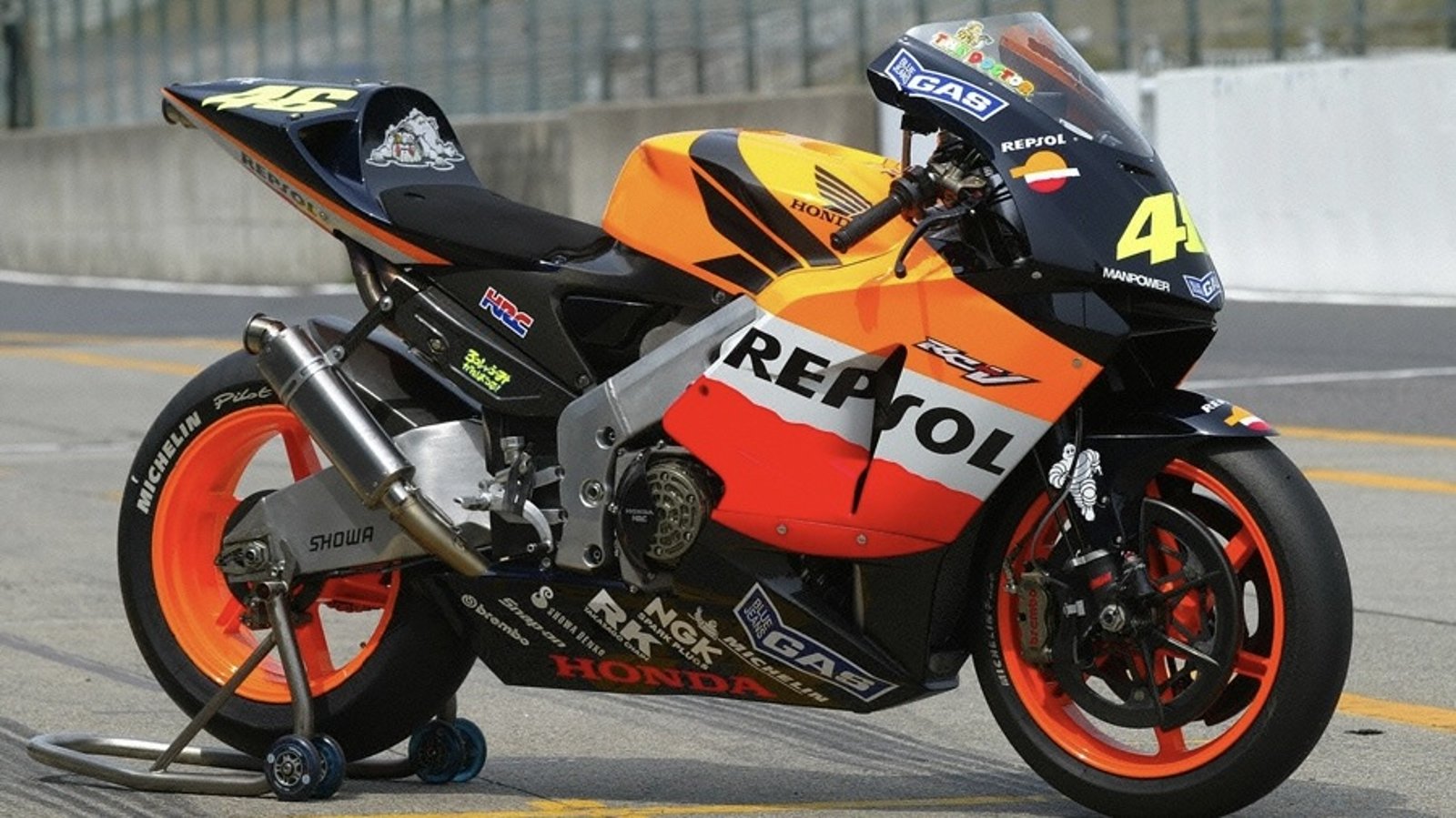
Honda RC211V
The only other occasion a V5’s made it beyond that stage was on two wheels, and only on the racetrack. The Honda RC211V, the machine fielded by the Japanese company in MotoGP between 2002 and 2006, featured a tiny 990cc V5, albeit with a more traditional wide-angle layout with separate cylinder heads for the two banks. It was a hugely successful bike, winning Honda the constructors’ title in four of the five seasons it competed in, but the engine layout never made it onto a roadgoing bike, and the machine that replaced it in MotoGP moved to a more conventional V4 layout.
Read the full article here


