






According to reporting by Reuters, the Volkswagen Group, which includes Audi, is considering bringing EREVs to the U.S. and Europe. Backing up the bus for a moment, an EREV is a different kind of hybrid. Rather than directly power the driven wheels, it uses a gas motor to charge the car’s battery, which, in turn, drives the wheels via an electric motor. That battery is typically larger than in the average hybrid. The TLDR: An EREV can drive at least 100 miles on electric propulsion alone; no conventional hybrid offers that.
The reason this is a big deal is that Scout, which is owned by Volkswagen, already has plans to produce EREVs on our shores. While Scout Motors has yet to reveal where they plan to source their gas motors, almost for certain, that’s going to be a VW Group powerplant. Further, the Scout facility in South Carolina is likely to have excess capacity, which Audi could benefit from. Volkswagen already has some U.S. manufacturing capacity to make extant models like the ID.4 EV and the gas Atlas. Here’s how all this might unfold.
Scouting Future EREVS From VW And Audi
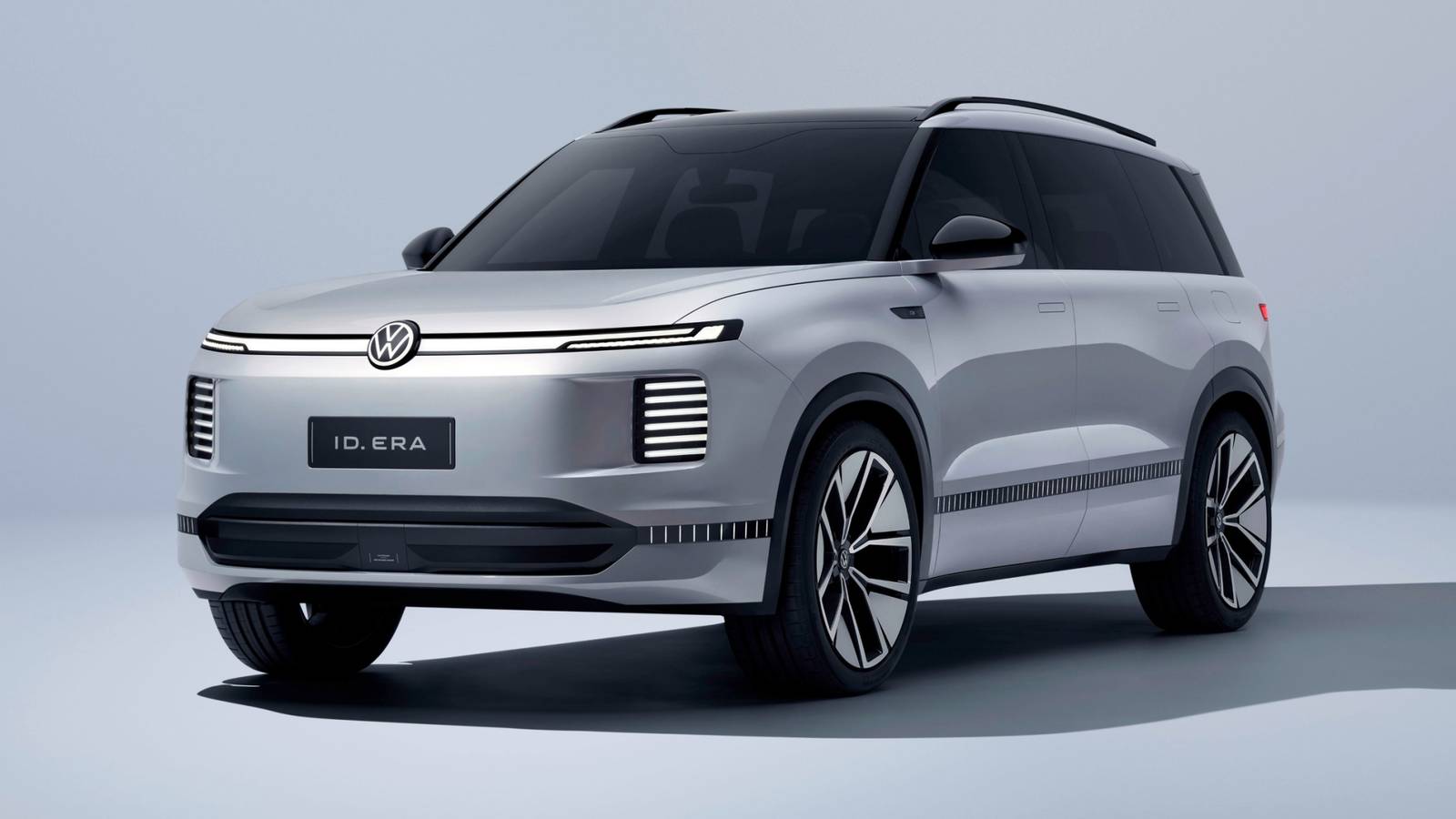
Volkswagen already has plans for EREVs. Back in April they showed off the ID. ERA, a three-row SUV for the Chinese market. This debuted as a concept, but Volkswagen says they have plans to put it into production, likely by the end of 2026. According to the specs for the concept, VW says it delivers 186 miles of EV-only range and total range of up to 621 miles. Foreign-market range ratings are always optimistic vs. U.S. EPA metrics, in large part because Americans do much more highway driving, but even if you figure 120 miles of EV-only range and a total of 400 miles, that means you could do most of your local driving electrically and only dip into gas for road trips—minus the challenges of public charging.
The Audi Part
Volkswagen has some domestic, U.S. manufacturing. Audi does not. It’s rumored that Audi has already been studying adding a body-on-frame EREV model for U.S. consumers, based on the Scout chassis. The target: G-Class Mercedes buyers and Range Rover/Defender customers. You can easily imagine how this works. New sheetmetal riding on the same underpinnings of the Scout architecture would provide Audi the mechanical basis they’d need, and since Scout has already talked about how the logistics side of the VW Group is greasing the skids for their supply chain, tooling and all the rest, everything about this map looks pretty obvious.
Perhaps More EREVs?
Back in the spring, the VW Group talked about the great flexibility of their new Scalable Systems Platform (SSP). According to Reuters, however, Volkswagen has also tested EREVs for that platform, which was originally intended to be completely electric. The advantage to converting them to EREVs is pretty simple: More range. VW hasn’t brought its smaller ID-platform EVs to the U.S. in part because they don’t out-leg Tesla (and other rivals) on range. But as EREVs, vehicles like the ID. Cross (shown above) would suddenly have a massive advantage vs. options like the latest Chevy Bolt and Nissan Leaf. Sure, it might cost a little more, but you can imagine 400-plus miles of range in a small crossover that sits alongside the gas-only Tiguan.
EREVs Could Be A Volkswagen Kickstart
Volkswagen came late to the U.S. with the ID. Buzz, and that vehicle is very expensive. There’s not a huge van market in the U.S., and the longer-wheelbase version they brought to the U.S. isn’t as nimble as the ID. Buzz sold in Europe. At the other end, there’s no more Golf, and GTIs are awesome—but not as affordable. Guess what? GTI sales were off a whopping 42 percent in the third quarter this year. That’s not good, especially when all of VW’s car sales are flagging in the U.S. But if VW hybridized and refreshed its model lineup via EREVs, it might be a boon to the brand.
TopSpeed’s Take
Volkswagen has a brand identity problem in the U.S. The only models that have sold especially well in 2025 are the ID. 4 (partly thanks to evaporating incentives) and the Atlas. Volkswagen says we don’t want small cars in America. Perhaps, but we buy every kind and shape of crossover, and Volkswagen doesn’t compete well for those buyers, either. For the carmaker to rejigger their offerings around EREVs may be a gamble. But Volkswagen axed its sedan market and gave up on affordable wagons. And guess what? Subaru is on pace to sell 150,000 Outbacks this year. Volkswagen doesn’t have a single U.S. model selling at remotely that pace. So EREVs—and refocusing on what Americans want to buy from Volkswagen—certainly seems like a worthwhile Hail Mary.
Source: Reuters
Read the full article here


