





Dumpster fires are burning brightly throughout the industry, fueled by massive piles of cash wasted on battery-electric vehicle programs that have been given up for dead, or at least discontinued or delayed for the U.S. market.
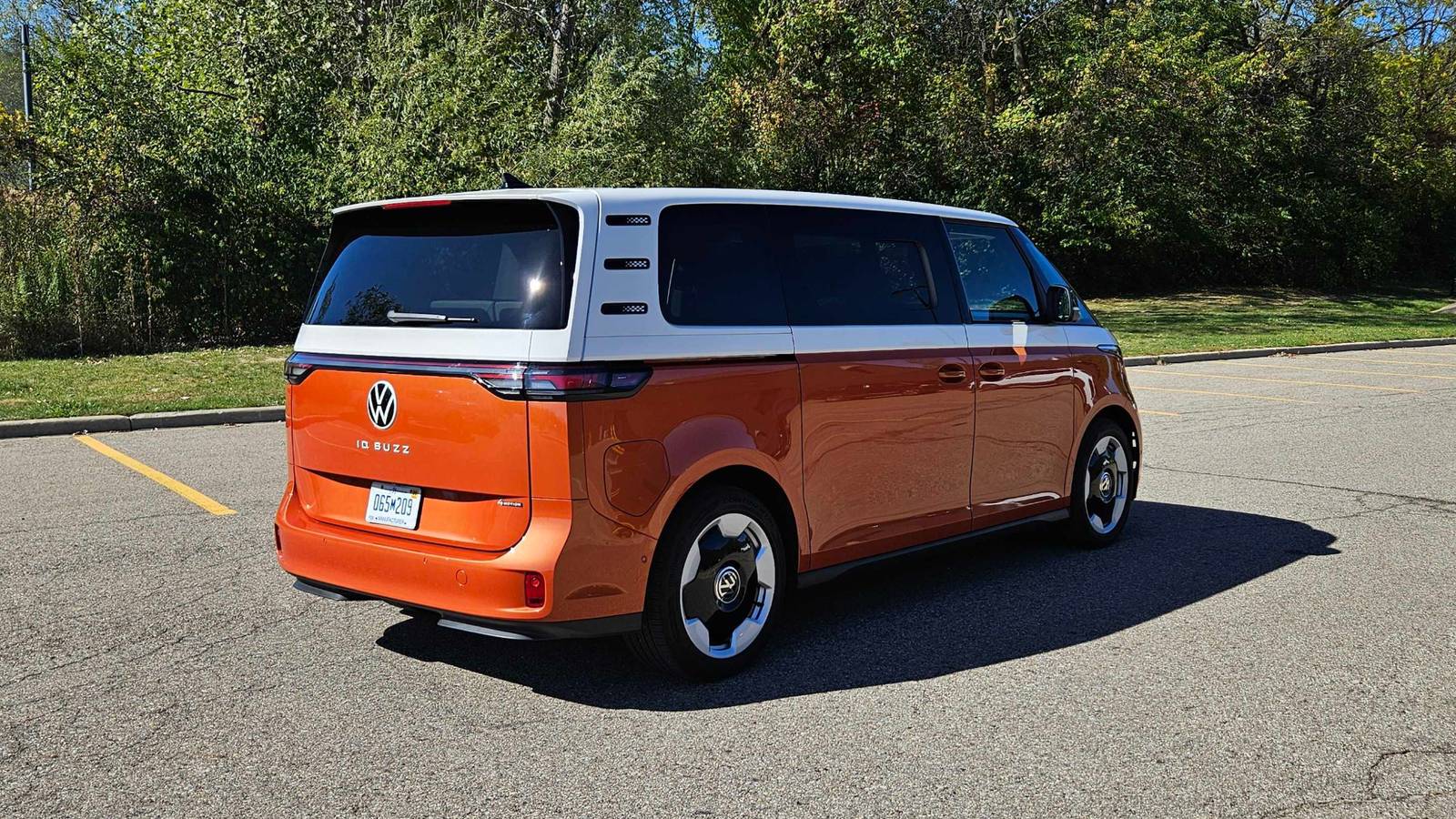
After Mercedes-Benz said it’s pausing EQE and EQS production for the U.S., and after Ford announced this week the new F-150 Lightning will have a gasoline-powered range-extending generator, Volkswagen is the next conglomerate facing massive losses as the automaker confirms there won’t be an all-electric ID. Buzz minivan for the 2026 model year in the U.S., as reported by CarScoops.
‘Ensuring A Strong Foundation’
“The ID. Buzz continues to serve as an important halo product for the Volkswagen brand, and safeguarding its market presence remains a top priority,” Volkswagen said in an email sent to dealers, and shared with TopSpeed.
“Following a careful assessment of current EV market conditions, we have made the strategic decision not to move forward with MY26 ID. Buzz production for the U.S. market. This approach allows us to focus our resources more effectively on current inventory and supporting your retail performance throughout the remainder of MY25, ensuring a strong foundation as we prepare for the MY27 transition next year.”
Let’s Not Forget Tariffs
This statement came from Stuttgart, and that last line about preparing for the 2027 model year transition leaves a lot to be interpreted. The VW PR team in the U.S. tells TopSpeed the statement means the plan is for the ID. Buzz to return to the U.S. in 2027. And the 2025 model year ended Sept. 30, so it’s quite possible this message has been circulating to dealers for some time.
But should VW expect a different result in 2027 if the same issues are still hindering ID. Buzz sales? That includes a high starting price ($60,000), limited range (about 230 miles), no more U.S. federal tax credits, questionable charging infrastructure and a political climate that is favoring internal combustion over battery-electric power? Did we mention 15-percent tariffs on vehicles from Germany?
How About Extending The Range?
One option is to reduce the price and extend the range by equipping the ID. Buzz with a gas-powered generator as an EREV minivan. That’s easier said than done, but Ford put pencil to paper and determined they are better off financially by ditching the F-150 Lightning BEV and re-engineering it as an extended-range pickup with a gas engine.
This strategic shift, announced this week, will cost Ford $19.5 billion in “special items” involving plant retooling, “asset write-down” for the EV-focused Model e business unit, and ending the Blue Oval SK battery joint venture. Last year, Ford lost $5 billion on its battery-electric vehicles. Stellantis has done the same with its upcoming extended-range Ram pickup, and General Motors has said it’s working on similar plug-in hybrids while its full-size EVs are selling poorly.
No Official Word On EREV ID. Buzz
Granted VW will never sell as many ID. Buzz minivans as Ford will sell any form of F-150, but a less-expensive range-extended version might make the ID. Buzz more appealing to American shoppers.
A VW spokeswoman declined to comment on whether a 2027 ID. Buzz could return to the U.S. with a range-extended powertrain. But with its generous proportions, perhaps VW engineers could get creative in packaging an EREV version.
Fewer Than 5,000 Sold Through 3Q
The U.S. heard about the all-electric ID. Buzz for years before salable units actually started arriving here in late 2024. Its retro styling and homage to the microbus of old makes the van immediately recognized — at least the few on U.S. streets. Through the first three quarters, VW sold fewer than 5,000 of them in the U.S.
While the $60,000 ID. Buzz languishes on dealer lots, the new Nissan Leaf and Chevrolet Bolt represent the industry’s push for affordable EVs, starting near $30,000.
Is Elon To Blame For This?
Overseas, the Volkswagen ID. Buzz isn’t a major player in China, but it has been reasonably popular in Europe (especially Germany) and in Singapore.
Can we just blame all this on Elon Musk? Every automaker worked desperately to replicate the model that he famously took global in proving there is, indeed, a huge market for battery-electric vehicles. But as it turns out, most of the people who really wanted BEVs, at least in the U.S., only wanted to buy a Tesla.
Source: CarScoops, VW
Read the full article here


