


Cramming the biggest possible engine into the smallest possible car is not a new idea. It dates back to the earliest days of hot rodding, when pioneering custom car builders would fit modified Model T Fords with the company’s later ‘flathead’ V8 in order to make them go as quickly as possible.
It is, however, a tactic that’s all too rarely been employed by major car manufacturers, for boring reasons like ‘return on investment’, ‘engineering challenges’, and ‘don’t be silly, of course we can’t put a V12 in this family hatchback’. Every so often, though, a car company will find justification for stuffing a massive engine into a compact package, and while the results have been mixed, they could never be accused of being boring. Here are 10 of our favourite big engine, small car combos.
Mercedes-Benz SL K55 AMG
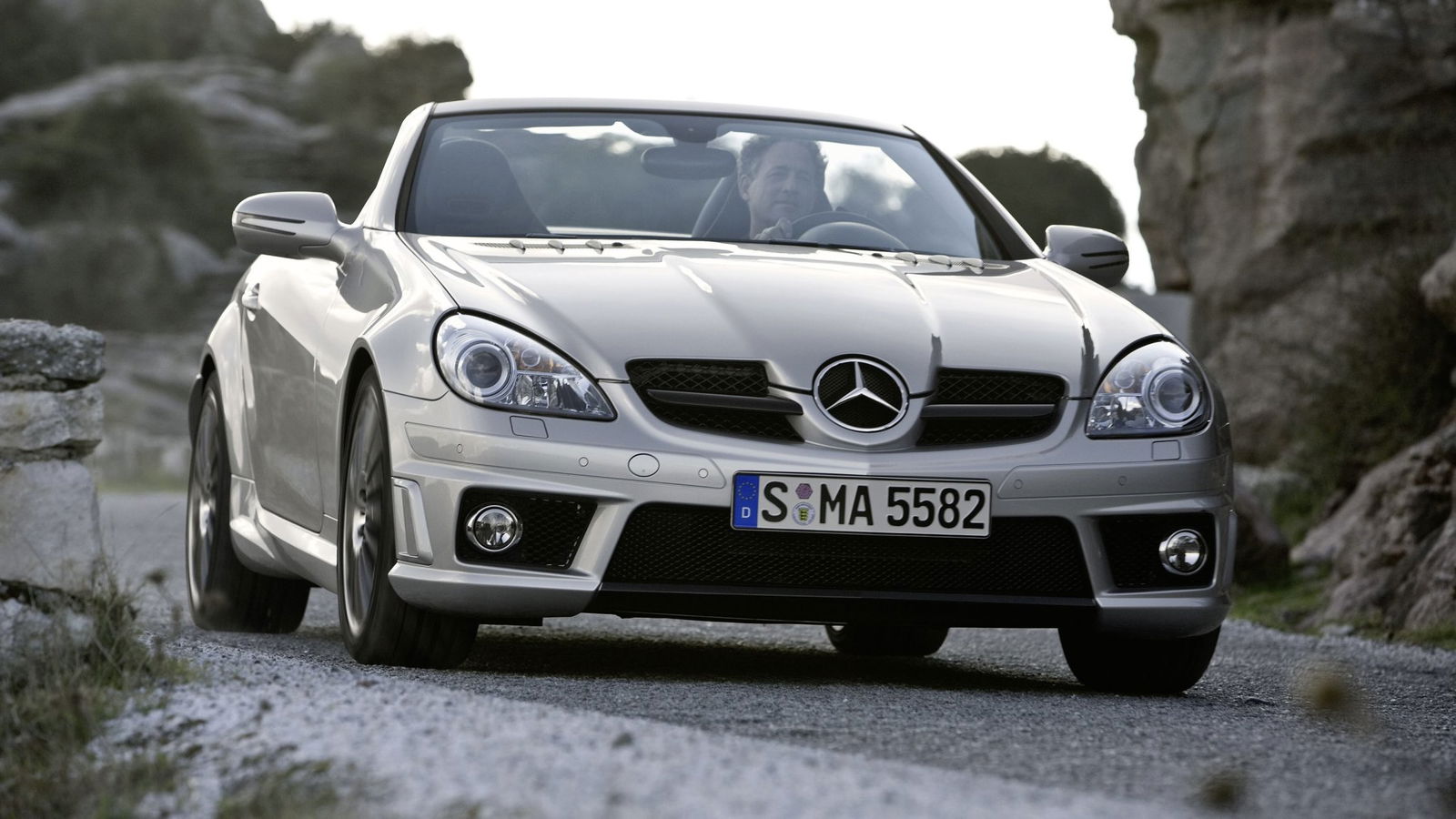
Mercedes-Benz SLK 55 AMG
Mercedes’ AMG division is no stranger to stuffing very big engines into relatively small cars – just look at the time the C63 had a 6.2-litre V8 at a time when BMW’s M3 made do with a paltry 4.0 litres. The zenith of this old-school approach to performance, though, had to have come when AMG set about creating a hot version of the second-gen SLK roadster in 2004.
Mercedes’ smallest convertible, this two-seater was only a smidge longer than a contemporary Mazda MX-5, which made it all the more amusing when AMG stuffed its then-biggest V8 – a 5.5-liter with 355bhp under its SLR McLaren-inspired bonnet. The later Black Series then upped this to 395bhp, and the SLK 55 even returned for a second generation in 2012, surely making it the de facto modern day poster child for big engines in small cars.
Aston Martin V12 Vantage
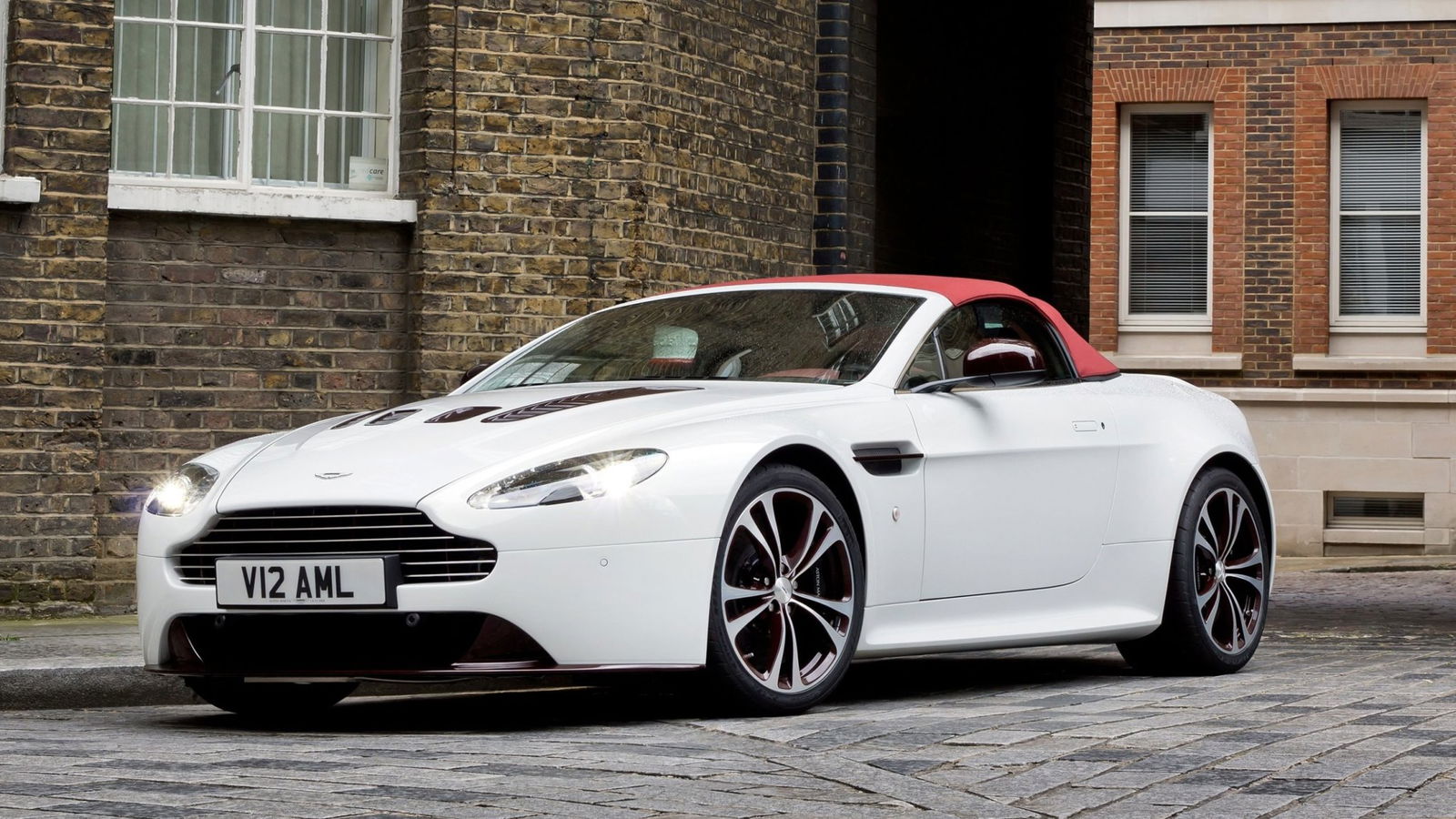
Aston Martin V12 Vantage Roadster
Or maybe this is the de facto poster child. When Aston Martin’s desperately pretty new Vantage arrived in 2005, only a tiny bit longer than a Golf and with a 4.3-litre V8 in its snout, it already made a good case for appearing on this list.
But a few years later, Aston went one better by taking the DBS’s 5.9-litre, 510bhp V12 and shoehorning it into the little Vantage. The resulting car was one of a kind, a gorgeous but brutal streetfighter of a sort that would never be repeated. Even when the V12 Vantage returned for a limited-run second generation in 2021, the car was bigger and the engine smaller at 5.2 litres, a pair of turbos making up the deficit.
Renault Clio V6
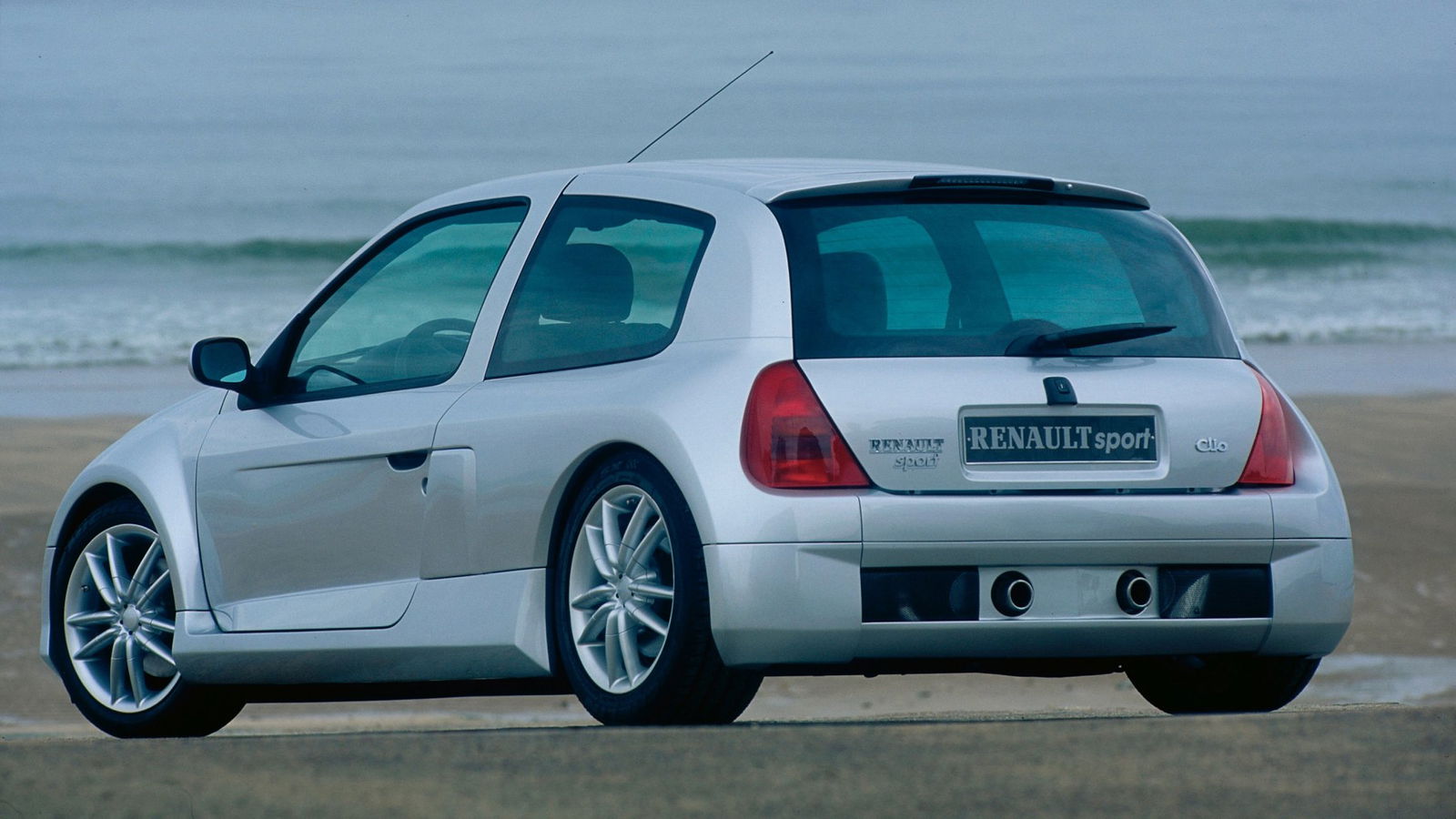
Renault Clio V6
We’d love to have been in the meeting in the late ’90s when Renault decided it was going to build a mid-engined Clio as a tribute to the 5 Turbo rally homologation special of the 1980s. While the 5 used a tiny 1.4-litre engine with a turbocharger to make its power, though (the clue’s rather in the name), for the hot mid-engined Clio, Renault decided there was no replacement for displacement.
The resulting car, the Clio V6, borrowed the 2.9-litre V6 from the Laguna saloon, with power bumped up to 227bhp – later increased again to 252bhp with the facelifted Phase 2 model in 2003. Such a big, heavy and powerful lump in the middle of something as tiny as a Clio and sending all its power to the rear wheels made the V6 a notoriously spiteful thing in the corners – but gosh, doesn’t it just look like the best fun?
Alfa Romeo 147 GTA
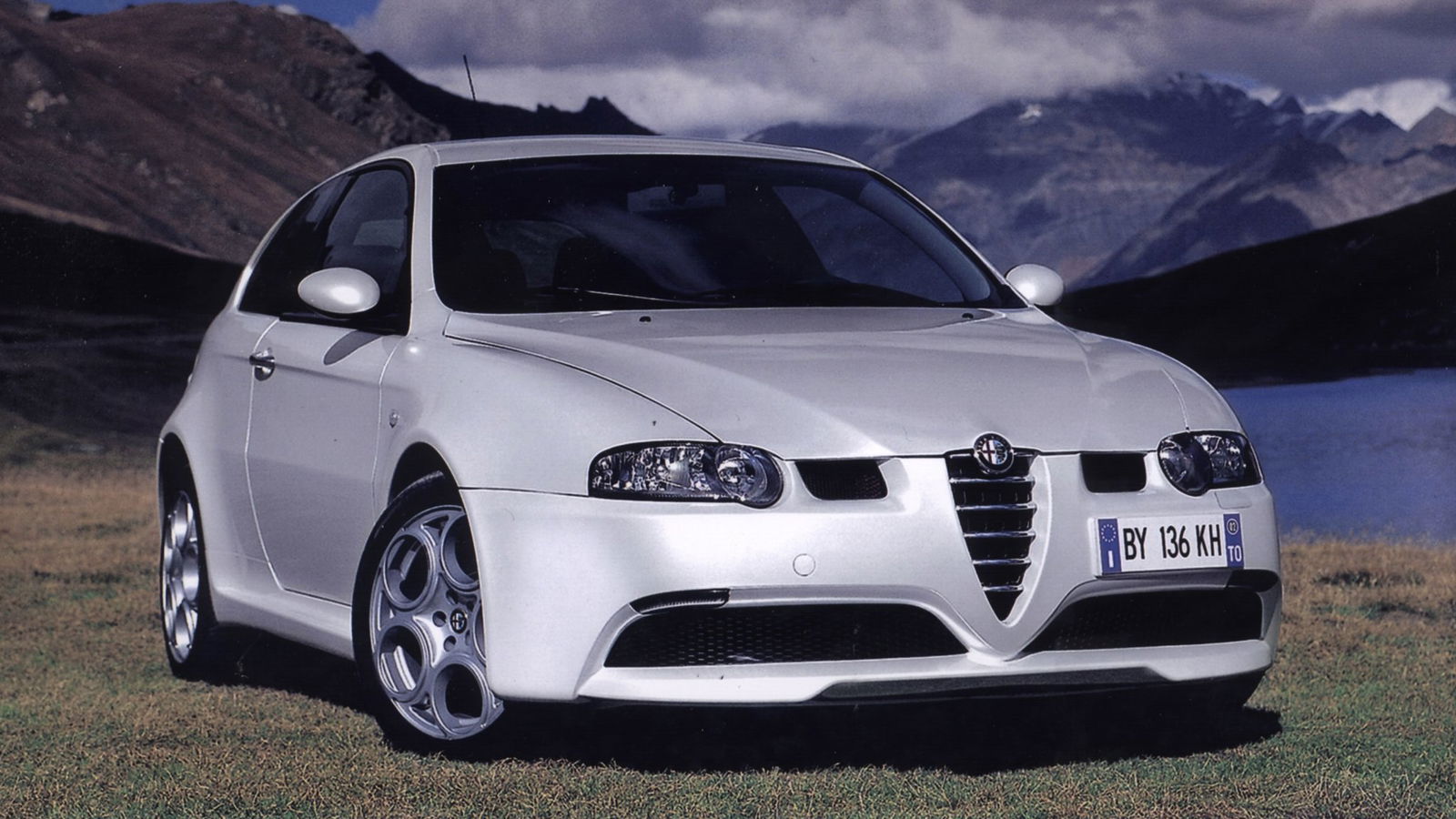
Alfa Romeo 147 GTA
Renault wasn’t the only company stuffing six cylinders into its hot hatches in the early 2000s. Volkswagen had the 3.2-litre V6 Golf R32, complete with all-wheel drive, but we can’t help but love the Alfa Romeo 147 GTA, also with a 3.2-litre V6. That engine was the final iteration of Alfa’s glorious ‘Busso’ V6, producing 247bhp, and in typical Alfa fashion, the company didn’t bother with all-wheel drive, instead sending all that grunt through the front axle.
It was a bit of a mess to drive as a result, especially without the limited-slip diff that’s since become an almost prerequisite aftermarket mod on these cars. But when a car looks and sounds this good, who really cares about appalling understeer? And if 3.2 litres and 247bhp through the front wheels somehow weren’t enough for you, renowned Alfa tuner Autodelta offered a version that saw the engine upped to 3.7 litres and 325bhp.
Porsche 718 GTS 4.0
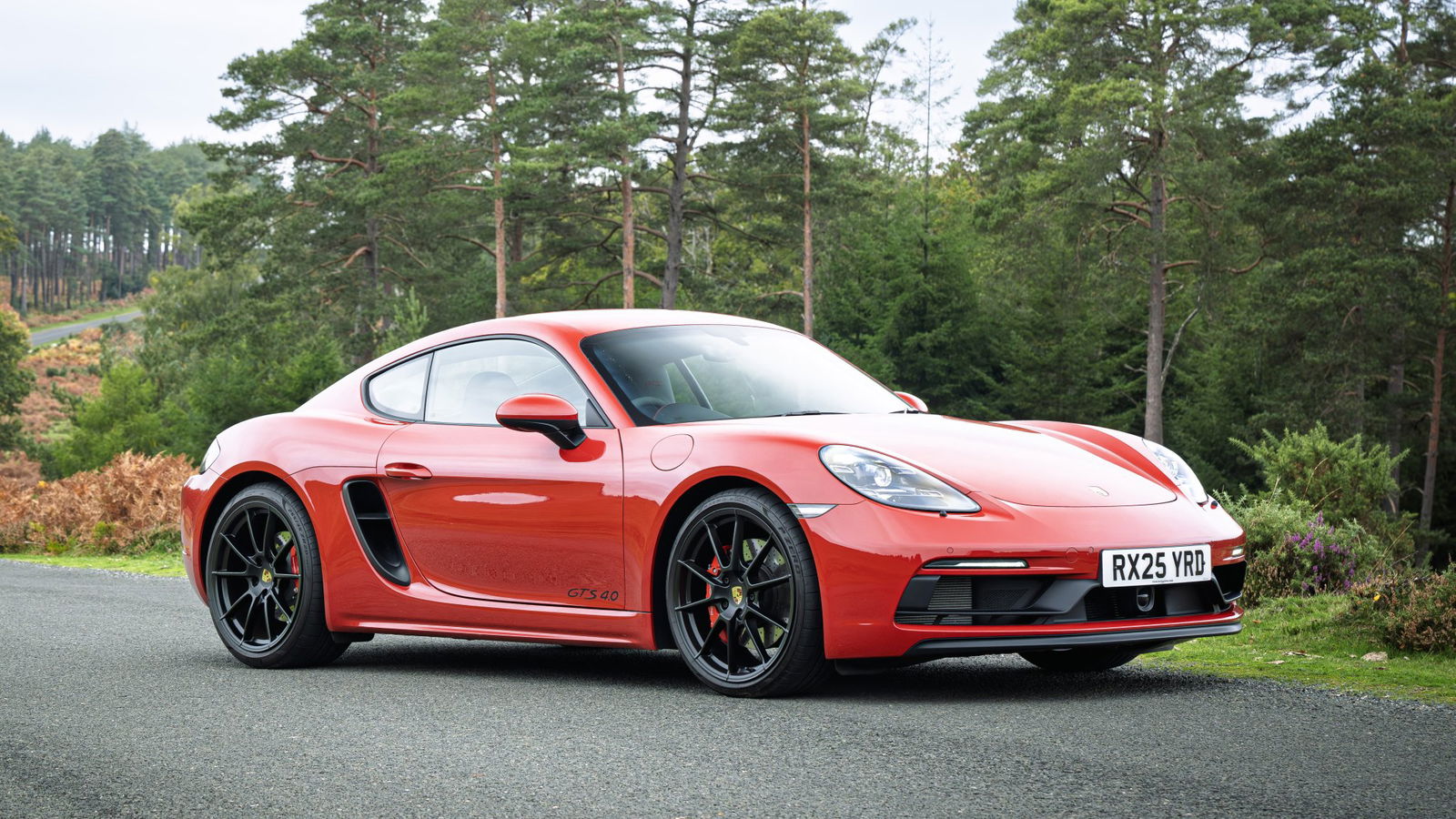
Porsche 718 Cayman GTS 4.0
To say reception was muted when the Porsche Cayman and Boxster twins moved from their old naturally aspirated flat-sixes to a pair of turbocharged flat-fours for the 982 generation in 2016 would be an understatement. The addition of the 718 badge, an attempt to have them hark back to a four-cylinder Porsche race car of the 1950s, did little to quell the anger from Porsche circles.
Happily, Porsche listened, delivering new GT4 and Spyder versions in 2019 with a new 4.0-litre, naturally aspirated flat-six. This was not only the biggest engine ever fitted to Porsche’s baby sports cars, but also as large as any powerplant found in any version of the bigger 911. Reception to these models was unsurprisingly enthusiastic – even more so when Porsche launched cheaper GTS 4.0 models with the same engine a year later.
Ariel Atom 500 V8
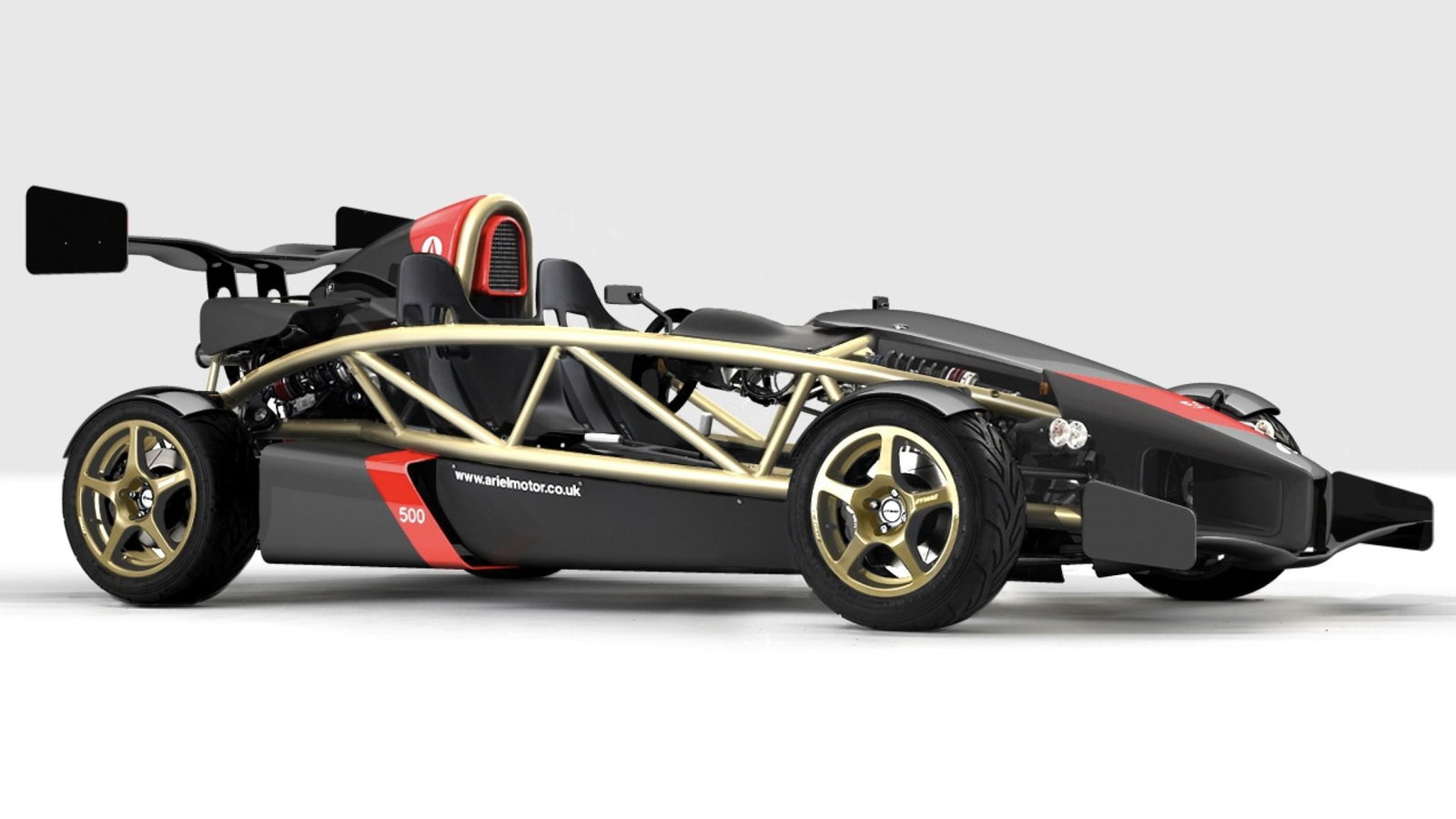
Ariel Atom 500 V8
Granted, 3.0 litres isn’t huge by engine standards. As V8s go, it’s a positively tiny capacity. But shoving a 3.0-litre V8 into an Ariel Atom, a car where everything is designed to be as pared-back as possible, to the extent that even basic bodywork is considered unnecessary, is a bit like strapping a jet engine to a Sopwith Camel.
Considering that engine – essentially two Suzuki Hayabusa superbike engines grafted together – made 500bhp, and the Atom V8 weighed just 550kg, the result was predictably unhinged. With upwards of 900bhp per tonne on tap, the Atom V8 was capable of utterly humiliating the supercar establishment – if anyone was brave enough to try.
Randall 401-XR
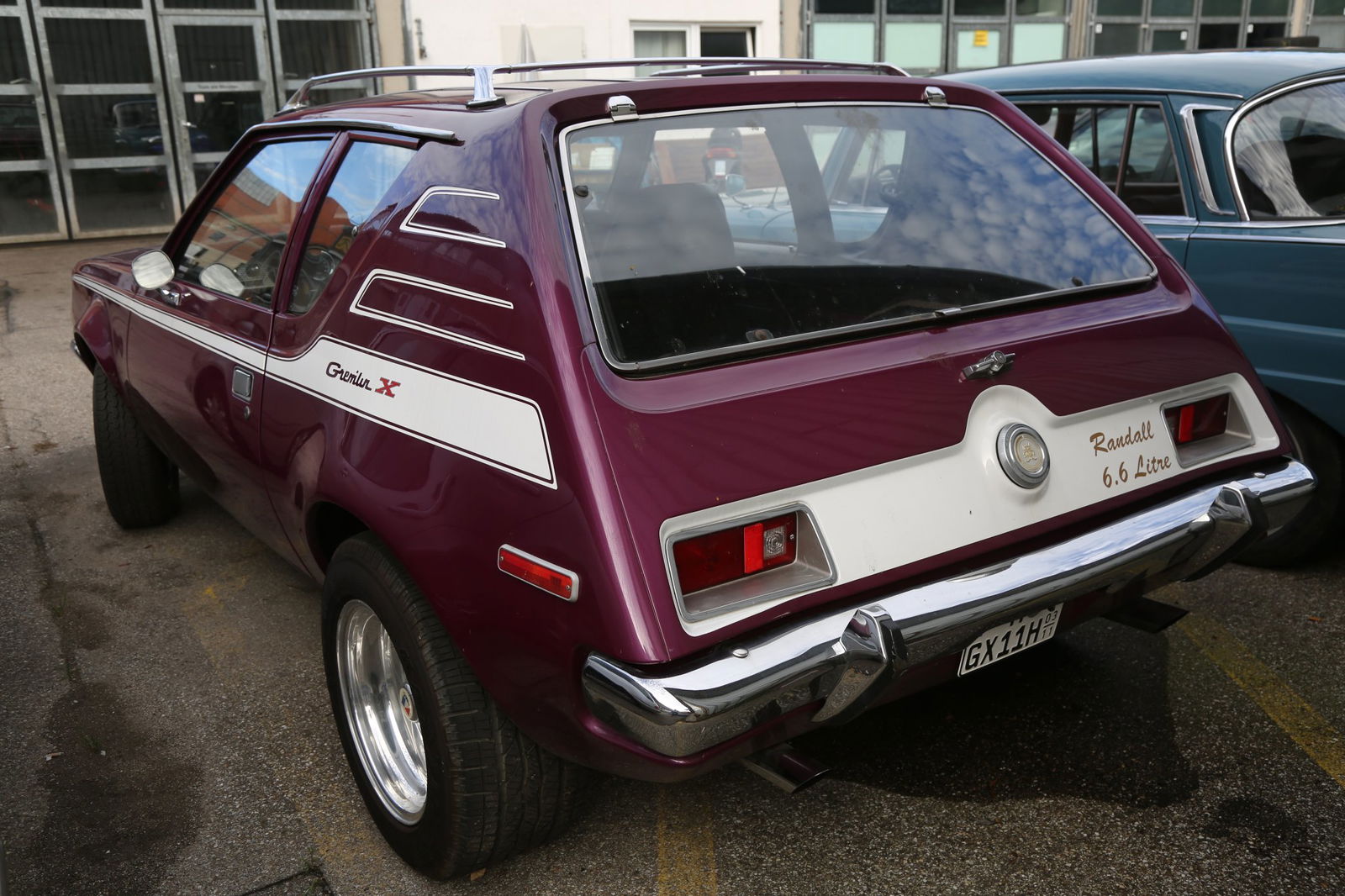
Randall 401-XR
The what now? This one may take a bit of explaining. The Gremlin was an odd-looking compact car built in the ’70s by America’s perennial underdog car company, AMC. Being a ’70s American take on a small car, none of the engines were really that small – the littlest ever offered was a VW-sourced 2.0-litre four-pot, and after that it was a range of straight-sixes and even a 5.0-litre V8.
Because they were strangled by ’70s emissions rules, all of these engines were basically rubbish – at one point, that V8 was making just 120bhp. However, in 1972, AMC authorised Randall, an Arizona-based dealership, to produce its own performance version of the Gremlin. The result, the Randall 401-XR, featured a massive 6.6-litre V6 – in a car barely any bigger than a VW Beetle. Even the 255bhp produced by the 401-XR was fairly poor for such a huge engine, but it was at least enough to give the Gremlin some proper performance cred, even if just 21 were built.
Image: Henning Schlottmann, CC BY-SA 4.0
Ford Sierra XR8
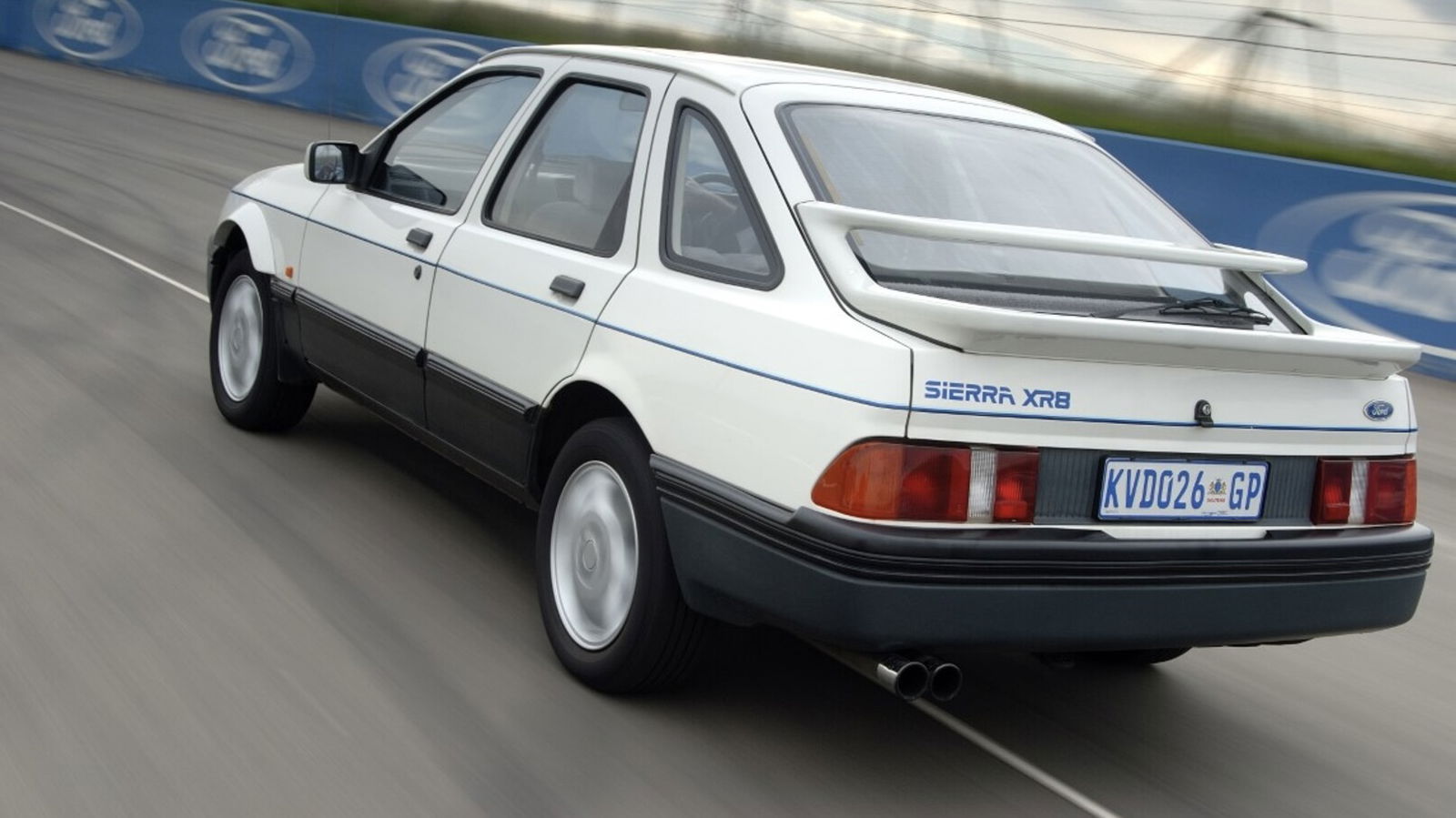
Ford Sierra XR8
Think of a fast Ford Sierra and you’ll inevitably gravitate to the whale-tailed Cosworth model, designed as a homologation special for Group A rallying. But that wasn’t the only wild homologation special Sierra – South Africa had one of its own, thanks to the unique rules of its national touring car series, and while the Cosworth used turbocharging to make its power, this one went down an altogether more old-school route.
Launched in 1984 and limited to 250 units, the Sierra XR8 saw the ’80s sales rep’s favourite stuffed with the V8 from a Mustang, badged as a 5.0-litre but strictly a 4.9. With its unpainted bumpers and more subtle rear wing borrowed from the XR4, it was a bit of a sleeper compared to the peacocking European Cosworth, and with roughly 215bhp to the Cossie’s 204bhp, it was more powerful too… until the 224bhp RS500 arrived in 1987.
AC Cobra
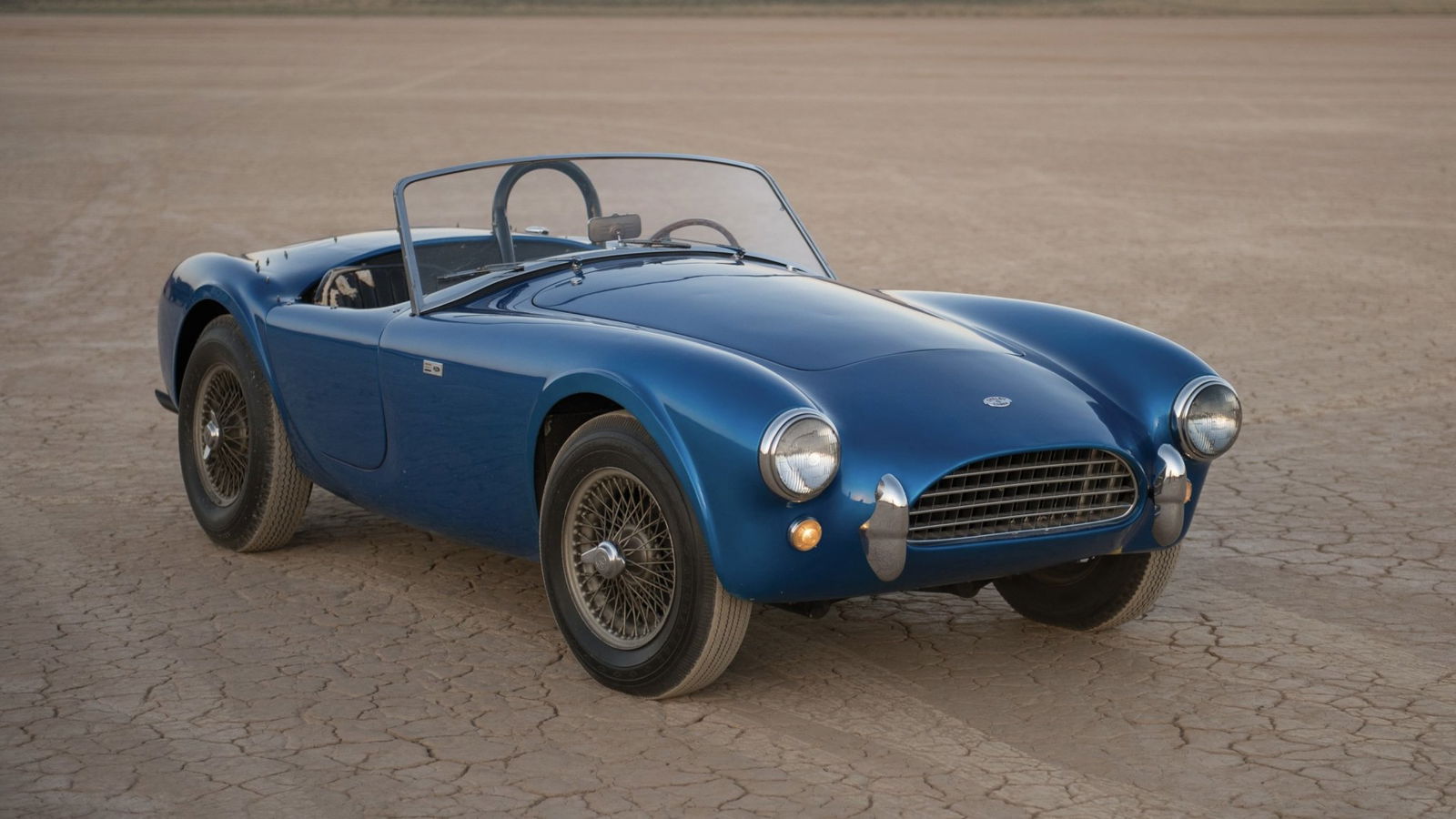
Shelby Cobra | Darin Schnabel © 2016 courtesy RM Sotheby’s
We simply couldn’t do a list like this without a nod to the AC Cobra, the result of racing-driver-turned-tuner-extraordinaire Carroll Shelby looking for a way to beat the Chevrolet Corvette on America’s racetracks. He looked to the AC Ace, a petite six-cylinder British roadster, and struck a deal with Ford to fit them with V8 engines.
The resulting car, badged as the Shelby Cobra in North America and the AC Cobra elsewhere, first featured 4.3 or 4.7-litre V8s, but peak big engine, small car arrived in 1965 when the Cobra gained Ford’s 7.0-litre, 425bhp V8, creating one of the lairiest, fastest cars around. Original production wound up a couple of years later, but various officially sanctioned continuation cars kept the Cobra story going, and today, the successor to the original AC company still builds them, now with modern Ford Mustang V8s.
Toyota Blade Master
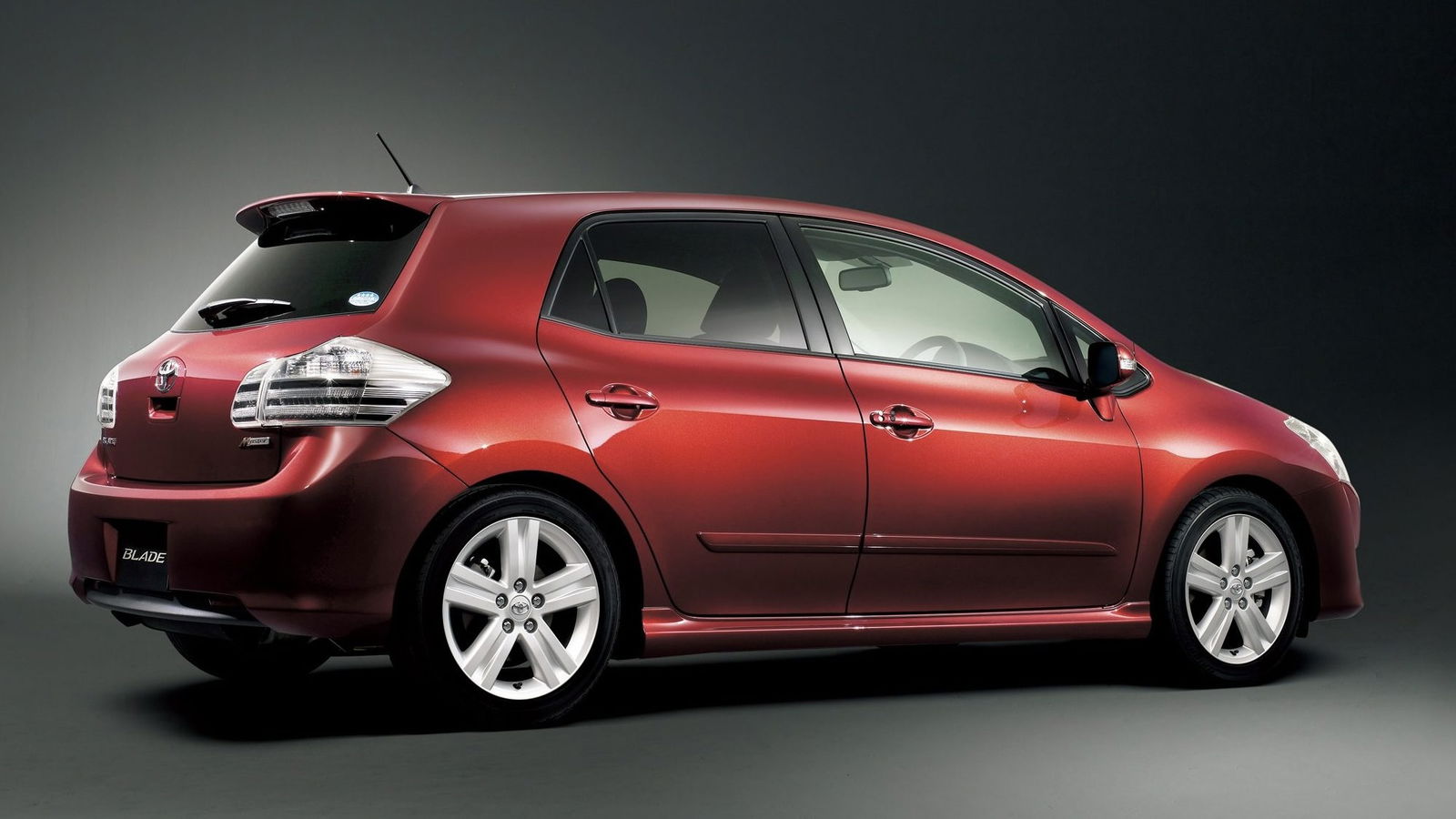
Toyota Blade Master
Sounding like a character from a ’90s Saturday morning action cartoon, the Toyota Blade Master was a rather silly car. The Blade was essentially a more upmarket, Japan-only derivative of the crushingly dull Toyota Auris hatchback, and to create the Blade Master in 2007, Toyota stuffed it with the 3.5-litre V6 that powered plenty of the company’s larger cars at the time.
Making a quoted 276bhp – possibly more, given that the ‘gentleman’s agreement’ was still just about a thing in 2007 – any excitement around this being a rip-roaring V6 hot hatch was quelled by the fact that it was front-wheel drive and only came with a six-speed automatic. Really, it was intended to be more of a luxury cruiser, although with a quoted 0-60mph time of 5.8 seconds, it wasn’t exactly slow. What it was was very, very strange, although it’s now a bit of a cult classic, with a particularly big appetite for imports in Australia and New Zealand.
Read the full article here