


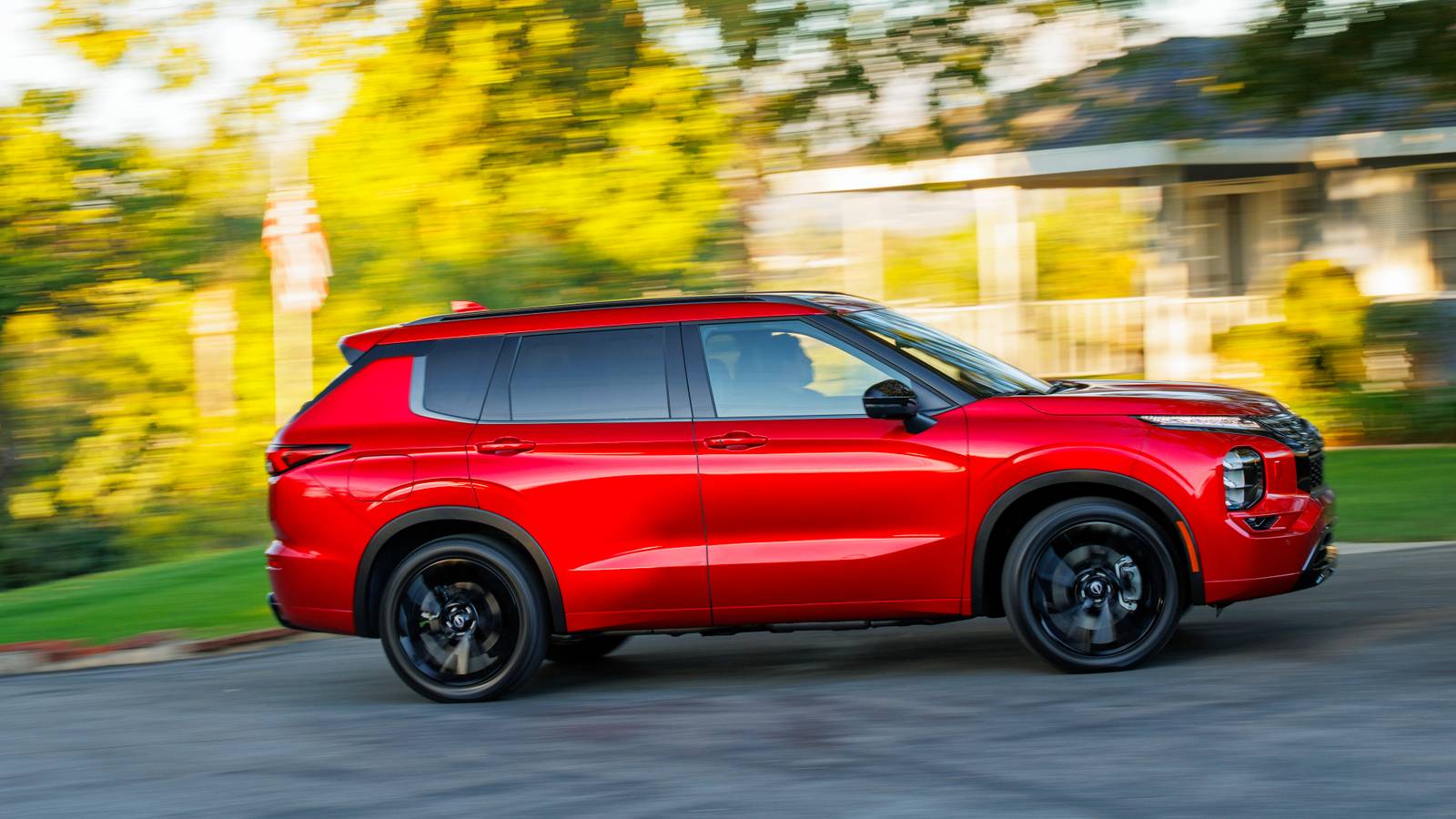
Earlier this year, Nissan officials told me they’d noticed mid-size crossover buyers choosing the Nissan Rogue because it was more affordable than competitors like Toyota’s Hybrid RAV4 and Honda’s hybrid CR-V. However, since Nissan axed its prior hybrid, the Rogue has not been more fuel-efficient than those options. Sure, gas is cheap currently. However, there’s also an increasing trend among buyers to opt for the better range and lower carbon footprint of a hybrid. Buyers are also realizing, increasingly, that hybrids offer more power without the gas-sucking penalty of a larger engine. However, Nissan has lacked a hybrid Rogue, which has stung the carmaker, resulting in slower sales of the Rogue, their biggest-volume model, through three quarters of 2025 compared to 2024.
That’s about to change, and Nissan’s not just coming with a hybrid, but a plug-in model with an all-electric mode. Here’s an initial assessment of what Nissan’s bringing, and how it might stack up vs. models like Toyota’s RAV4 Hybrid, but also vs. other small three-row offerings—an edge Nissan has over that Toyota, but not over every rival in the hybrid/PHEV segment.
The Rogue Is A Tweener
The Rogue fills two buckets for Nissan. It has to be spread between mid-size two-row rigs, like the Toyota RAV4 and Honda CR-V, and larger (but not huge) crossovers such as Honda’s Pilot and Toyota Highlander Hybrid. Nissan’s next size up option is the Pathfinder, but it’s not that much larger, and the Armada is a too-large price jump.
But pitting the Rogue PHEV against Toyota’s RAV4 plugin-in and Honda’s CR-V hybrid, may give Nissan an edge they’ve been missing. Not just by having a hybrid, but one that’s more affordable and versatile, with a viable (for kids) third row, which neither of those Japanese peers offer.
The Specs Are Good—And Borrowed From Mitsubishi
The Mitsubishi Outlander is, under its skin, a Nissan Rogue. And really, vice versa, since these two crossovers share a global platform. Still, the new Rogue PHEV’s specs go deeper than the chassis, because the gasoline engine on the new Rogue is actually a Mitsubishi model, based on the engine code, displacement, output… well, all the specs, essentially. Here are those digits. They are identical to what you’re seeing on the 2026 Mitsubishi Outlander PHEV.
2026 Nissan Rogue Plug-In Hybrid Powertrain Specifications
|
Gas Engine |
Front Motor |
Rear Motor |
Combined Total |
|
|
Horsepower |
131 |
114 |
134 |
248 |
|
Torque (Pound-Feet) |
144 |
188 |
144 |
332 |
More Power And EV-Only Range
Part of what Nissan didn’t offer in the non-hybrid Rogue was muscular power. The 201-horsepower, turbocharged three-cylinder in the non-hybrid Rogue is spunky enough, but you can run out and get yourself a Volkswagen Tiguan R-Line Turbo with 268 horsepower if you’re hungry for get-out-of-my-way propulsion. The Rogue PHEV will certainly remedy concerns about only middling power. Further, Nissan says that because this Rogue gets a 20 kWh battery, drivers can expect about 38 miles of EV-only range. This trails the 52 miles of range offered by Toyota’s RAV4 in plug-in hybrid trim and that model’s 324 horsepower.
Home Charging Expected
The RAV4 PHEV is rare in that it allows DC fast public charging. Most PHEVs aren’t equipped for that, because most buyers wouldn’t bother. Once the EV battery can no longer motivate their PHEVs, they’d just keep motoring in hybrid mode, which is how the Rogue PHEV is designed. So it’s not equipped for DC fast charging. Instead, you can recharge at a public Level 2 charger or at home. Using a Level 2 home charger takes about 7.5 hours to fully recharge. A standard wall plug requires around 16 hours, though Nissan does include the necessary cable. Given the more-than-12-hour charging time on a wall plug, I’d recommend a Level 2 setup to maximize the benefits of owning a PHEV.
Loaded From The Jump
Nissan will sell the Rogue Plug-in Hybrid in two grades, but both come with a lot of goodies. That includes 20-inch wheels, multi-element headlamps, acoustically laminated front door glass, to make the cabin quieter (necessary, especially, when you operate a PHEV as an EV), and standard 12.3-inch driver display, nine-inch touchscreen infotainment system, dual front and dual rear USB ports, LED fog lamps, and standard front heated seats. Platinum grade adds leather seating, a head-up display, and a nine-speaker Bose sound system.
EV-ish Touches
Nissan includes multiple modes for their PHEV customers, including the option to save battery power for later, such as when you might be driving in a crowded, stop-and-go city environment. But they also add the option to shift from Drive to “B,” which essentially adds more regen to enable nearly one-pedal driving. EV owners are used to that experience and it’s innovative for Nissan to include that function as well. In addition, there are gravel, snow and mud modes as well, with the latter presumably adjusting the stability control system to allocate power for loose-traction conditions. This is clearly less about serious off-roading, since that’s not the Rogue’s remit.
Clever Second Row
Nissan isn’t selling the roomiest PHEV on the market. That’s a Lexus TX 550h, and it’ll set you back more than 70 large. But because its more natural rivals don’t offer third-row seating, Nissan is wisely making the most of this configuration, by offering a sliding second row of seats. That will let buyers maximize the utility of their ride, likely leaving that final row flat most of the time, which yields a decent, 30.8 cubic feet of cargo capacity. With the aft seats upright, you’ve got a scant 13 cubic feet behind them.
TopSpeed’s Take
If you’re cross-shopping three-row family hybrids that won’t break the bank, your choices are very limited. But one rival that will probably get shopped against this Nissan is the Kia Sorento PHEV. It’s that rare mid-sizer that also gets three rows of seating, and has a little more maximum cargo capacity and slightly better second-row legroom than Nissan is offering. That car stickers right around $50,000. If Nissan can come in more affordably than that, they’ll definitely get buyers’ attention. This is probably key, too, because the Rogue starts right around $30,000. Asking buyers to spend $20,000 more for the “same” model can be a tough ask, even if the ingredient mix is excellent.
.
Read the full article here