


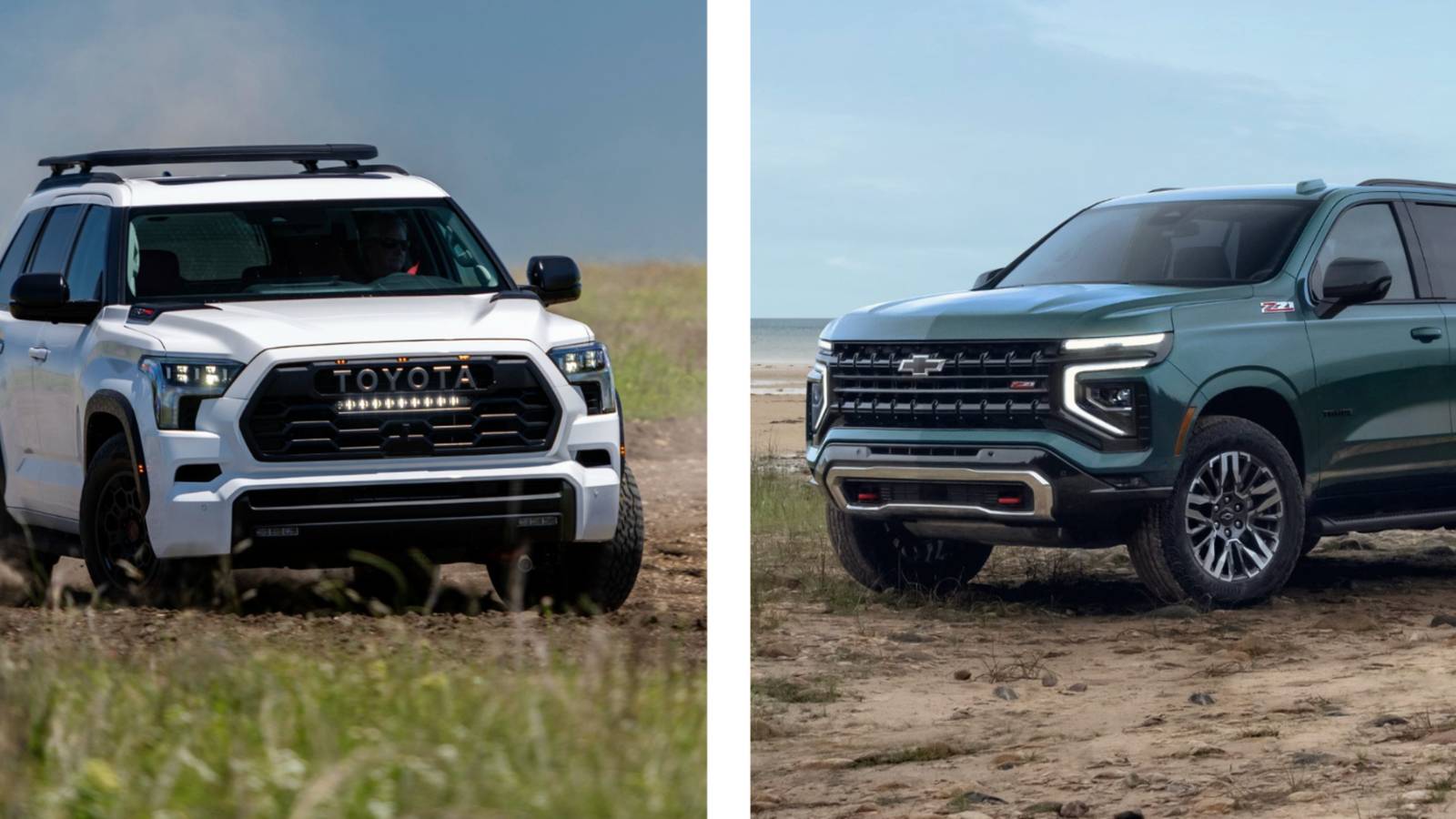
There may have been a part of you that felt deflated in 2021 when General Motors — the world’s largest automaker for 77 years — sold fewer cars in its home market than Toyota, the transplant juggernaut that did a better job steering around supply-chain headaches while the world struggled to cope with the global COVID pandemic.
Detroit no longer calls GM, Ford, and Stellantis the “Big Three” because they have ceded so much market share to Toyota, Honda, Nissan, Hyundai, Kia, Subaru, and several European automakers.
GM Lost The U.S. Sales Crown In 2021, But Reclaimed It
While the Detroit brands have contracted in terms of domestic sales, these foreign-based manufacturers have grown exponentially over the past 40 years by building new vehicle assembly plants, primarily in the South, where foreign-born engineers now call towns like Chattanooga, Nashville, Tuscaloosa, and Montgomery their home away from home. Those plants have become vital to offsetting Trump Administration tariffs.
General Motors reclaimed the No.1 sales slot in the U.S. in 2022, 2023, and 2024, and a comfortable lead of nearly 300,000 vehicles through September suggests the General will wrap up the crown once again.
Toyota Pushes Hybrids While GM Launches EVs
But what about in 2026? Can GM retain the lead while coping with tariffs, Toyota’s surge with popular hybrids and a sagging market for battery-electric vehicles after heavily pushing its product lineup in that direction over the past five years?
Anything can happen, but a closer look at recent sales trends in the U.S. for Toyota and GM reveals two reasonably strong automakers pursuing different product strategies and facing unique challenges.
GM Sales Down 45% Since 2020
GM held 58% of the U.S. market in 1955.
“The gap between GM and Toyota could narrow next year, but for multiple reasons and not resting on GM’s lack of hybrid offerings,” Stephanie Brinley, associate director of AutoIntelligence at S&P Global Mobility, told TopSpeed in an email. “The gap is likely to vary one year to the next, but our current forecast sees GM holding the U.S. sales lead.” She notes that GM’s lead over Toyota through the first three quarters is 30,000 units more than at the same point in 2024.
But Brinley recognizes GM’s decline over the past 25 years. “GM’s volume in 2024 was 2.7 million units versus 4.9 million in 2000, and as the U.S. market grew more crowded, GM’s market share has been below 20 percent for years, when at one time it was more than 50 percent.”
Toyota Brand Outselling Chevrolet, Again
Through September this year, Toyota Motor sales were up 7.9 percent to 1,865,876 vehicles compared to 2024 sales through the first three quarters, while GM grew 10.3 percent to 2,150,298 units. The Toyota brand posted a respectable 7.7-percent growth in U.S. sales to 1,595,301 while Lexus was up 9 percent to 270,575.
That number reflects the mainstream Toyota brand outselling the mainstream Chevrolet brand by more than 215,000 units through September. If that trend sticks, Chevrolet will have trailed Toyota three years in a row in the U.S. market.
All Four GM Brands Growing This Year
But don’t count out GM overall based on this data point. All four GM brands grew sales at a faster pace through September than both Lexus and Toyota: Cadillac was up a whopping 19.4 percent (to 132,629 vehicles); Buick climbed 14.3 percent (to 156,835); GMC grew 10.3 percent (to 480,759); and volume leader Chevrolet was up 9 percent to 1,380,075.
True, Cadillac has struggled to regain relevance in the face of European luxury brands (and Lexus), and there was a time when Buick was so starved for new product in the U.S. that observers speculated it might follow Oldsmobile and Pontiac to the graveyard.
Cadillac + Buick Are Outpacing Lexus
But if you consider Cadillac and Buick working together to tend the luxury (and near-luxury) market, their combined sales through September of 289,464 vehicles outpaced Lexus by about 19,000 units. Suddenly those year-end Christmas gift purchases with the giant bows on the hood could turn the tide for either side.
There are some other interesting sales trends that are setting up what could be a battle for 2026. For instance: Toyota is crushing it with hybrids so far this year, up 28 percent to nearly 900k vehicles (including 100k Lexus hybrids and a handful of EVs).
GM’s Hybrids Arriving In 2027
How many hybrids is GM selling this year? The Chevrolet Corvette E-Ray is the only one — enthralling, yes, but expensive and very low volume. GM promises new plug-in hybrids arriving in 2027, but will they arrive in time to nibble into Toyota’s hybrid dominance?
With several competitive all-electric luxury crossovers in the lineup, Cadillac is well positioned if that segment should rebound, perhaps, if petroleum prices skyrocket because U.S. fighter jets begin targeting tankers they believe to be hauling drugs.
Waiting For Year-End Sales Figures
On the other hand, the status quo is treating both Toyota and Lexus quite well. If luxury shoppers in the U.S. start leaning heavily toward hybrids, Lexus will reap even greater rewards.
When the calendar year ends and 2025 sales are tallied up in early January, we’ll have a better idea how 2026 is likely to shape up for both automakers.
Source: GM and Toyota sales reports
Read the full article here