





We love a big engine as much as the next car enthusiast – nothing quite excites us like the howl of a V12 or the rumble of a V8. But that doesn’t mean a huge capacity and many cylinders are the be all and end all of driving fun.
Quite the contrary, in fact – just as much enjoyment can be found from extracting as much as possible from a smaller engine, and there are countless four-cylinder hot hatches and sports cars that prove it. But we want to celebrate the cars with even fewer pistons, so we’re taking a look at eight fun cars with just three cylinders, proving that there is in fact a replacement for displacement.
Toyota GR Yaris
Toyota GR Yaris
Could we begin anywhere else? The rally-bred Toyota GR Yaris felt like a breath of fresh air when it arrived in 2020, and six years on, it remains one of the best performance cars on the market, full stop.
Its engine, the 1.6-litre turbocharged G16E-GTS, is held back to 276bhp by emissions rules in Europe, but makes a full 300bhp in Japan. Either way, it’s the most powerful three-cylinder production engine ever, and provides the GR Yaris with an angry, offbeat soundtrack. Its small but powerful punch perfectly matches the car’s amped-up streetfighter attitude, and as much as we’re excited by Toyota’s next-generation G20E turbo four-pot, it’s a shame it’ll likely spell the end of the G16E.
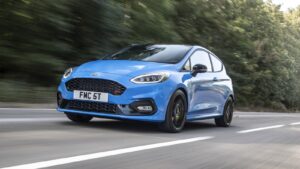
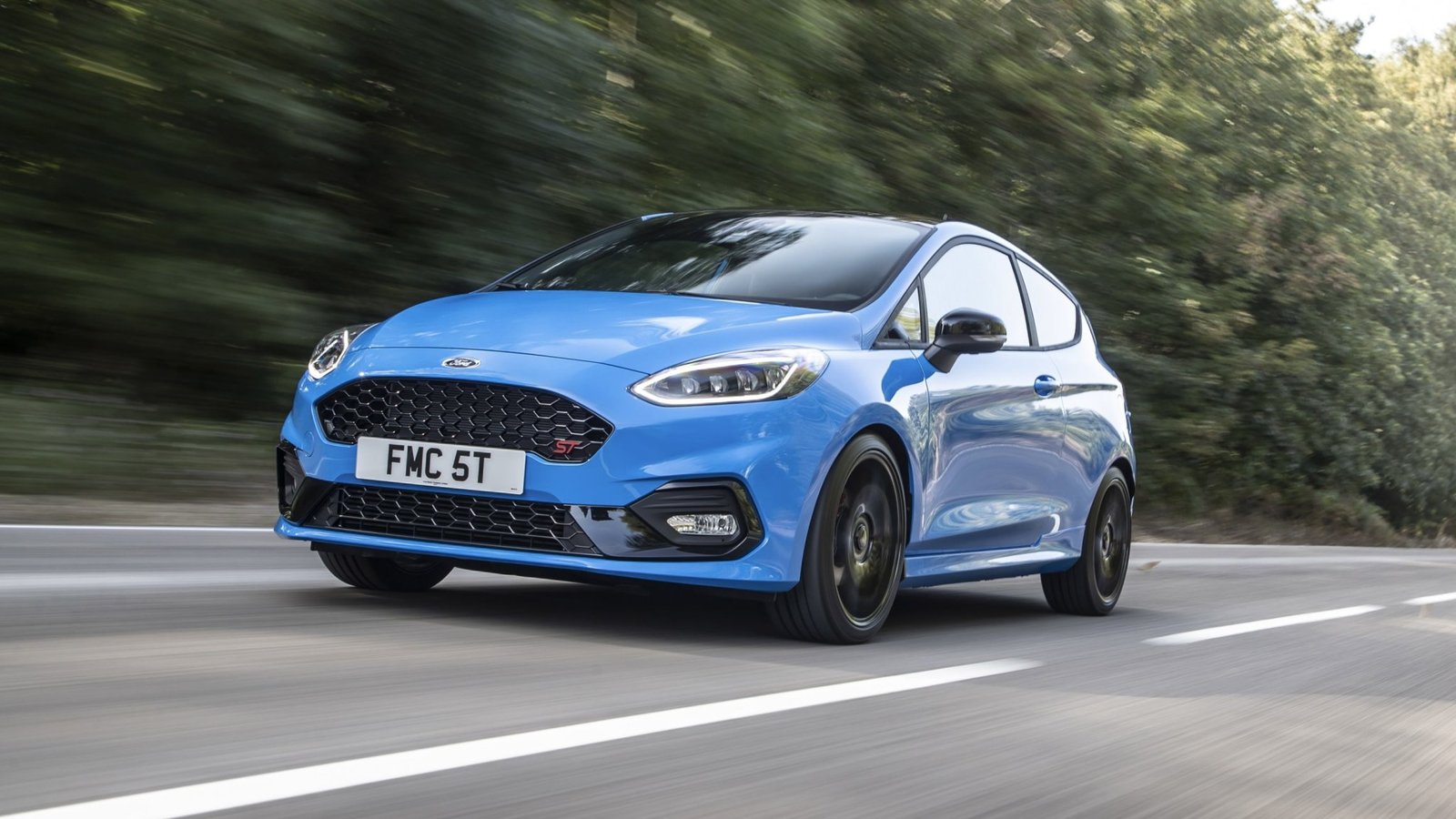
Ford Fiesta ST Mk8

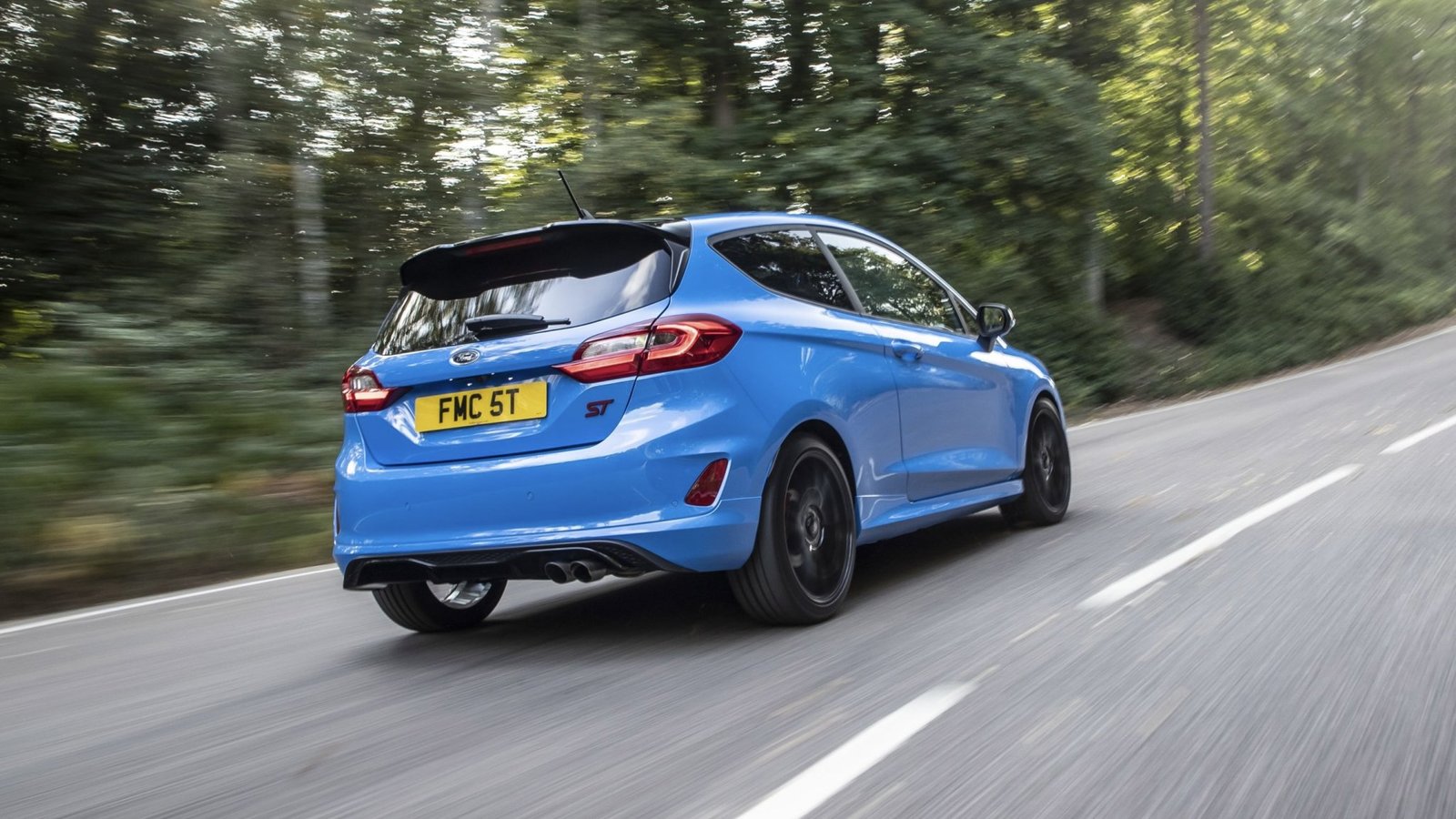
Ford Fiesta ST
Ford’s range of EcoBoost three-cylinder turbo engines were hailed as little marvels of engineering upon launch in 2012, even if the 1.0-litre version has since gained notoriety for its flakey ‘wet belt’ design.
Thankfully, the timing chain-equipped 1.5-litre turbo triple fitted to the final generation of Fiesta ST avoids that issue while also delivering an impressive 197bhp and a thrummy exhaust note, while still making 40-plus mpg eminently achievable. It was a memorable powertrain married to a brilliant chassis that helped make the last iteration of the Fiesta ST brilliant, and we’re very sad it’s gone – not just from the discontinued Fiesta, but from the Puma ST, where it’s been replaced with a much less satisfying mild hybrid 1.0-litre.
Volkswagen Up GTI
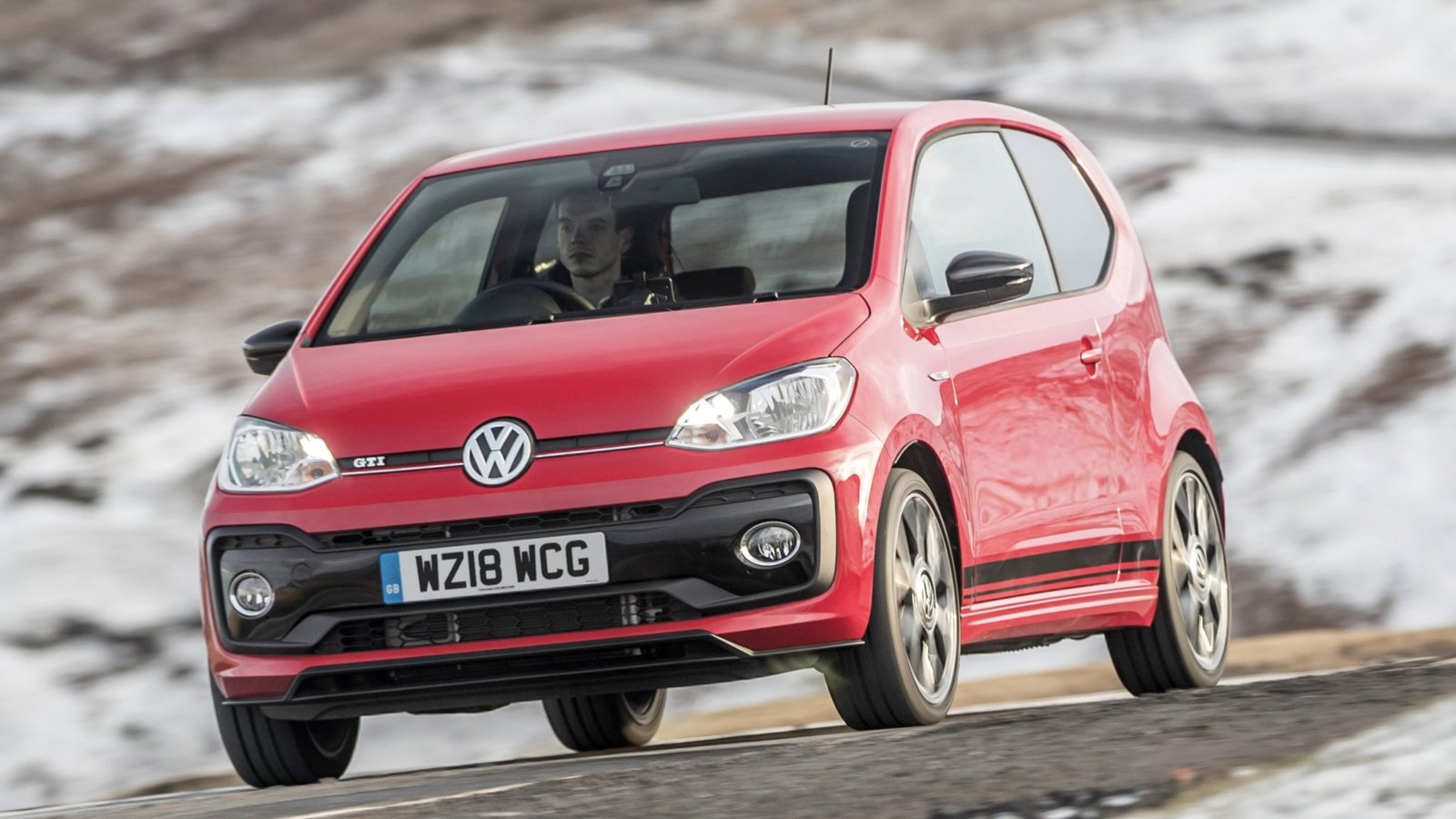
Volkswagen Up GTI
The regular Volkswagen Up and its Skoda Citigo and Seat Mii twins were some of the best small cars of recent years – tiny and economical, but refined and very cleverly packaged. All that was missing was a sporty version, but that changed with the arrival of the Up GTI in 2016.
With a 113bhp turbocharged version of the base car’s 1.0-litre triple and a tiny 995kg kerbweight, its power-to-weight ratio wasn’t all that far off that of the seminal Mk1 Golf GTI. Combined with plenty of GTI flourishes like tartan seats and a dimpled golf ball gearknob, it was a little joy of a hot hatch, the sort of car you could grab by the scruff of the neck and drive the wheels off without getting in too much trouble. It’s a real shame hot hatches like that can’t really exist anymore, because the Up GTI was a very solid case for the less-is-more philosophy. Sorry, though, VW – we’re still not going to spell with an exclamation mark.
Smart Roadster
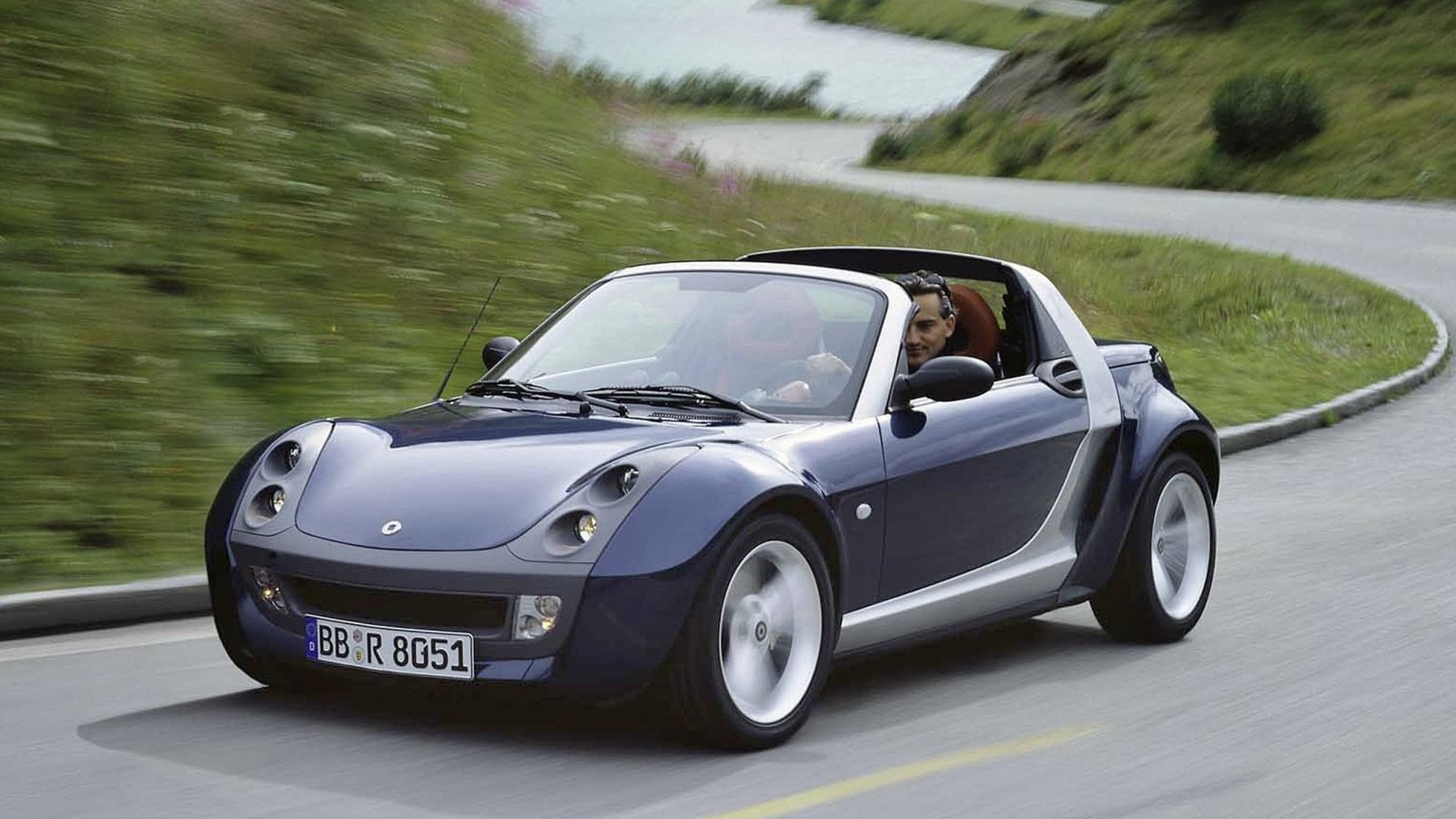
Smart Roadster
The arrival of the Smart Roadster in 2002 came as a bit of a surprise, given the Mercedes-owned brand had made its name with the tiny egg-shaped City Coupe. It was a welcome surprise, though, because the Roadster was the kind of sports car the world simply hasn’t had enough of – small, affordable and unapologetically focused on handling fun over big speed.
Its dinky 698cc turbo engine – with up to 99bhp in Brabus guise – sat amidships, and that balanced layout combined with a 790kg kerbweight led to a seriously amusing thing to thread through corners. Yes, it was let down by its sole gearbox option, a clunky paddleshift automated manual, but that shouldn’t detract from an otherwise fantastic little package. Father of the McLaren F1 Gordon Murray doesn’t give his endorsement to any old car, but he famously daily drove a Roadster for years.
Honda Beat
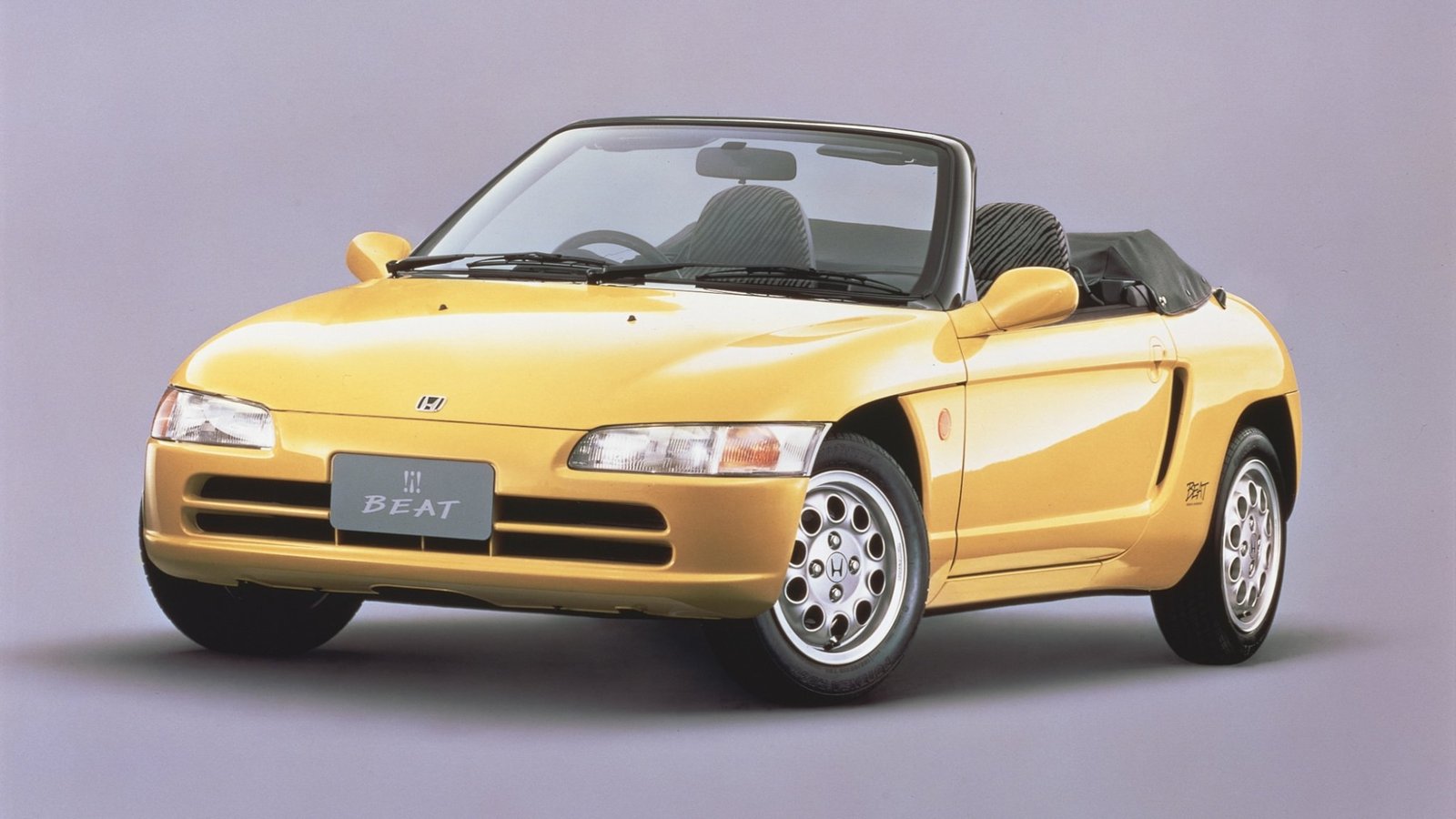
Honda Beat
There are a few three-pot sports cars built to Japan’s famously diminutive kei car regulations we could have picked here – Autozam AZ-1, Suzuki Cappuccino, Honda S660 – but our favourite of all might be the S660’s ’90s forebear, the Honda Beat.
Why the Beat specifically? Because it’s a Pininfarina-styled, mid-engined sports car with an engine that breathes through individual throttle bodies, a phrase that gets any dyed-in-the-wool car enthusiast a bit hot under the collar. Granted, kei car rules means that said engine is just 656cc in size and makes 63bhp – the maximum allowed under the regulations – but with just 760kg to shift around, and in a car with roughly similar dimensions to a size six shoe, that’s more than it sounds like. Also, ZEBRA PRINT SEATS.
Suzuki Alto Works

Suzuki Alto Works
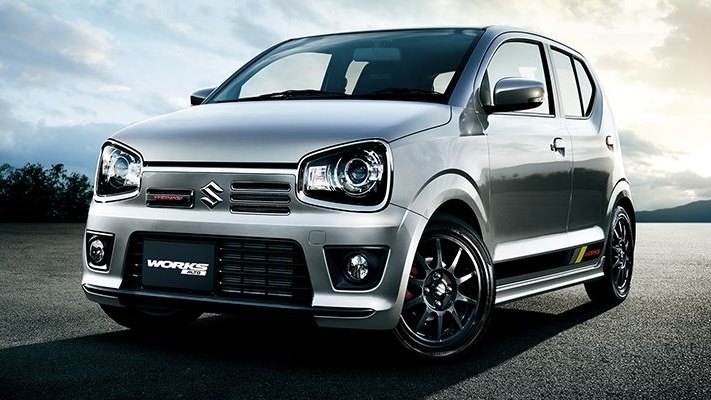
If a kei sports car doesn’t float your boat, how about a kei hot hatch? The Suzuki Alto Works has been providing just that on and off since the ’80s, mating downscaled hot hatch styling with turbo three-cylinder power.
The most recent version, launched in 2015, was still stuck at 63bhp thanks to kei car rules, but packed goodies like a close-ratio manual, KYB shocks, a reinforced body and even specially-developed Bridgestone Potenza tyres to fit the titchy 15-inch wheels. It could even be optioned with all-wheel drive for proper baby rally car vibes.
BMW i8
BMW i8 Roadster
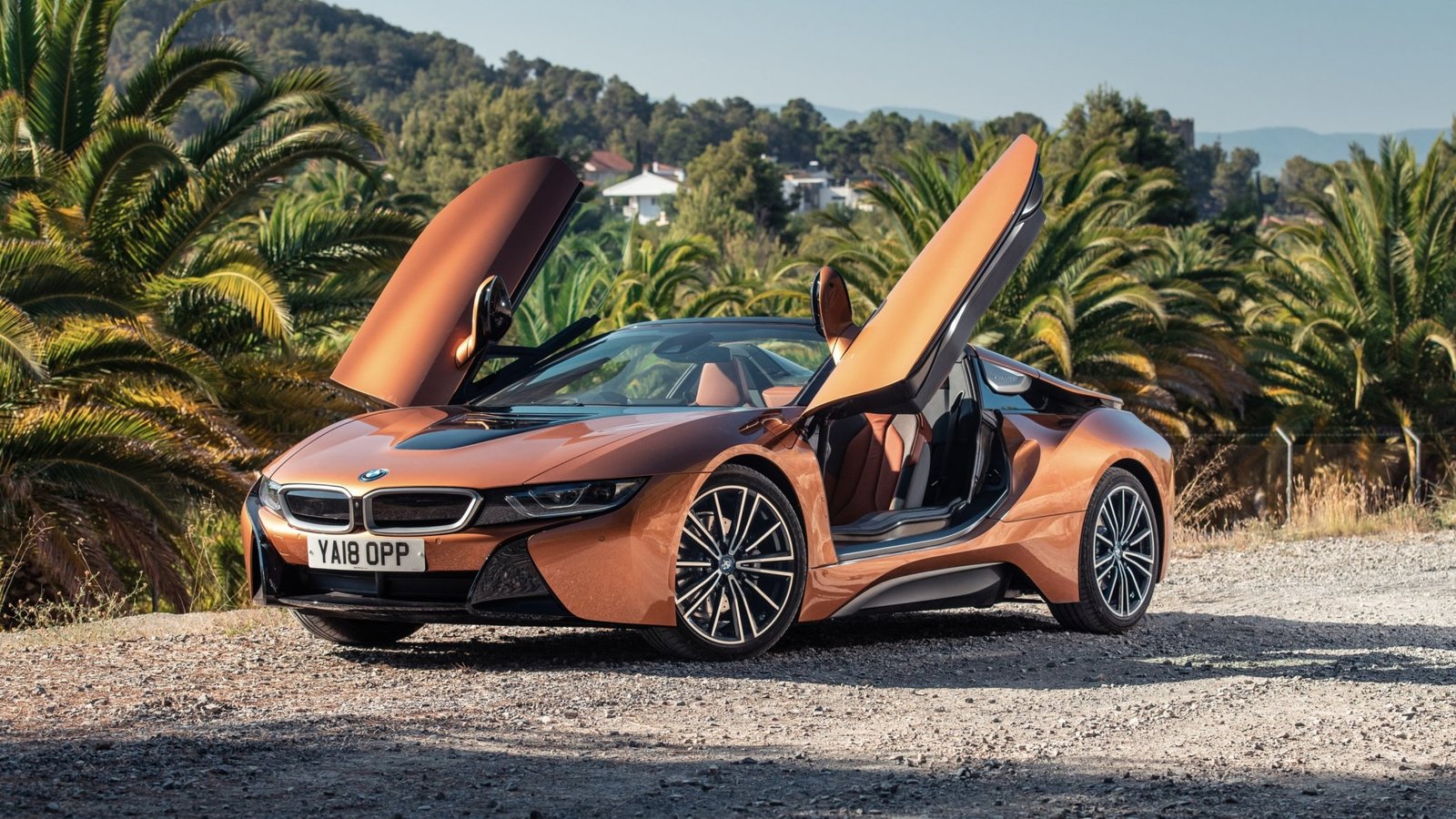
Still looking like something from the future 12 years after it went on sale, the BMW i8 was a sports car unlike anything we’d seen before. Its carbon chassis, wedgy shape and butterfly doors were pure supercar theatre, but nestling in the middle was something altogether more pedestrian – the 1.5-litre turbo three-pot from a Mini.
That, of course, wasn’t the whole story, because the i8 was a plug-in hybrid, with the system delivering a peak combined output of 369bhp by the end of the car’s life. That was enough to propel the i8 to 62mph in 4.4 seconds, enough to give a contemporary Porsche 911 Carrera a close run. A 911 driver, though, wouldn’t be getting a real-world economy figure of around 50mpg. With plenty of manufacturers now rowing back on plans to go all-electric by the end of the decade, we wouldn’t be at all surprised if the i8 ends up looking even more ahead of its time during the next few years.
Morgan Super 3
Morgan Super 3
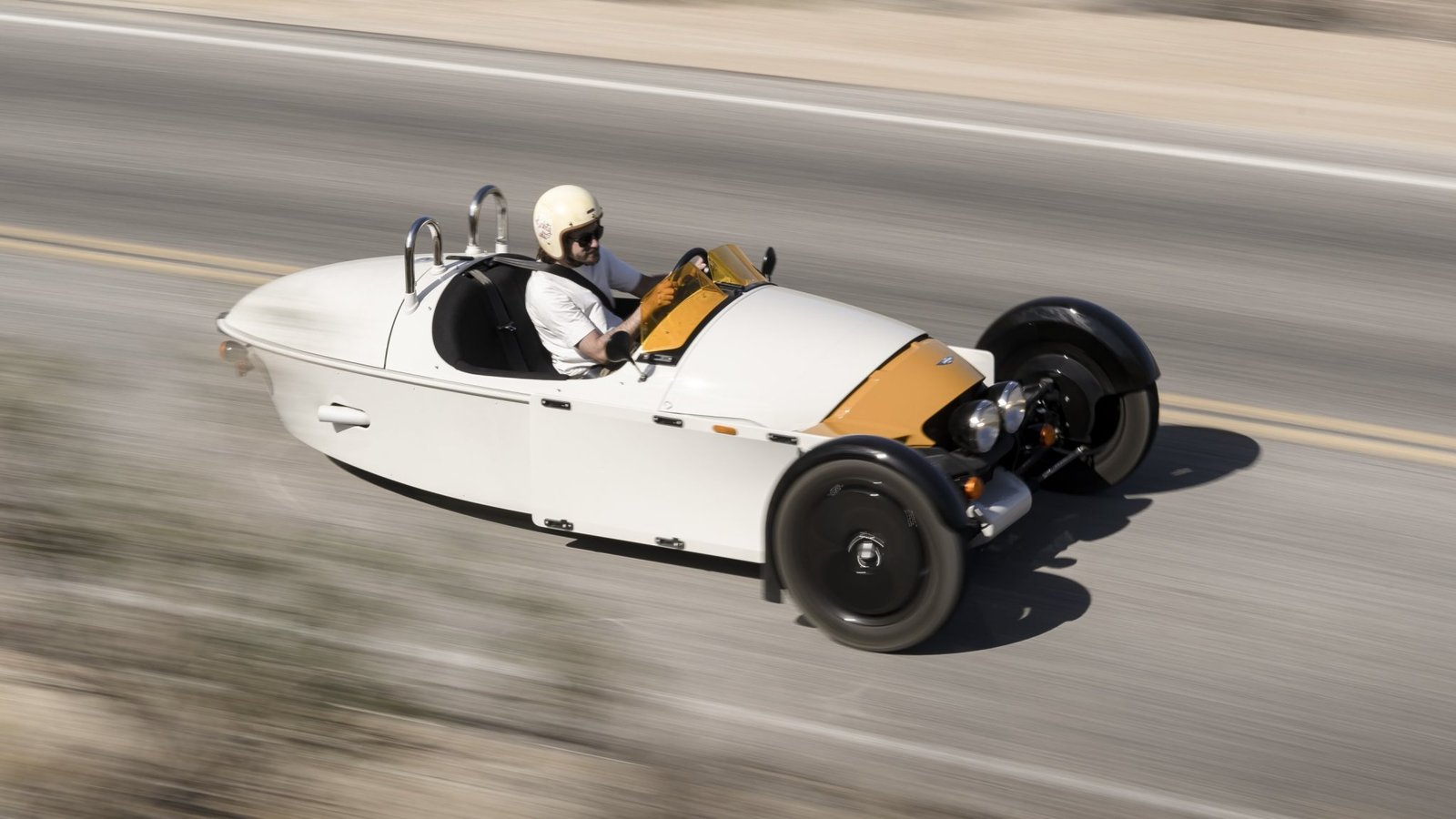
‘The Power of Three’ is a phrase you’ll hear pop up in mathematics, literature and various other places, but it’s perhaps summed up no better in the car world than by the Morgan Super 3. Three wheels, three cylinders – nice circularity there, isn’t there? (Or should that be triangularity?)
Said three-cylinder is a naturally aspirated version of the 1.5-litre Fiesta ST engine we were discussing earlier, and though it makes a modest 117bhp here, that’s more than enough to be sending entirely through a skinny single rear tyre. It’s definitely not the most focused, hardcore sports car, but few other new cars have quite as much ability to make driver, passenger and passersby alike break out in a huge grin. And that’s the power of three.
Read the full article here


