


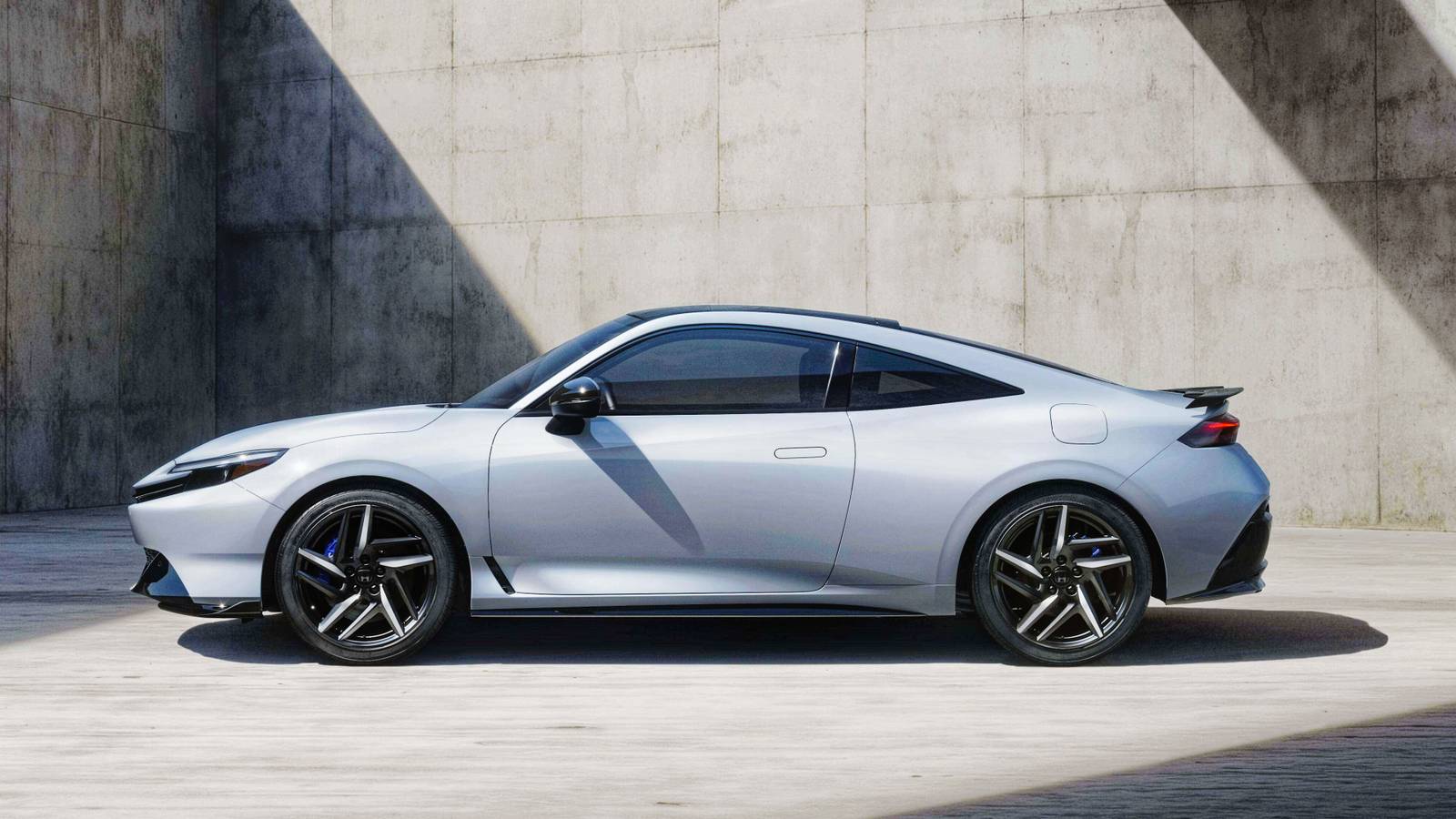
A 2025 Hyundai Ioniq 5 N will set you back $67,000. If you’re unfamiliar, that’s the sportier, pinned-to-the-tarmac version of the Ioniq 5 EV, and it’s a blast to drive. This side of a $100,000-plus Porsche Taycan or its twin, the extraordinary Audi e-Tron GT, The Ioniq 5 N shows the possibility of electrified sports cars. Well, it did—but now we have the $42,000 Honda Prelude, which runs on both gas and electrons. And at the very least, we’re super intrigued by what Honda is bringing—and you can read our initial driving impressions from Japan, here. Meanwhile, here’s both a recap of what the Prelude is all about, and a bit more detail on the pricing up- and downsides.
A Very Unique Powertrain
You have to remember that Honda is, first and foremost, an engineering company. They’re one of the world’s largest makers of motors, period, from lawnmowers and generators to anything that runs on two wheels. This makes the carmaking division think a little differently than a company that only manufactures automobiles. So it’s not too surprising that their recipes are always “off” from how other carmakers might approach the problem of propulsion. That’s why you get a very unconventional hybrid like the Prelude.
The Prelude Powertrain 101
The heart of the Prelude’s powertrain isn’t so different from what Honda’s already doing with its other hybrids. The Civic, Accord and CR-V hybrids all have something similar. In the front-wheel-drive Prelude, two electric motors mete out power in tandem with a 2.0-liter direct-injection four-cylinder. These combine for 200 horsepower. Which may not sound all that muscular, but the real trick is 232 foot-pounds of torque directly from idle. While Toyota’s GR86 gasoline engine produces a more robust, 228 horses, its 184 pound-feet trails the Prelude’s torque by a considerable margin and takes far longer to arrive.
We don’t yet have a 0-60 MPH time for the Prelude to see how this shakes out; and one demerit for the Honda could be it’s added 400 pounds of pork.
2026 Honda Prelude Power Output Vs. Toyota GR86
|
Horsepower |
Torque (LB-FT) |
Weight |
|
|
Toyota GR86 |
228 @ 7,000 RPM |
184 @ 3,700 RPM |
2,811 |
|
Honda Prelude |
200 @ 5,000 RPM |
2232 @ 0-2,000 RPM |
3,261 |
The Unusual Transmission
Honda has stressed that their newly reborn Prelude doesn’t have a CVT, which is pretty common in most hybrids, or a traditional torque-converter automatic, though its drivetrain is closer to the latter. Instead, the way it works is more akin to the more engaging “manumatics” from the Volkswagen Group, though a lot of what’s happening is even more complex. In conventional mode, the transmission up- and downshifts in a simulation of something like an eight-speed automatic, with that more precise feel, rather than the soupy, kinda-not-shifting vibe of a CVT. These are adaptive ratios that depend on grade, braking, throttle input and other variables.
Simulating Shifting
Then Honda’s S+ Shift paddle shifters add more manual control, allowing gear holding while cornering, enhancing lateral grip. Honda also includes rev-matched downshifts, though, again, that’s more engineering wizardry, because this includes using the traction motor in cooperation with the gas four-cylinder. And, further, you hear that downshift through simulated engine noise piped through the Prelude’s sound system. Honda isn’t alone in using this feedback loop, and since drivers respond to audible cues about a downshift—even if the mechanics aren’t identical to what you’re used to experiencing in a conventional manual-gearbox machine—as long as the simulations correspond to real-world physics, it kinda doesn’t matter if the signal is manufactured.
A GT Car Chassis
If you’ve driven a Civic Type R, you know its dual-axis strut front suspension is miraculous. Most front-wheel drive cars torque-steer like crazy. Translation: Get on the throttle and the driven, front wheels are fighting for purchase, and that means that you cannot simultaneously steer as precisely. The Civic Type R doesn’t do this, thanks to clever steering and suspension geometry that all but eliminates torque steer.
Honda’s gifted the new Prelude with that same setup, tuned specifically for this car, and its own, slightly more relaxed, adaptive suspension. Drivers can choose between Comfort, GT, Sport and Individual driving modes, and these also adjust steering assist level and engine response. Honda also includes powerful Brembo four-piston brakes.
Two-Tone Option—One Trim
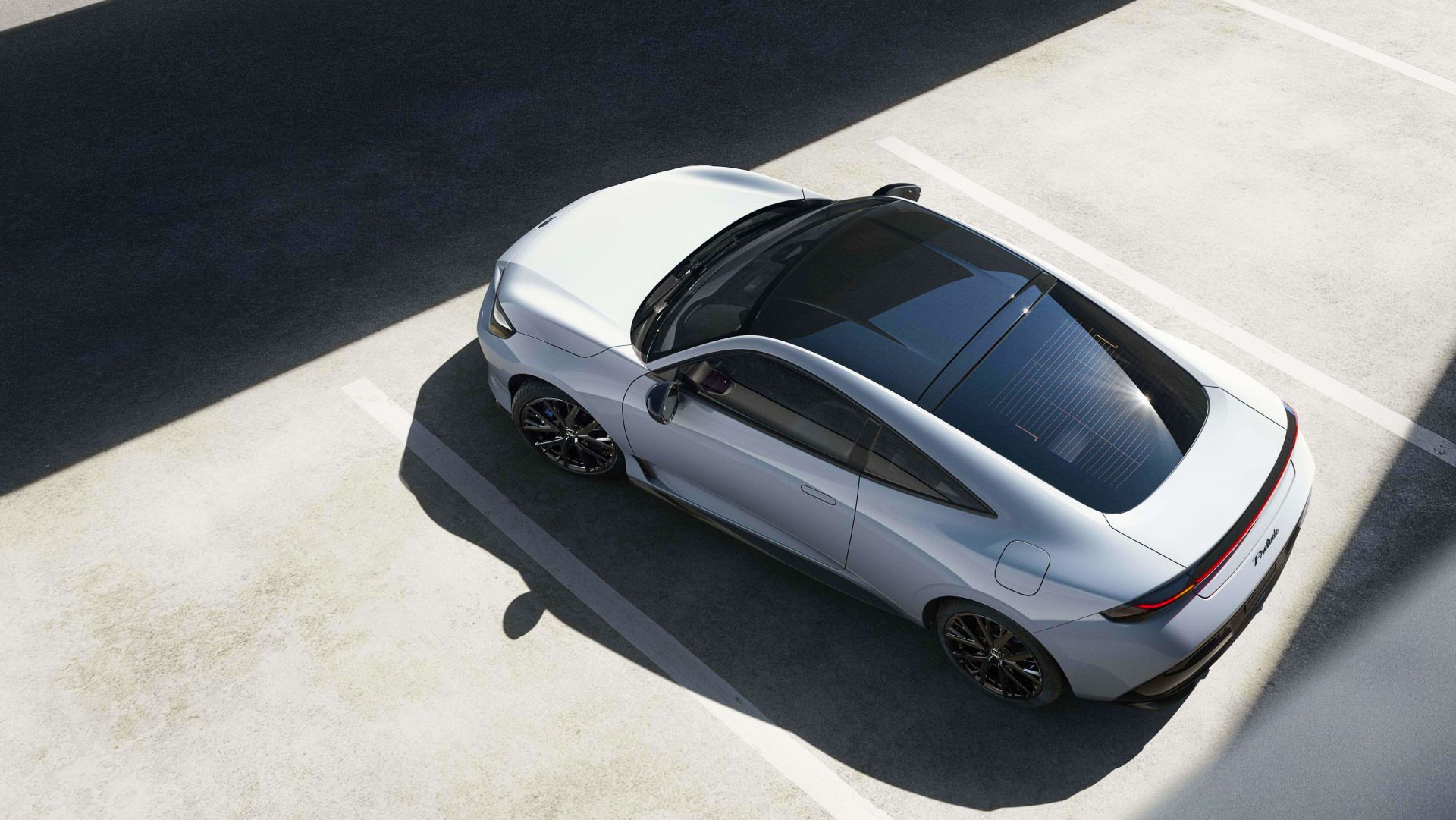
Honda’s wisely offering this car in a two-tone cool white (Winter Frost Pearl) with a black roof. The car looks a little sportier with a black roof, though there are other hues, including a gray, black, red and Honda’s signature Boost Blue Pearl. Since there’s only one grade of Prelude, that includes a pretty loaded setup. You get a leather-trimmed steering wheel with squared-off bottom, 19-inch black alloy wheels, sport pedals, 2+2 seating, and the rears split 60/40, to enhance cargo capacity. Honda also includes tech goodies, like Google Built-in (enabling Google mapping and voice control of some functions), wireless Apple CarPlay and Android Auto, and an eight-speaker Bose sound system.
TopSpeed’s Take
There are a few ways you can read this pricing. A Civic Type R will run you nearly $50,000. It also has 315 horsepower, and will surely outrun the Prelude. Oh, and it has four doors. Still, the Prelude’s rear-seat legroom of 32 inches isn’t terrible. You wouldn’t want to use this car to ferry basketball players to practice, but that’s decent space for carting a wee one to preschool or even a pre-teen to a soccer match. And whereas the Type R’s suspension tune and sonic signals are pretty brash for, oh, some spouses to abide, that’s not going to be as much of a challenge for Prelude owners. Plus, it does have usable hatch and rear-seat space. That’s a non-starter for a Mazda Miata purchase, or the GR86 intender. Which gives the Prelude a decent edge for sports-car wannabees who face some pragmatic challenges.
But what we really wonder is whether Honda’s unique S+ Shift proposition could somehow be adapted to full EVs? Because an electrified future is real. But what sports car fans want is the experience of manual engine braking and shifting. If anyone can get that right, we bet it’s Honda.
Read the full article here