


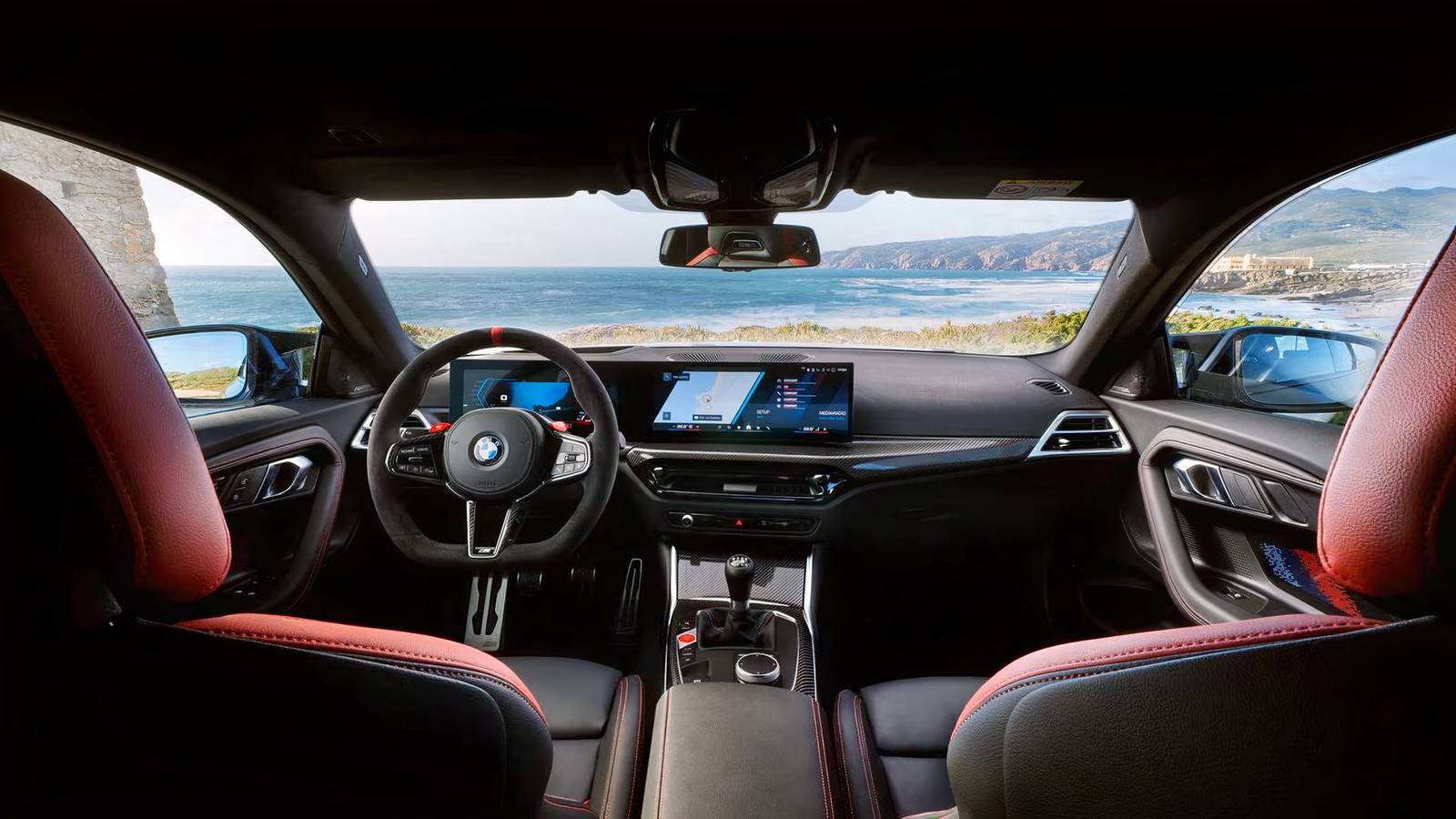
BMW has heard the complaints about touchscreens. It has read the studies, watched the backlash, and presumably noticed how often its own owners are poking at glossy panels like they’re trying to wake some sleeping tech. And its response, at least for now, doesn’t seem to involve buttons. An interesting choice. Instead, BMW has patented a way to lean even harder into touchscreens.
BMW Has A New Patent That No One Asked For
A newly uncovered BMW patent, spotted by CarBuzz, outlines an infotainment display with a slim sensing strip built into the base or side of the screen. It protrudes only a few millimeters, which in BMW terms is basically restraint. The idea is to make touchscreen interactions more accurate, more intuitive, and theoretically safer, without surrendering the clean, screen-first interior design the brand has already committed to.
The sensing strip works in tandem with the touchscreen itself. According to the patent, the system would interpret input from the strip and the display as a single, unified gesture rather than two separate contacts. In practice, that means fewer missed presses, fewer accidental menu jumps, and less of that familiar moment where you hit the wrong icon and have to pretend you meant to do that.
BMW also positions the strip as a physical reference point, a place to rest your finger while interacting with the screen. That matters more than it sounds. One of the biggest issues with touchscreens in moving vehicles isn’t just software design, it’s physics. Roads bump. Hands slip. A fixed tactile anchor gives drivers something to brace against, reducing the chance that a pothole turns a volume adjustment into a climate-control detour.
The patent allows the strip to be oriented horizontally or vertically, depending on the application, and even suggests small indentations that line up with virtual buttons on the screen. The concept echoes old-school muscle memory, where drivers learned control layouts by feel rather than sight. BMW is essentially trying to recreate that familiarity without actually adding buttons, which feels very on-brand.
Can Haptics Make Screens Safer? Maybe. Less Annoying? Doubtful.
Feedback is another key piece of the system. BMW’s filing references haptic, acoustic, and optical confirmation when an input is registered. This isn’t revolutionary on its own, but paired with a physical sensing surface, it becomes more meaningful. A vibration, sound, or visual cue lets drivers know the system has responded, eliminating the need to glance over and double-check. In theory, that reduces distraction, even if the interface remains screen-centric.
Notably, the patent also goes out of its way to emphasize aesthetics. The sensing strip is described as intentionally subtle, visible enough to be useful but small enough not to disrupt the cabin’s visual flow. BMW isn’t just solving a usability problem here; it’s protecting a design philosophy.
BMW Sticks With Form Over Function
All of this lands at an interesting moment for the industry. While BMW is refining touch-first interfaces, others are retreating. Genesis has publicly committed to keeping physical controls. Audi is rolling back touch-sensitive sliders in favor of mechanical rollers that work with gloves and wet hands. After years of screen maximalism, the pendulum is clearly swinging.
BMW, however, seems determined to bend that pendulum rather than follow it. This patent doesn’t mark a return to buttons. It’s an attempt to make touchscreens behave a little more like the controls they replaced. If this feels like BMW trying to get that old wheel a little rounder, it’s because it is. Whether that’s enough for drivers who just want a knob remains an open question.
Read the full article here