


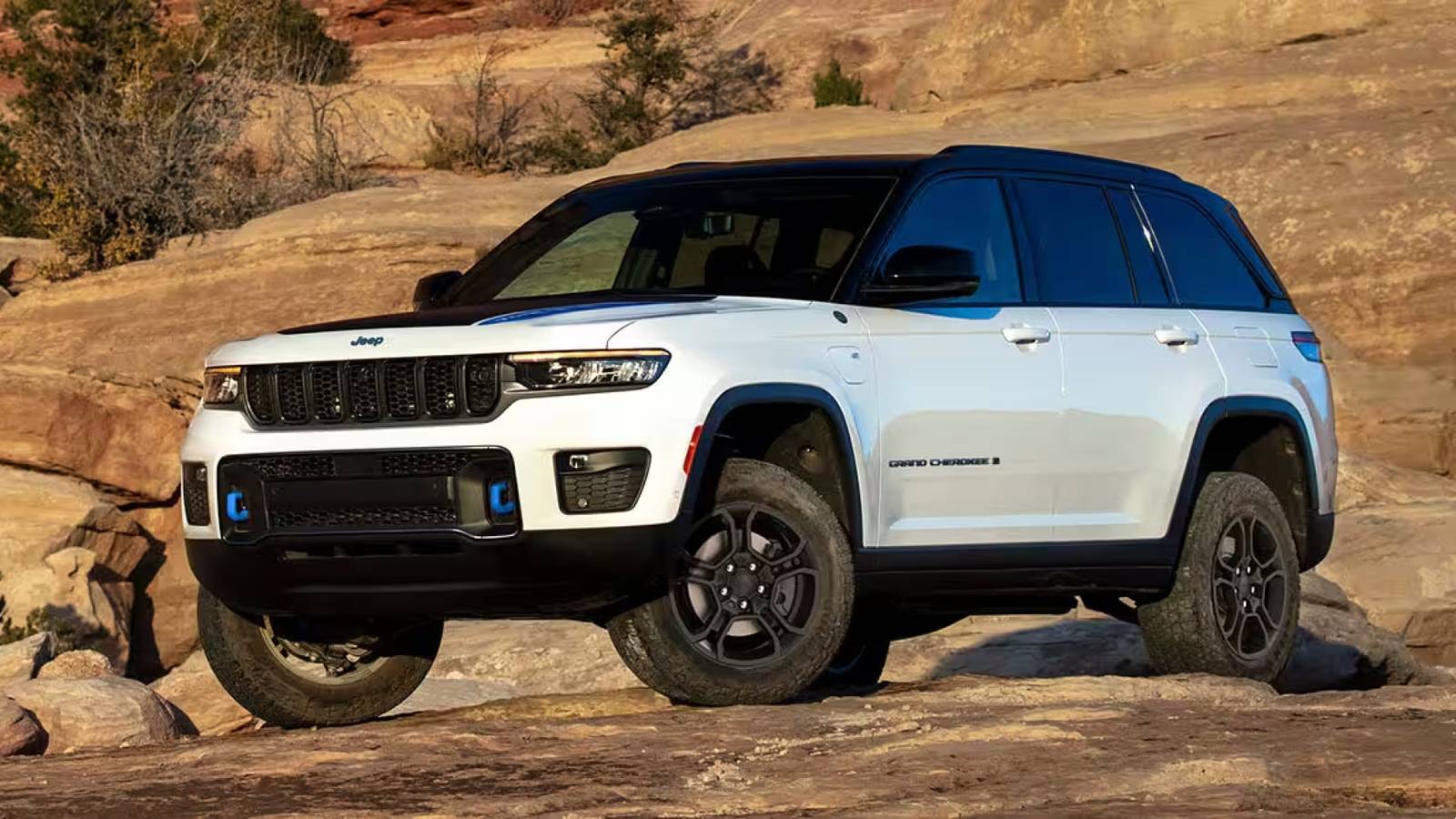
It’s been a terrible month for owners of the Jeep Wrangler 4xe and Grand Cherokee 4xe. These people thought they were buying a sophisticated plug-in hybrid that would make their lives easier, but the last few weeks have been anything but.
The first issue came in mid-October when Jeep issued an over-the-air (OTA) update that rendered their vehicles inoperable. In slang terms, they were bricked. Then came a recall over concerns their hybrid battery packs could spontaneously catch fire and instructions to leave the vehicles parked outside, away from structures, just to be safe. Today, a third recall has surfaced regarding engines that may have been contaminated with sand from the casting process. When will it end?
Why Are Jeep 4xe Models Being Recalled This Time?
The latest recall affects Jeep Grand Cherokee 4xe models, specifically those built between July 19, 2023, and March 3, 2025. All told, this includes some 36,840 vehicles. The problem is with the turbocharged 2.0-liter four-cylinder engines these SUVs use.
According to the recall notice, there could be sand left over from the casting process of the engine block still inside the engine. Not surprisingly, a contaminant like sand could lead to catastrophic engine failure, which at the very least could cause a sudden loss of power or, at worst, ignite a vehicle fire.
According to Stellantis, the parent company of Jeep, the only warning an owner may have is a knocking noise coming from the engine bay or a malfunction indicator lamp lighting up. As for the remedy, the automaker says it’s still under development. We can’t imagine there’s a fix that doesn’t involve replacing the engine entirely, as tearing down an engine to that extent would cost a lot in labor and may not result in certainty that the contaminants have been removed.
So far, Stellantis is aware of 36 fires and 50 reports of loss of power that are directly related to the issue of sand contamination. Unfortunately, it’s also aware of three injuries, though it hasn’t specified their type or severity.
TopSpeed’s Take
If you own a 4xe plug-in hybrid from Jeep, chances are you’re not driving it right now. Whether it was taken out by a rogue OTA or you’re worried either the battery pack or now the engine will explode, it’s probably the most expensive paperweight you own. This is such a sad circumstance for a pair of vehicles that have been incredibly popular. The Wrangler 4xe is the best-selling PHEV in the U.S., and the Grand Cherokee 4xe isn’t far behind. Even though Stellantis is retreating from electrification these days, these two SUVs were bright spots in the company’s original strategy.
Today, however, we fear their reputation is tarnished enough that sales will suffer. Stellantis, for its part, could also be considering canceling its 4xe models, considering the trouble they’ve caused. While it’s true that PHEVs are inherently more complex because they have two distinct propulsion methods that must work in concert, Jeep would be wrong to blame the mere concept of this powertrain for its woes.
Many automakers have been building PHEVs for decades now, with nothing like the trouble Jeep is experiencing, including Stellantis itself, which has had great success with the Chrysler Pacifica Hybrid. Perhaps it should look inward at its own production methods and quality controls and try to do better with the next generation of PHEVs it builds, which hopefully it still will.
Source: NHTSA
Read the full article here