





For decades, American automotive executives have complained that Japanese regulations and requirements have served as non-tariff barriers that have blocked U.S. automakers from selling vehicles in Japan.
Meanwhile, it’s been more than 40 years since Honda (1982) and Nissan (1983) began producing vehicles in Ohio and Tennessee, respectively, followed by Toyota in Kentucky in 1988.
When The Floodgates Opened
These initial plants opened the floodgates to a U.S. vehicle market that would soon become arguably the most diverse and the most competitive on the planet as Mercedes-Benz, BMW, Subaru, Mitsubishi, Hyundai, Kia, Volkswagen, and Volvo would come from overseas to set up manufacturing in the U.S. for the U.S.
The domestic industry was forever changed as General Motors, Ford, and what is now Stellantis suffered steep declines in market share to so many transplants.
Others Exporting From U.S.
BMW was quick to devote its manufacturing capacity in South Carolina in the 1990s to more than the domestic market: Before long, about two-thirds of BMW crossovers coming from Spartanburg went overseas, and Mercedes-Benz eventually matched that percentage with exports from its Tuscaloosa plant in Alabama.
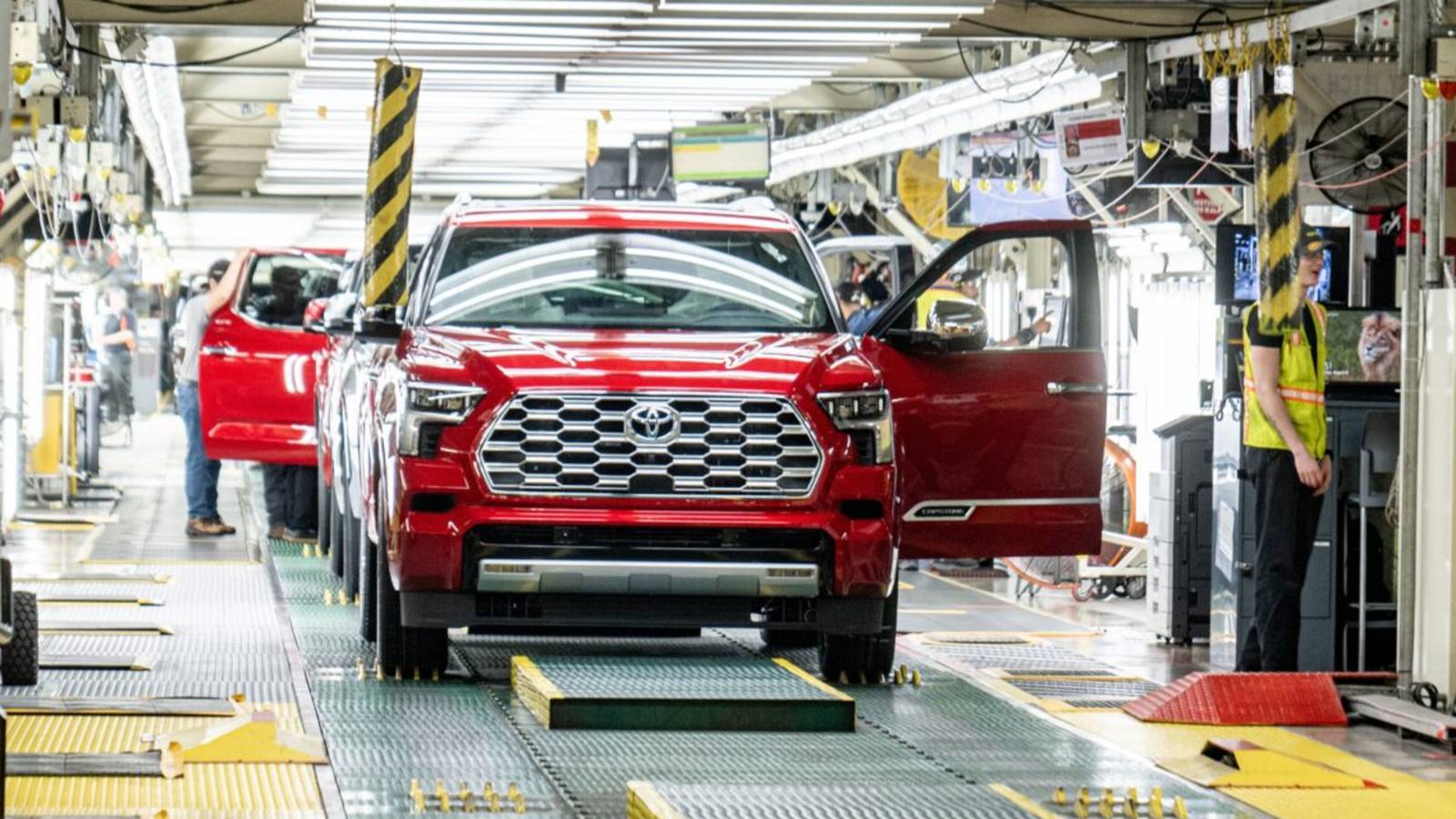
This model of using U.S. manufacturing capacity as an export base took a big step forward in December when Toyota announced that in 2026 it will export the Camry sedan, Highlander SUV, and Tundra pickup truck from their U.S. assembly plants back to Japan for domestic consumers.
More Questions Than Answers
We’ve reached out to Toyota with lots of questions about this plan, how it can be executed profitably, and how many U.S.-built vehicles the automaker hopes to sell in Japan. But it appears they’re not quite ready to speak in detail just yet, although the release clearly states this will happen starting this year.
What we have confirmed from Toyota spokesman Paul Hogard is that it will be a “gradual rollout in 2026.”
Meeting ‘Diverse Needs’
Hogard also says Toyota is targeting its offerings in the sedan, SUV, and pickup segments “in order to meet the diverse needs of Japanese customers. The decision was based on a comprehensive assessment, considering factors such as the Japanese market’s receptivity to popular American models.”
There is already some crossover between the U.S. and Japan in terms of product. For instance, Toyota produces the Corolla in both Blue Springs, Mississippi, and in Takaoka, Japan, so there’s no need to export that one from the U.S.
Tundra Is No Kei Car
While the Corolla compact sedan is an average-sized, versatile car that meets the urban needs of Japanese families, the same car is an entry-level offering in the U.S. that is too small for most shoppers, who lean toward midsize and even full-size crossovers, SUVs, and pickups.
The overall length of a Corolla is 183 inches. Meanwhile, popular Japanese “kei cars” (pictured above) designed for narrow streets make up more than a third of domestic sales and are strictly limited in overall length to 134 inches.
No, It’s 8 Feet Longer!
For context, the Tundra is at least 234 inches long, so that extra EIGHT FEET (and more than 20 inches of extra width) will make for interesting maneuvering in Nagoya. All three Toyota vehicles heading to Japanese shores are quite a bit larger than most domestic offerings: Camry measures 193.5 inches stem to stern, while the bigger Highlander stretches to 197.4 inches in XSE trim.
Is it possible that Toyota has identified nascent demand for much larger vehicles in its home market? And if so, wouldn’t Honda, Nissan, and Subaru be interested in doing the same? TopSpeed reached out to them for comment, but they declined or did not respond.
Toyota is arguably the only automaker with pockets deep enough to attempt such a strategy that is bound to lose money. As of late 2025, Toyota had more than $114 billion in cash on hand and equivalents, which is considerably more than all of its Japanese rivals — combined.
LHD Cars Are Legal In Japan
So we reached out to two insightful automotive analysts who track stuff like this every day. Sam Fiorani, vice president of global vehicle forecasting for AutoForecast Solutions LLC, says there is a niche group of buyers in Japan who like the idea of a full-size pickup.
But, “even with a dedicated push by Toyota, it will still be a sliver of the market. The cost of engineering proper right-hand-drive versions of these three will be in the hundreds of millions of dollars.”
Japan is a right-hand-drive market, but left-hand drivers are permitted and even viewed as a status symbol for foreign luxury cars. Might a Camry, Highlander, or Tundra be perceived the same way?
Toyota Tried This Before
Fiorani says this isn’t the first time Toyota has tried to be friendly to U.S. government initiatives. In the 1990s, he says Toyota sold RHD Chevrolet Cavaliers in Japan under the Toyota brand, but to less than spectacular results.
“This time, the high-volume efforts with the Camry, Highlander, and Tundra look good, but will, in the end, not make much of a dent in the market,” he predicts. “Camry-sized models are on the margins of that market, as are large crossovers like the Highlander.”
Meeting Regs In Japan
Stephanie Brinley, associate director of AutoIntelligence at S&P Global Mobility, says Japan is looking to allow vehicles meeting U.S. regulations to be sold in Japan without modification or being subject to further testing, based on the latest agreement between the two countries.
“If that element is resolved, Toyota may not need to make any adjustments to these vehicles to accommodate Japan-market safety regulations, or even to invest in additional testing with Japan authorities,” Brinley said in an email to TopSpeed.
Premium Pricing Possible
Toyota has not yet announced Japan-market pricing for the three U.S.-produced models. “Positioning may be that these are premium vehicles, and may partially address concerns about profitability,” Brinley says.
She says the depth of demand for U.S.-built Toyotas in Japan is “uncertain,” and that sales will be comparatively low in volume.
If Land Cruiser Is Popular In Japan…
Perhaps boosting prospects for the Highlander, Brinley suggests, is the booming popularity of the similarly sized Land Cruiser, whose home market legacy extends to the 1950s.
If a vehicle that size has an eager audience in Japan, couldn’t three U.S. models find similar success? That’s probably the main question top management is wrestling with now.
Source: Toyota
Read the full article here


