


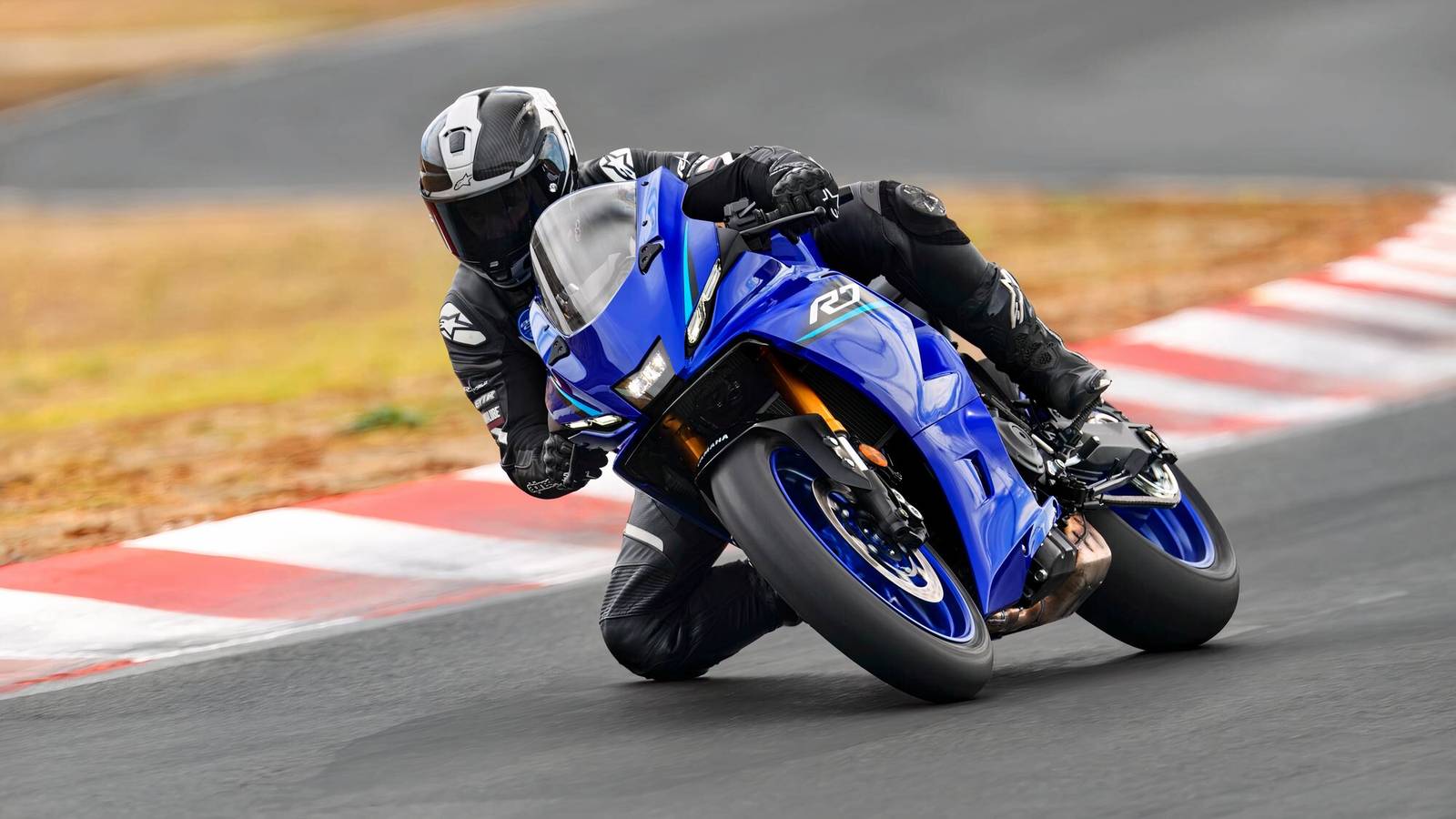
With the EICMA underway, new bikes are coming in left, right, and center in European countries. Meanwhile, most of these remain TBA for the US, and some, like the BMW F 450 GS, are not coming here even next year. Yamaha Motorsports, though, isn’t holding back. Mere hours after announcing the revamped YZF-R7, the sports bike has already been announced for North America. There’s a lot to like, and the price hasn’t gone up by much, either. Let’s dive in.
The New Yamaha R7 Boasts A Class-Leading Electronics Package For 2026
Since its inception a few years ago, the R7 has always been one of the more basic bikes in the segment. It didn’t even have traction control, let alone some other fancy bits. That’s primarily what Yamaha has focused on for MY26. From having no rider aids, the R7 now brings you a class-leading safety aid package.
A YZF-R1-derived six-axis IMU takes center stage, allowing electronics like traction control, slide control, wheelie control, and brake control. This is topped with launch control and power modes. You can also have full control over these via the customizable User ride mode. A two-way quickshifter sweetens the pot.
New 5-inch TFT Instrument Cluster Makes Life Easier
To enjoy these, there’s a new 5-inch TFT (identical to the YZF-R9), too. This comes loaded with app connectivity and four display modes, so you can enjoy all the information on your phone on the dash and vice versa. A lap timer is present as well. Yamaha also claims you can loop in the Y-Trac Rev application for logging sector times, lap data, and even pit messages.
An Updated Chassis And Swingarm Boosts The YZF-R7’s Track Abilities
While you can argue that such electronic aids don’t make much sense on a middleweight, you’ll be glad to know Yamaha has focused elsewhere, too. The steel chassis has improved pipe layout and wall thickness to boost the rigidity without increasing weight. Similar updates follow for the swingarm, and even the 41 mm USD forks have new lightweight aluminum pistons. Lastly, you’ll feel different on the bike as well, thanks to repositioned handlebars and a tweaked tank shape.
But The Engine Remains The Same
Unlike the chassis, the engine is the same as before. It’s a 689cc, parallel-twin mill, producing 72 horsepower and 50 pound-feet via a six-speed transmission. Oh, and all those features don’t increase the weight by much (just 3 pounds), so you can expect the exact same performance here. As a refresher, the R7 can manage a top speed of about 140 miles per hour.
The New Yamaha R7 Starts From $9,399
With all the upgrades, Yamaha has somehow managed to limit the bump in MSRP. The new YZF-R7 starts from $9,399, which is just $200 more than the outgoing model. All three standard colors–Team Yamaha Blue, Raven, Breaker Cyan–cost the same, while the limited edition 70th Anniversary Edition will cost you $300 more. At this price, the R7 undercuts the Suzuki GSX-8R and Honda CBR650R, but remains pricier than the Triumph Daytona 660, CFMoto 675SS, and Kawasaki Ninja 650.
2026 Yamaha R7 Specifications
|
Engine |
689cc, parallel-twin |
|
Power |
72 HP |
|
Torque |
50 LB-FT |
|
Transmission |
Six-speed |
|
Chassis |
Tubular steel |
|
Front suspension |
41 mm USD forks (adjustable) |
|
Rear suspension |
Monoshock (adjustable) |
|
Wheels |
17/17-inch alloys |
|
Weight |
417 pounds |
|
Seat height |
32.7 inches |
|
Fuel capacity |
3.7 gallons |
Read the full article here