






For a company that you mostly associate with big yellow diggers that you don’t want to get stuck behind on a nice road, JCB has a surprising track record with speed. The construction equipment giant holds the land speed record for tractors (135mph), backhoe loaders (73mph) and the outright record for diesel-powered vehicles, set in 2006 at 350mph with a specially-designed twin-engined streamliner called the Dieselmax.
20 years on from that, it’s got another record in its sights. You see, JCB reckons the next big thing in alternative fuel technology for the construction industry is hydrogen – specifically, hydrogen combustion, rather than fuel cell-powered electric vehicles. This tech uses gaseous hydrogen fuel to power what are otherwise largely traditional internal combustion engines. At the point of fuelling, at least, no carbon dioxide goes in, and therefore none comes out.
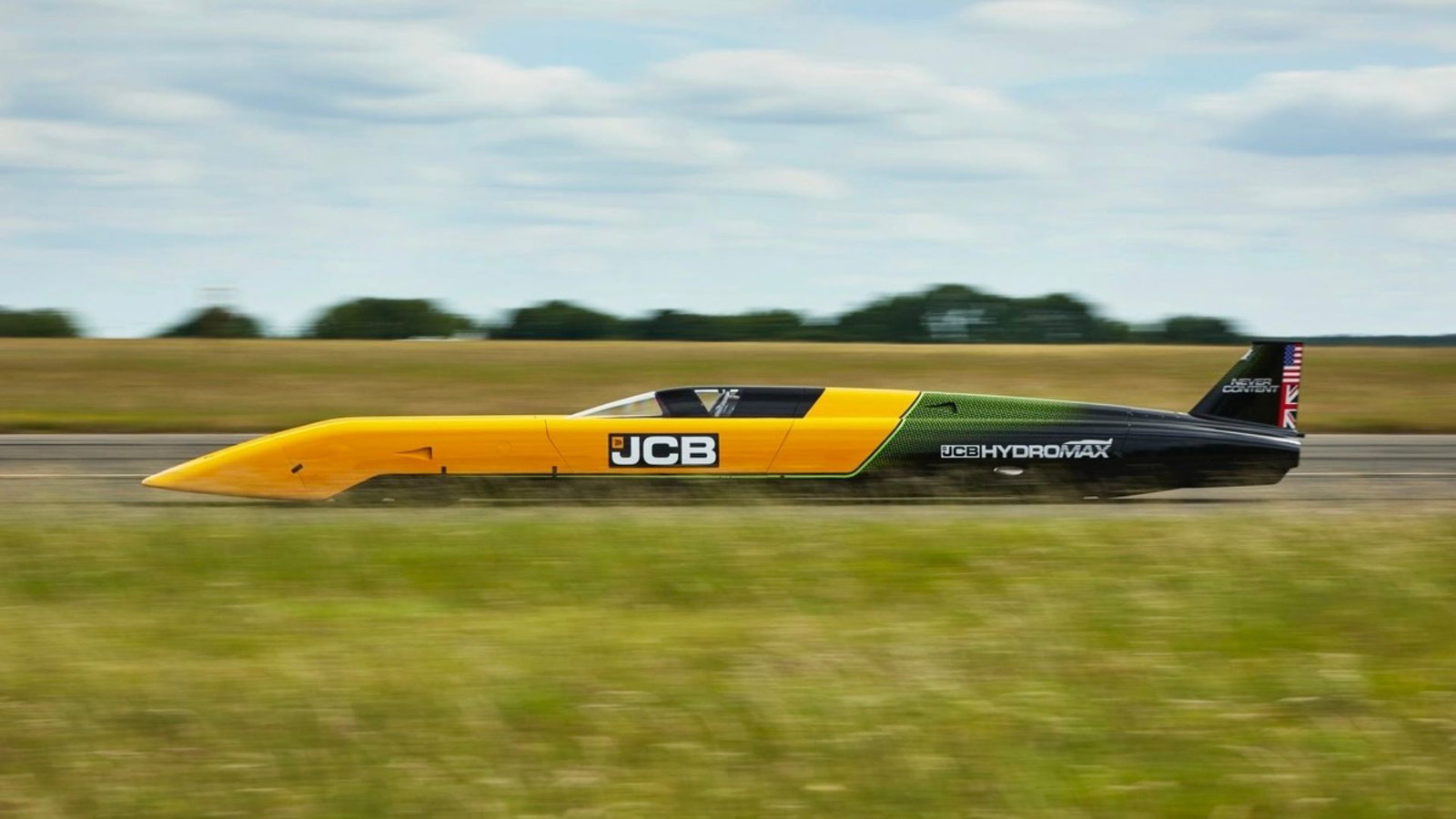
As proof of concept, then, JCB is going after the hydrogen speed land record with a new car, the Hydromax.
JCB Hydromax – front
Currently, that stands at 187mph, a benchmark set back in 2004 by BMW’s funky V12-powered H2R streamliner. That should be well within reach of the Hydromax, but JCB wants to move those goalposts a lot further, aiming to at the very least best the Dieselmax’s 350mph record.
JCB already has a hydrogen combustion powered machine out with customers. It’s a version of the 3CX, a model name you won’t know but a shape you’ll definitely recognise because it’s the iconic backhoe digger you picture whenever you think of a JCB. The engine in that, derived from one JCB’s regular diesel engines, is a 4.8-litre turbocharged four-cylinder with 74bhp and 325lb ft of torque.
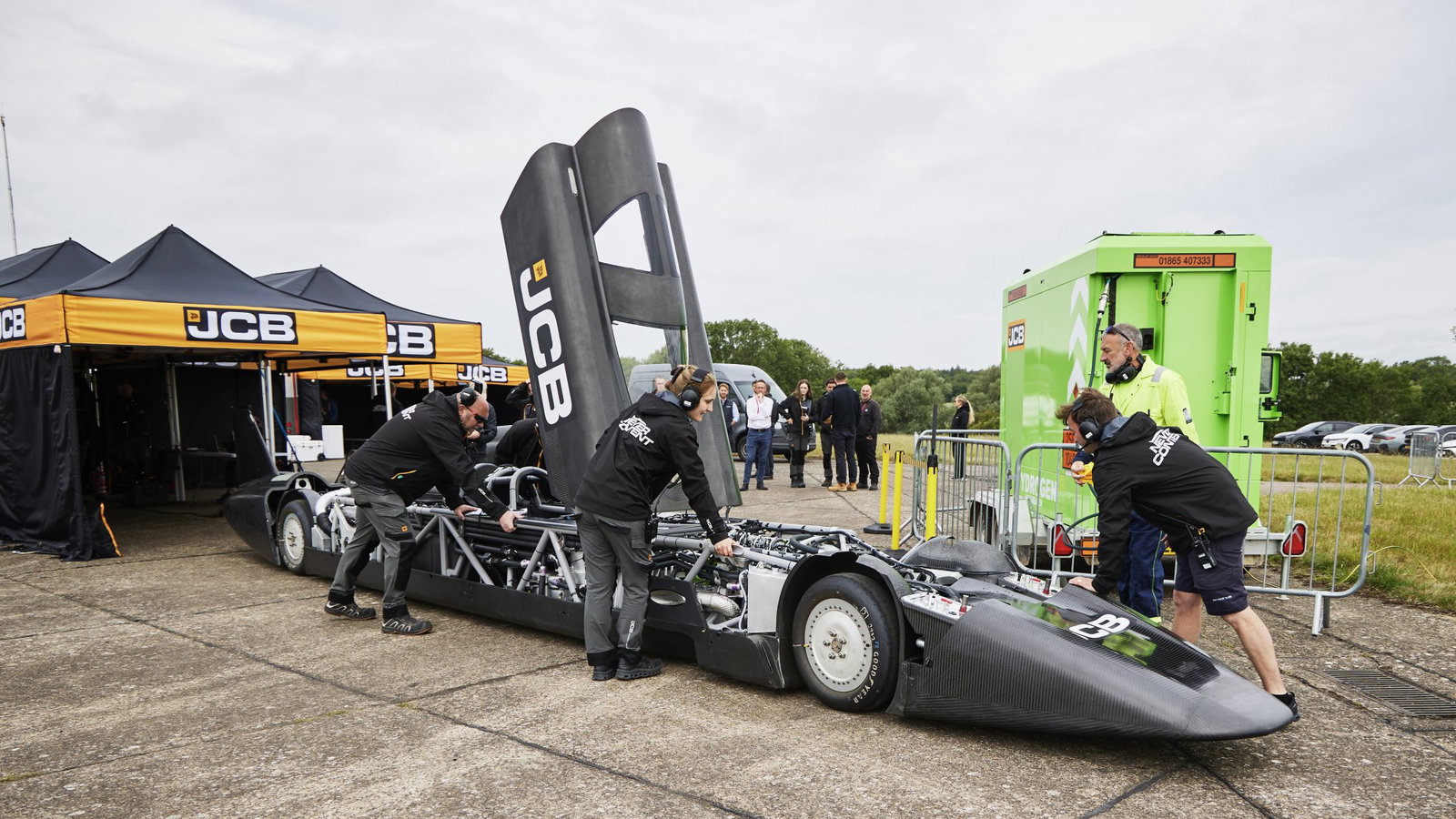
That engine serves as the basis for the one in the Hydromax, but clearly, it’s going to need more than the output of a Volkswagen Up to hit 350mph. So, although the crankshaft is the same, the engine’s been thoroughly re-engineered and now delivers 800bhp and an almighty 1,300lb ft of torque. It also weighs 95kg less than the standard hydrogen engine. Oh yeah, and the Hydromax has two of them.

JCB Hydromax – testing
One sits at the front of the car’s long, narrow body and one at the rear, each driving an axle through a six-speed gearbox, and both canted over to aid weight distribution. Each is cooled by a 250kg tank of ice that sends freshly chilled water coursing through the cooling system as it melts.
The hydrogen fuel, meanwhile, sits in a pair of tanks pressurised to 700bar – twice the pressure of the tank of the hydrogen 3CX digger, but the same as the hydrogen tanks that power the chargers you’d use to juice up one of the few hydrogen fuel cell road cars currently on the market.
So, 1,600bhp (not to mention 2,600lb ft of torque). That’s 100 more than the Dieselmax had, and the Hydromax is lighter and 10 per cent more slippery too, so in theory, that 350mph target should be well within reach.
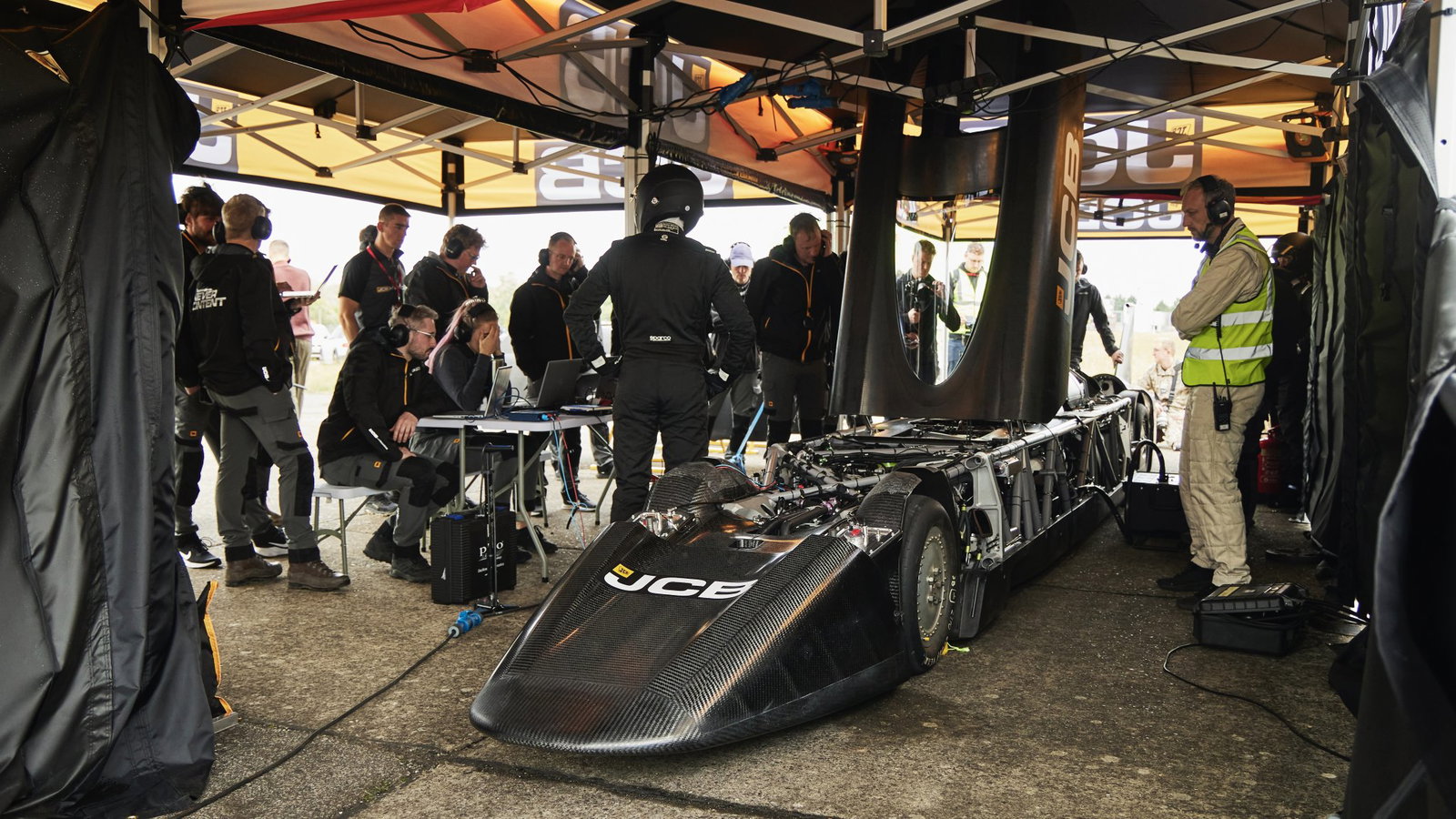
JCB Hydromax – testing
That doesn’t mean it’s job done, though. The timeframe JCB has given itself is incredibly tight. The team behind the Hydromax, cherry-picked from JCB itself as well as hugely respected UK motorsport and engineering outfits Prodrive, Ricardo and Xtrac, first assembled on 5 June 2025. Just a year later, nearly to the day, the car first turned a wheel at RAF Wittering, where initial testing is currently being carried out.
In July, it’ll be loaded onto a gigantic Antonov cargo plane and flown out to the famous Bonneville Salt Flats in Utah, USA. There, it’ll be tested some more, then take part in the flats’ annual Speed Week in early August before going for the FIA-certified record later that month. In other words, that’s about 14 months from conception to, hopefully, a successful 350mph-plus two-way average run.
That’s led to many long days and late nights for the team, led by Project Director Ryan Ballard, who has the added challenge of still doing his day job as JCB’s engineering director. Speaking to the team, though, it’s clear that this is a passion project entirely worth the strain.

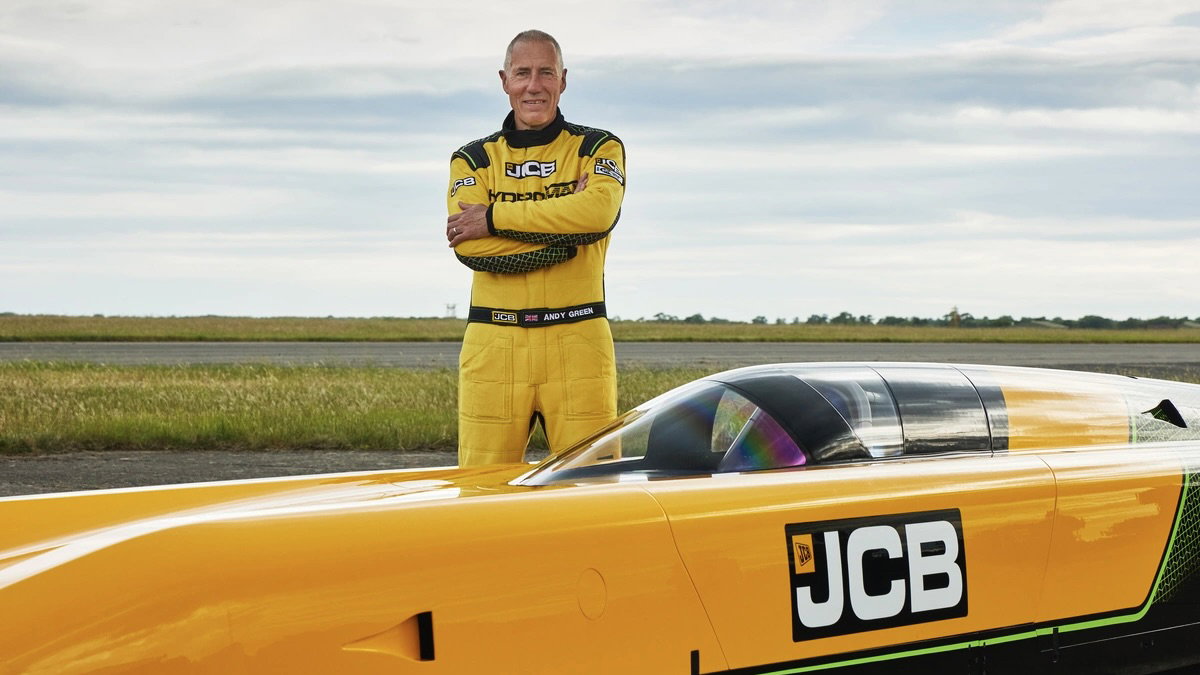
Wing Commander Andy Green with the JCB Hydromax
There’s one last piece of the puzzle – someone willing to strap themselves in and hurtle across the landscape at almost twice the speed a typical commercial airline leaves the tarmac. Also present at that first meeting last June, was Wing Commander Andy Green OBE, a man who, like Sir David Attenborough, commands the sort of respect to always be referred to by his formal title.
Green is a name eminently familiar in the land speed record world. Not only did he pilot the Dieselmax to its record in 2026, but in 1997, he took the jet-powered ThrustSSC to 763mph, an outright land speed record that still stands today, and makes Green the only human in history to break the sound barrier while travelling on land. In other words, he’s the man you call when it comes to land speed records. Initially on board as a consultant, there was never really any doubt that he’d be the one driving the Hydromax.
Around a week after those first test runs, we visited RAF Wittering, located in one of those bits of Britain where you’re never entirely sure which county you’re in, to get up close with the Hydromax as well as watching it being tested.
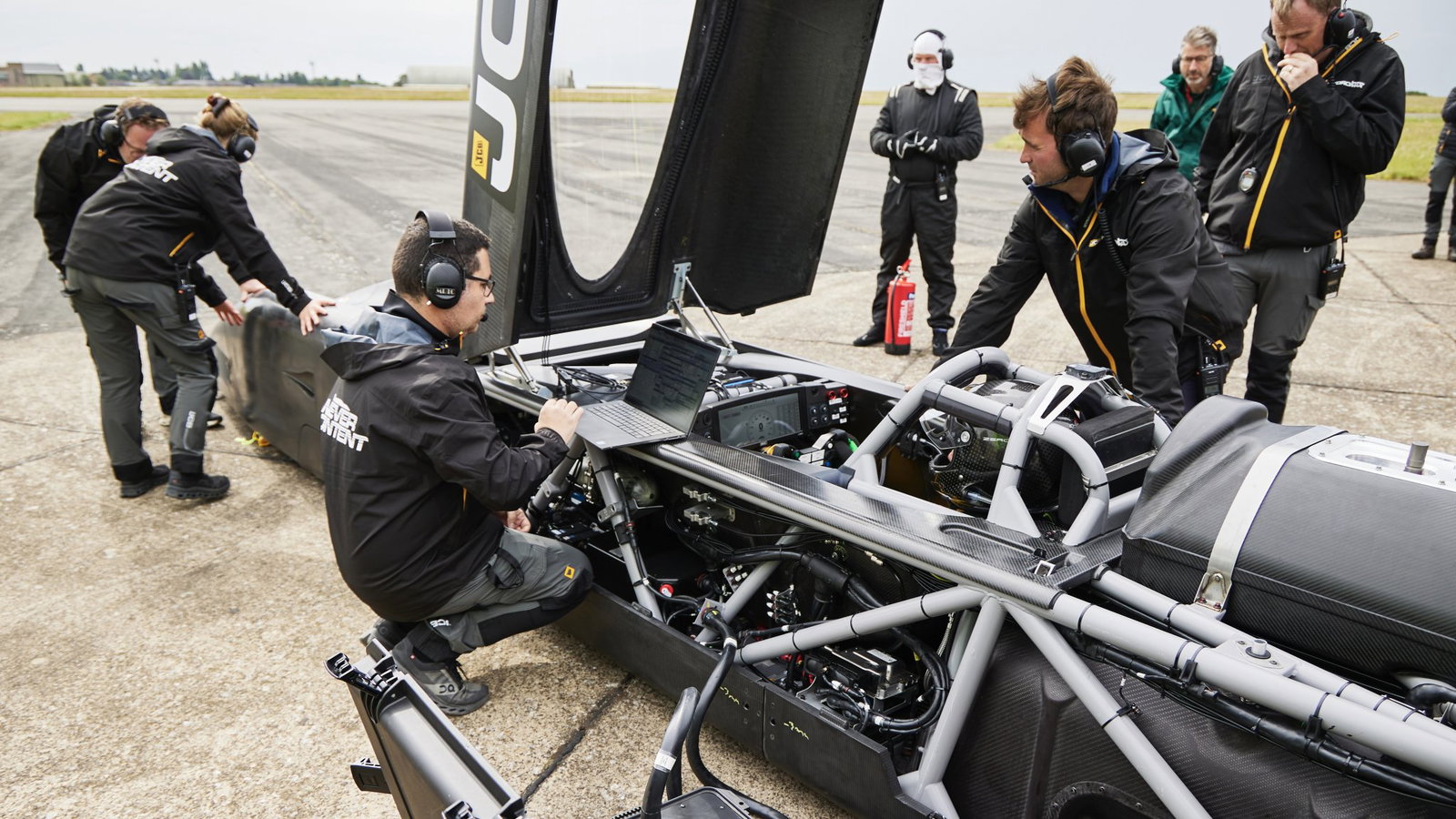
JCB Hydromax – testing
It’s only six weeks since the build started on the car, and right now, the priority is calibrating all the systems and ironing out the glitches that can and will crop up when something like this is in development. We head over to the spectator area, look down the taxiway to where the Hydromax sits as a tiny yellow speck in the shimmering heat haze, and wait. Then wait some more. And a bit more.
Eventually, we see it being wheeled back into the temporary pit area. Turns out the car’s systems have flagged a coolant pressurisation issue. Soon, though, the gremlin’s been squashed, and the car is once again lining up.
To get moving, the Hydromax gets a helping hand from a Land Rover Defender Octa with a giant metal pushbar mounted up front. This guides the car to around A-road speeds before Green accelerates and turns the big V8 Landie into a shrinking matt blue blob behind him.
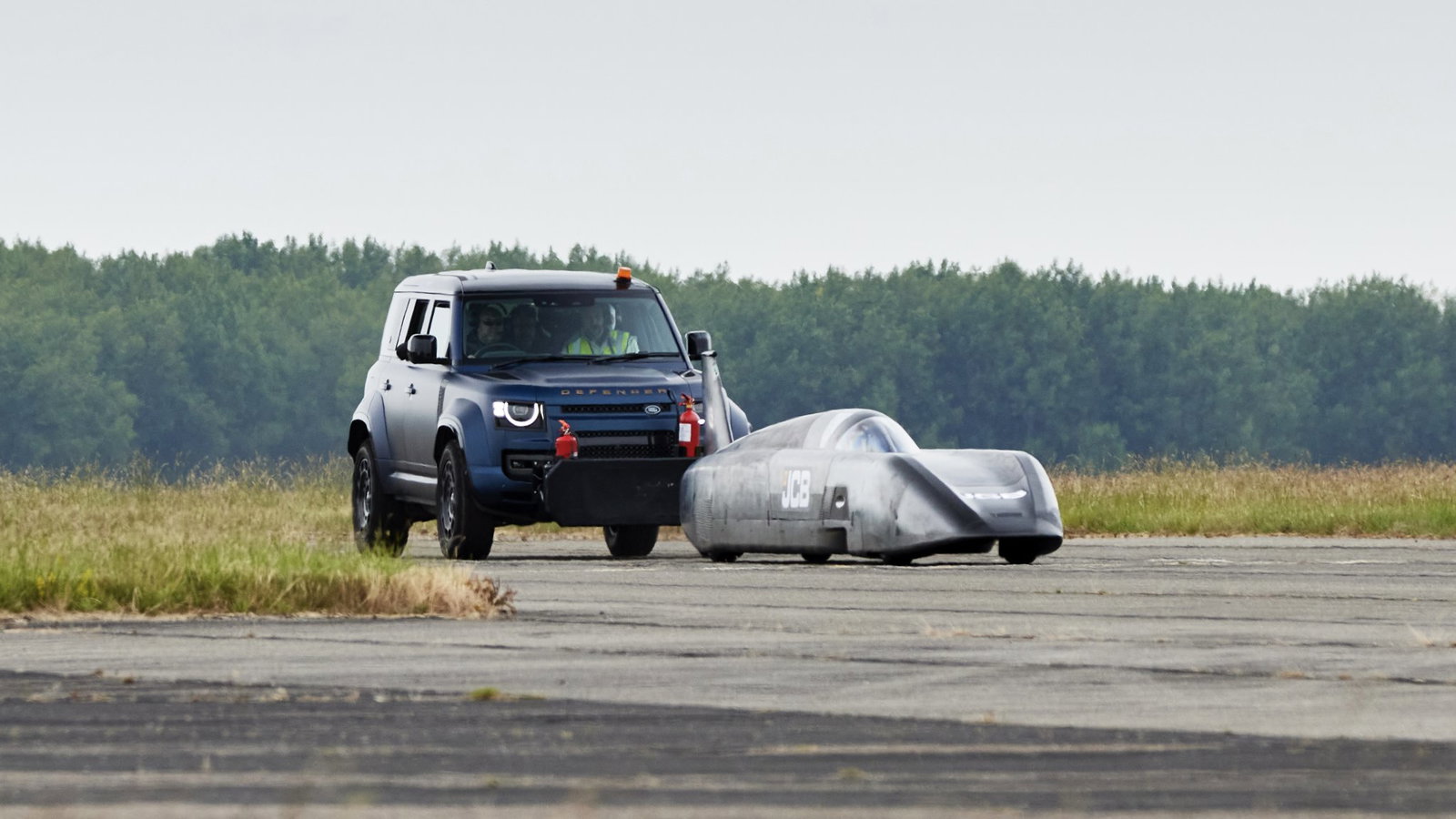
JCB Hydromax – testing
As it passes by, two things stand out. One, the Hydromax really is tiny, as something designed to be as light and aero-efficient as possible necessarily should be, and two, the noise it makes is bizarre. We had no idea what sound to expect from a pair of big displacement, race-prepped hydrogen-fuelled four-cylinders, but imagine an old Land Rover Discovery diesel that’s been straight-piped running flat out, and you get a rough idea.
Today, Green won’t get out of third gear, and the Hydromax’s engines have been limited to 3,900rpm. That’s partly because it’s not quite ready for full high-speed running yet, and partly because Wittering’s taxiway – running parallel to the main runway, which is still being used throughout the day by the RAF’s buzzy little Grob Tutor trainer planes – is only around 1.7 miles long. At Bonneville, the car will have up to nine miles to play with, depending on salt conditions.
Nevertheless, when Green hits the big orange brake markers at Wittering and the Hydromax’s twin parachutes billow out behind it to help slow it down, he’s travelling 177mph, the sort of speed most of us will only experience on land aboard a high-speed train or in the moments before an airliner lifts off. He later tells us that he thinks 200mph is the upper limit of what’s possible at Wittering.
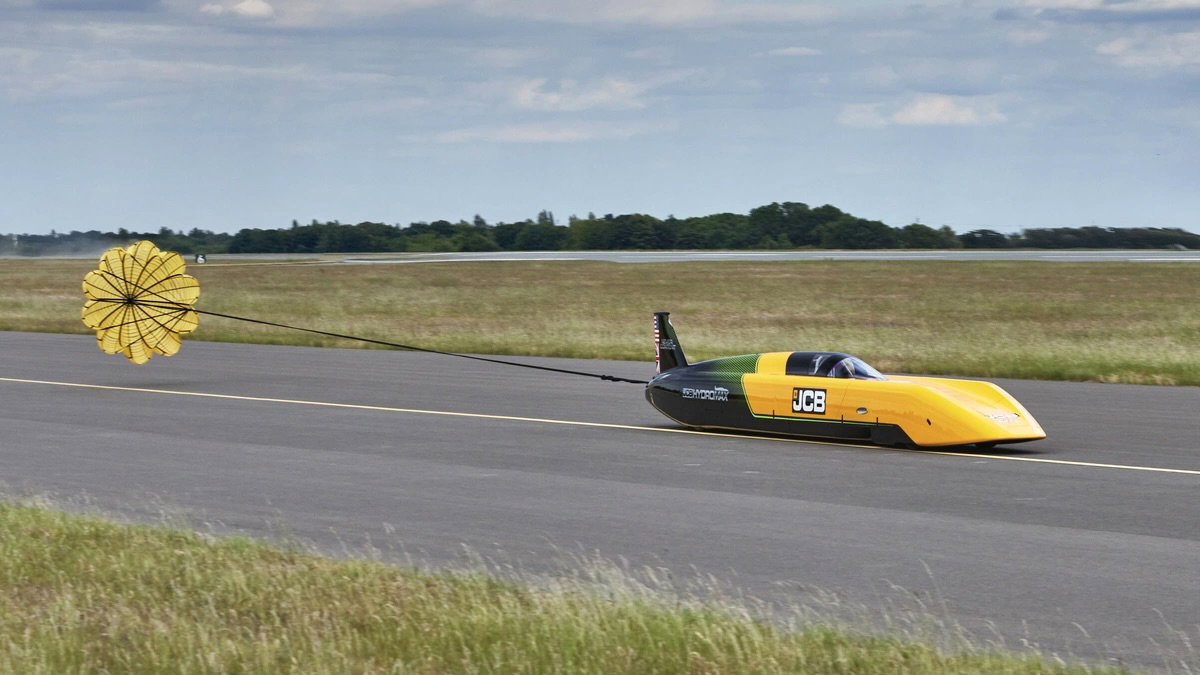
JCB Hydromax – testing
When the car starts pushing beyond that at Bonneville, then, it’ll be a leap into the unknown – not least for hydrogen combustion. While some companies in the automotive world are looking into it – Toyota has been racing a hydrogen-fuelled GR Yaris in Japan, and Alpine has its Alpenglow tech demonstrator – it’s a tech the car industry is largely cautious of.
JCB, though, sees a big future for it, especially in industries like combustion, agriculture and haulage, where EV powertrains don’t necessarily provide the endurance needed. There are still question marks around its viability: burning hydrogen may not create any carbon dioxide, but it does still produce nitrogen dioxide, which is fairly unpleasant stuff itself. Producing the fuel itself for now remains a fairly energy-intensive process too, and storing it safely is tricky.
Still, running a hydrogen engine on a construction site is cleaner than burning diesel all day, which is why JCB’s invested £100 million into hydrogen combustion engines as part of its drive to hit net zero carbon by 2050 – a drive that also includes fully electric machines, synthetic drop-in fuels and cleaner-burning diesels.
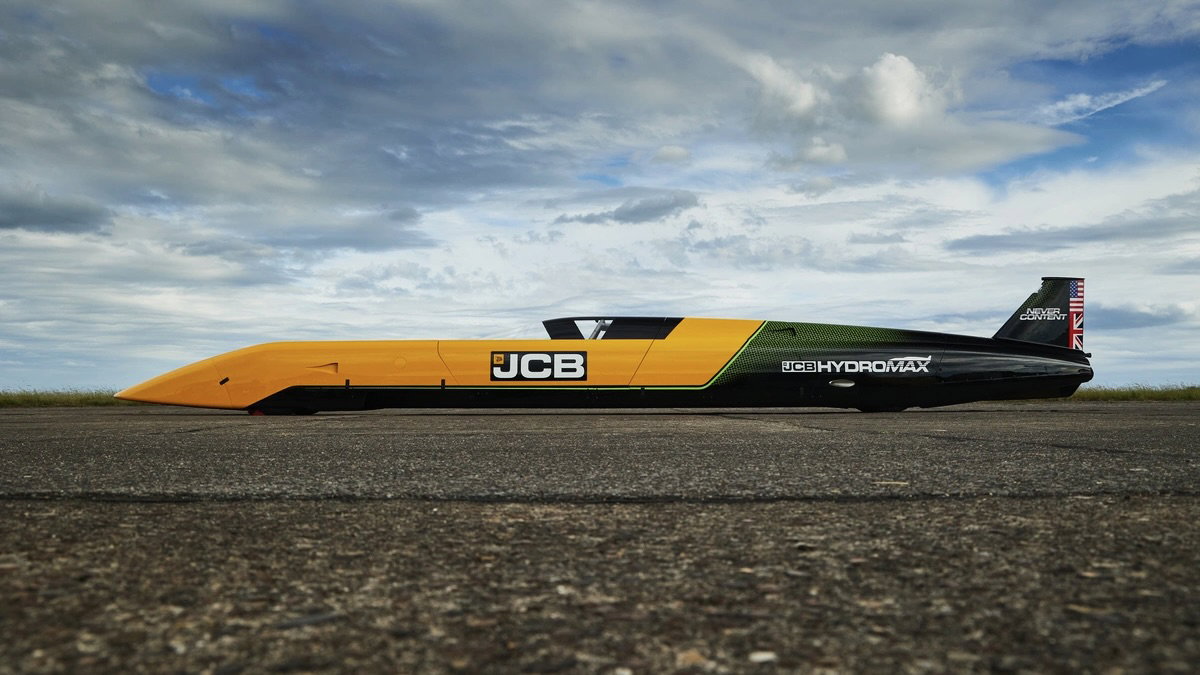
JCB Hydromax – side
There’s another heartening takeaway from the Hydromax project, though. As budgets have tightened and priorities have shifted, land speed record attempts have dropped off the agenda. It’s been 18 years since the Bloodhound project was announced as a new take on the outright record and despite that car testing successfully in 2019, it’s been three years since we last heard from the project’s new backers.
Even if it’ll be some way off approaching that outright record, though, the Hydromax project goes to show that, even in a changing industry, the human desire to go really flipping fast has never gone away.
Read the full article here


