


Volvo has been selling its Swedish-built cars in the U.S. since the summer of 1955, when the unibody-constructed PV444 “Little Volvo” rolled off a ship in Long Beach. Despite its longevity and solid brand recognition for a “boxy but good” reputation built on safety, practicality and Scandinavian design, Volvo has never challenged for leading market share in the U.S.
And that seems to be agreeable for a luxury brand that understands its niche placement below Audi, BMW, Mercedes-Benz and Lexus in terms of sales. But Volvo did outsell Genesis, Jaguar Land Rover, Porsche, Lincoln, Chrysler and Infiniti in 2024 in the U.S., with 130,493 deliveries.
That’s a mere 1,800 units behind the growing Acura brand. And if you told Volvo executives in Gothenburg in 1955 that Volvo would be only 29,000 vehicles shy of outselling Cadillac in year 2024, well, Nordic hilarity would ensue.
Plans To Go All-Electric
But Volvo now finds itself struggling to chart a path forward, much like every automaker navigating tariffs and a volatile U.S. vehicle market impacted by a president who definitely leans toward internal combustion, rather than battery power.
Volvo wants to go all-electric — and pledged to reach that goal by 2030. A few visits to Sweden will have you absorbing the cultural appreciation for the abundant natural resources and crystal clear skies and the importance of clean energy and conservative driving. There are no coal rollers in the land of ABBA. Most electricity in Sweden comes from hydro, nuclear, and wind.
2030 Pledge Changes Course
Today, Volvo’s path forward is taking it in two directions. In September 2024, while other automakers were also skinning back on all-electric pledges in the face of economic realities, Volvo Cars announced a new goal for 2030: Achieving 90 to 100 percent of global sales volume from electrified vehicles. That means “a mix of both fully electric and plug-in hybrid models – in essence, all cars with a cord,” the automaker said.
The remaining 10 percent would be a “limited number of mild hybrid models to be sold, if needed.”
Updates For EX90, EX30, EX40
If there’s any doubt how badly Volvo wants to go all-electric, take a look at the automaker’s press release from two months ago, detailing “its 2026 fully electric lineup.” The three-row EX90 SUV gets faster charging and more NVIDIA computing power; the EX30 Cross Country brings a rugged look; and the EX30 Single Motor arrives with a $40,245 sticker price. That’s with destination, but sorry, no federal tax credit.
They’re all competent, competitive vehicles in an evolving EV market, but they aren’t paying the bills like the internal-combustion models are.
EVs, Yes, But Where’s The ICE?
Through November, Volvo sold 4,970 EX30 compact electric crossovers and 3,299 EX90s, representing huge growth over the same period in 2024. So that explains why Volvo wants to remind shoppers about these EVs.
The ICE models, on the other hand, apparently sell themselves. The only brief mention of a gasoline-powered Volvo came in the last sentence of this press release, noting the Black Edition styling option available on the all-electric EX40 is already offered on the plug-in hybrid XC60 two-row crossover.
ICE Models Make The Money, EVs Burn It
Let’s not overlook the XC60. Its sales through November this year are up 7.2 percent to 36,069 units. Volvo has sold 2.7 million XC60s globally since its introduction in 2008, making it the brand’s all-time bestseller. It’s made more money than an entire fleet of battery-electric cars perhaps ever will.
The current second-generation XC60 has been in market since 2018, so it is certainly due for a complete makeover, perhaps late next year to coincide with the XC60 production launch at Volvo’s plant in Ridgeville, South Carolina.
Local Production For A New XC60?
Volvo announced U.S. production for the XC60 in July, as new tariffs from the Trump Administration were causing fits for automotive bean counters worldwide, but that decision involved much more than localizing a popular model.
Since the combustion-powered S60 sedan ended production a year ago, the Ridgeville plant has only two EVs on the assembly line: the EX90 and Polestar 3, from Volvo’s sister brand. EX90 production began in June 2024, followed a few months later by Polestar 3.
A Plant Seriously Under Capacity
The timing has not been kind. True, production has been ramping up, but Volvo’s sale of 3,299 EX90s through November plus (perhaps) a similar number of Polestar 3s from a plant that is tooled to produce 150,000 vehicles a year means the South Carolina plant is woefully, seriously under capacity. (Polestar hasn’t reported U.S. sales, but we know they sold 44,482 vehicles globally through September of this year, so it takes some guesswork to extract a Polestar 3 number for the U.S.)
Bottom line is, adding the gasoline-powered XC60 to the South Carolina plant puts Volvo on more stable financial ground.
Watch For News About U.S.-Built XC60
We reached out to Volvo for confirmation that an all-new XC60 will come to the U.S. plant next year, but they aren’t ready to say so. Does it make sense to tool up South Carolina to assemble a seven-year-old vehicle? No, it doesn’t. For the record, a refresh for model year 2026 brings a new user interface on a larger screen and updated styling.
When the product plans start breaking cover, expect a mild hybrid and a next-generation plug-in hybrid to be part of the U.S.-built XC60’s offerings.
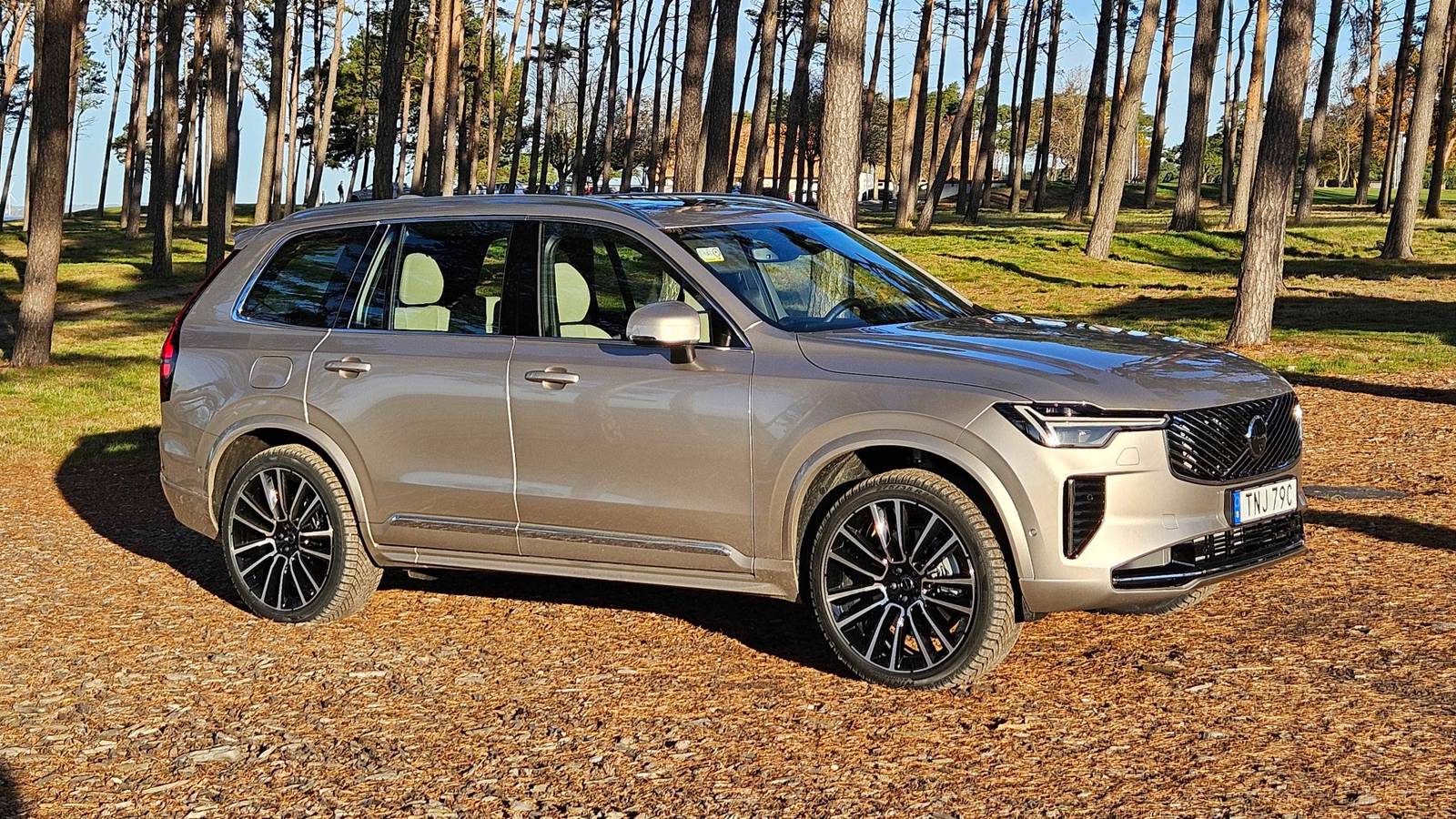
Filling out Volvo’s internal-combustion lineup is the all-new (for 2025) XC90 large SUV and the entry-level XC40, which have combined for more than 56,000 sales in the U.S. through November — despite 25% tariffs on these vehicles assembled in Europe.
How Long Can V60 Cross Country Stick Around?
These two models, plus the XC60, are making it possible for Volvo to continue pursuing an uphill EV strategy, which will also reveal the all-electric EX60 in January.
Besides the S60, several other gas-powered vehicles have departed from the U.S. lineup, including the S90 sedan and V90 Cross Country (only available while inventory lasts). That leaves the V60 Cross Country as the only non-SUV. It isn’t clear how long that will last, but Volvo sold nearly 4,000 of them through November in the U.S. The wagon lives! For now.
Source: Volvo
Read the full article here