


If you were to survey a group of car enthusiasts on which decade produced the greatest cars, the likelihood is that a big proportion of your answers would be ‘the 1990s’. This was an era when the industry was sitting in a happy middle ground between analogue and digital – there was just enough tech to make cars more usable and dependable than ever, but it hadn’t yet reached a stage where it was starting to dilute them and move the driver from the centre of the equation.
As a result, it’s a decade that spawned countless icons from around the world. European sports cars like the Ferrari F355 and Porsche 993 remain some of the very best of their lineages; Japan was firing out hit after hit with icons like the FD Mazda RX-7, Nissan Skyline GT-R and A80 Toyota Supra; and after a couple of mostly bleak decades for American performance, cars like the C4 Corvette ZR-1 and Dodge Viper were ushering in the modern muscle era.
But as with any era that produced so many legends, a few forgotten gems are bound to be lost in the sea of greatness, so today, we’re shining the spotlight on 10 of the coolest forgotten ’90s performance cars.
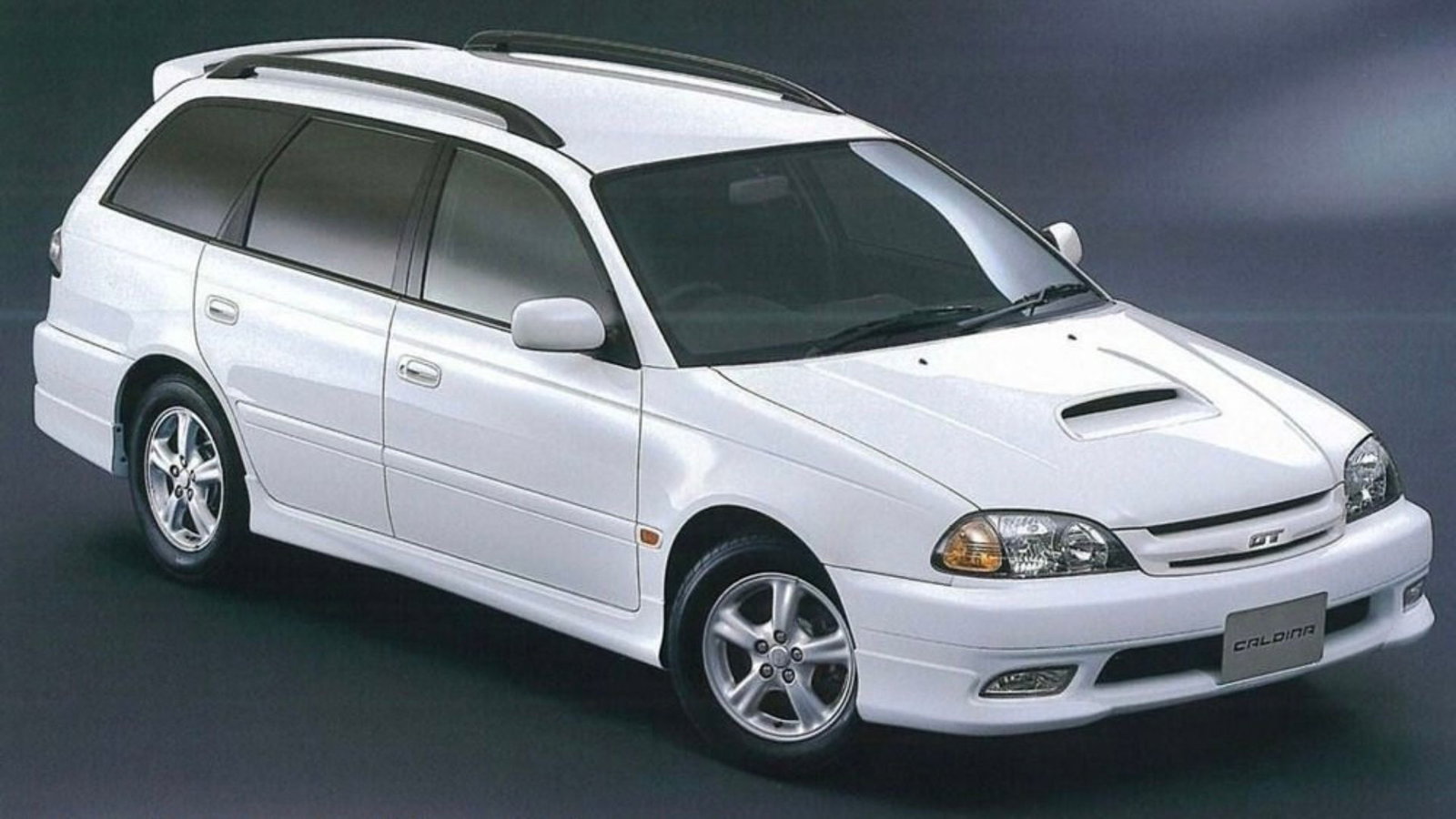
Renault Safrane Biturbo
Renault Safrane Biturbo
All but forgotten in Britain, the Renault Safrane was one of the French company’s final conventional attempts to compete with the German brands in the executive space. Going head to head with the likes of the 5 Series meant a fast version was pretty much a prerequisite, and it arrived in 1993 with the Safrane Biturbo.
To try and beat the German competitors at their own game, Renault actually called on two of the country’s tuning firms. Hartge, best known for its modified BMWs, developed a twin-turbo version of the Safrane’s range-topping 3.0-litre V6, producing 264bhp and hooked to standard all-wheel drive. Meanwhile, the chunky bodykit was the work of Opel specialist Irmscher.
Taking around 7.2 seconds to hit 62mph, the Safrane Biturbo wasn’t slow for its day, but it was some way behind a contemporary M5, and lacked the BMW’s prestige too. As a result, it wasn’t a success – only around 800 were sold, and it never made it to Britain at all.
Toyota Caldina GT-T
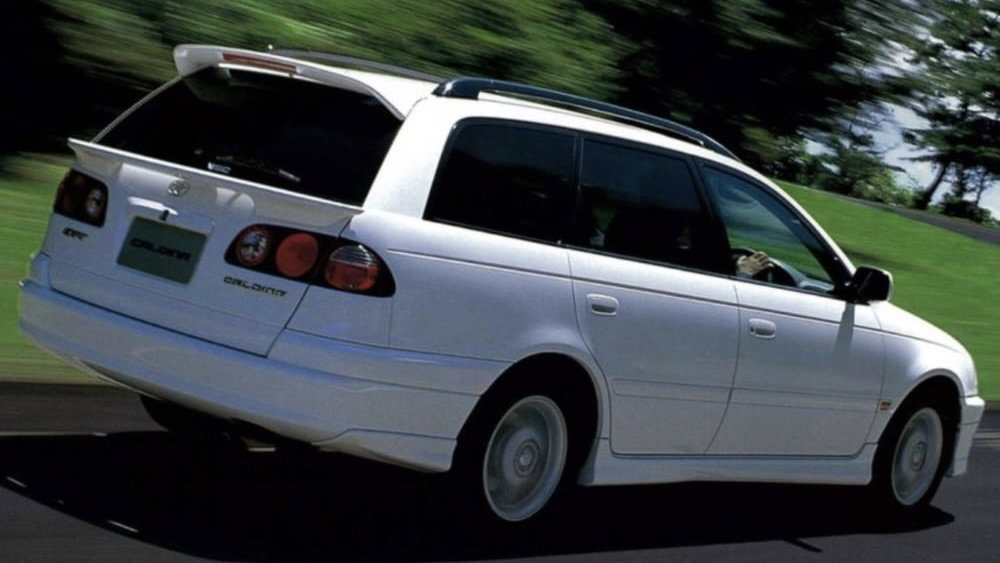
Toyota Caldina GT-T
If there are two things car geeks love, they’re a fast estate car and a homologation special, and the Toyota Caldina GT-T of 1997 combined them both. The second-gen Caldina was the Japanese version of what we got in Britain as the first-generation Avensis Estate, a car so pitifully dull you’re probably struggling to picture it.
The GT-T version, though, was anything but dull, because it borrowed its powertrain basically wholesale from the Celica GT-Four. That meant the legendary 3.0-litre 3S-GTE turbo four-pot producing 256bhp, a standard five-speed manual and full-time all-wheel drive. With little besides that small bonnet scoop and optional double rear spoiler to suggest the performance potential that lay within, the Caldina GT-T was one of the ultimate sleepers of its era.
Fiat Punto GT Turbo
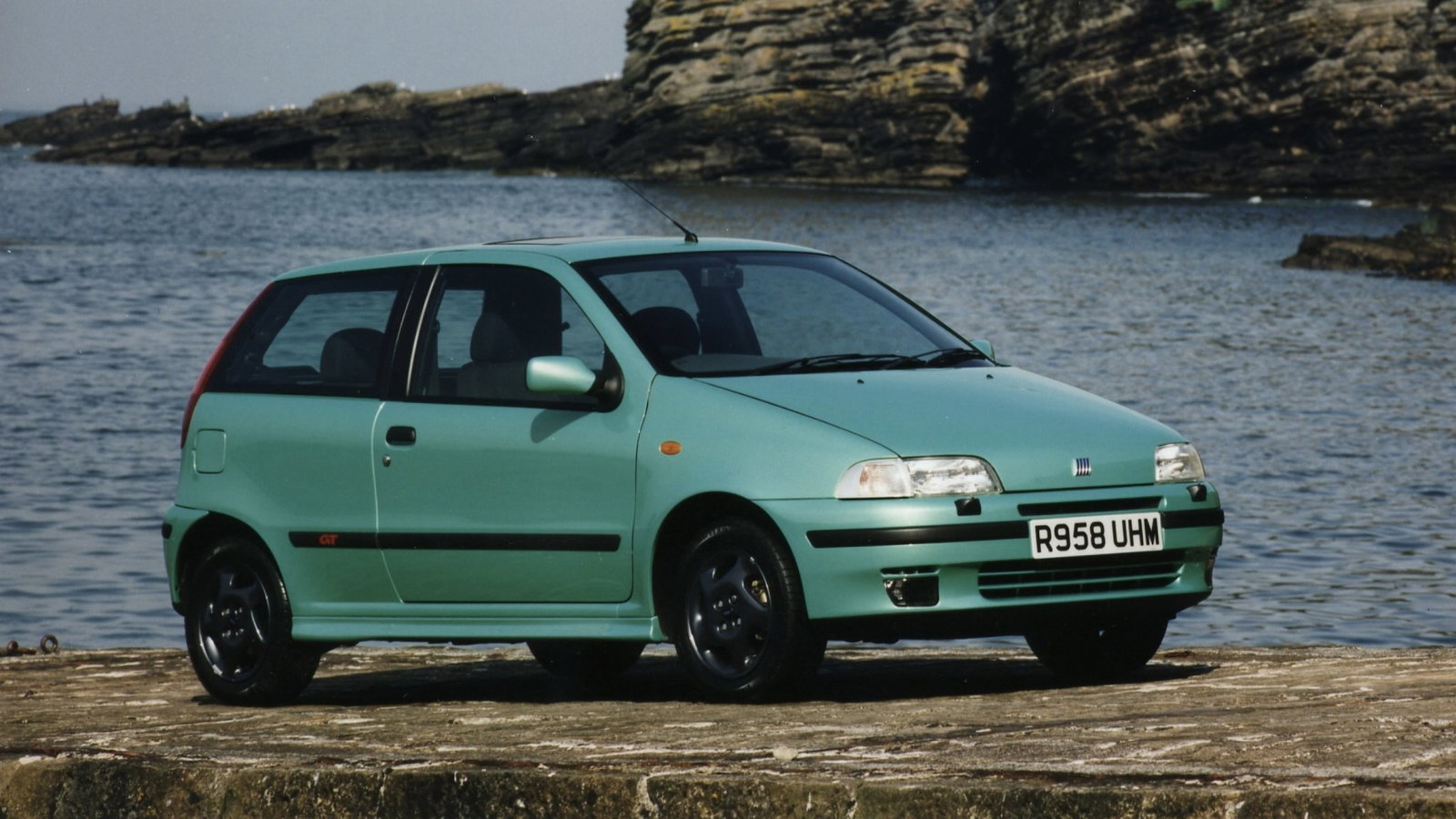
Fiat Punto GT Turbo
Though there were some bright spots, spiralling insurance costs meant that the 1990s weren’t generally a great time for the hot hatch, but that didn’t stop plenty of manufacturers from having a crack at them. That included Fiat, which shoved a 1.4-litre turbocharged four-cylinder into its new Punto supermini to create the GT version.
Power at launch in 1993 was 136bhp, plenty in a little hatchback of that era, especially one that only weighed around a tonne. As a result, the Punto GT would hit 62mph in around 7.9 seconds, handily accelerating the bigger, more powerful 16-valve Mk3 Golf GTI. It’s a shame the conservative exterior somewhat hid the GT’s pocket rocket potential, but given that some of the shoutier hot hatches of the era would command insurance premiums higher than their actual list prices, that may well have been a conscious decision on Fiat’s part.
Oldsmobile Achieva SCX
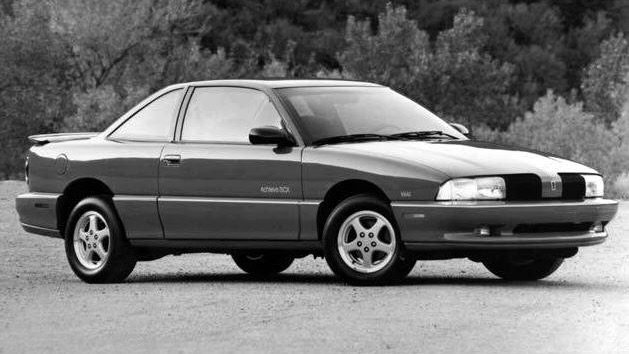
Oldsmobile Achieva SCX
Besides its brief ’60s muscle car flirtation, Oldsmobile is largely remembered these days as one of the dullest car companies to come out of the US. That didn’t mean it was totally averse to spicing up its range, though. The early ’90s saw a boom in ‘showroom stock’ club level racing in North America, and 1992’s Achieva SCX was designed specifically to serve as a basis for racing, hence its fairly conservative out-of-the-box styling.
Based on the otherwise unremarkable FWD Achieva coupe, the SCX gained a reworked version of Olds’ 2.3-litre four-cylinder with hotter cams and a new exhaust, bumping power to 190bhp and raising the redline to above 7,000rpm. Elsewhere, it gained a wider track, stiffer suspension, more aggressive tyres and even electrically-adjustable suspension, while a rare track-focused ‘C41’ package added a limited-slip diff and deleted the aircon.
Often compared to the Acura Integra Type R, its performance wasn’t quite on a par with that car, but it was still a properly serious little sports coupe from a brand hardly known for its performance prowess.
Nissan Pulsar VZ-R
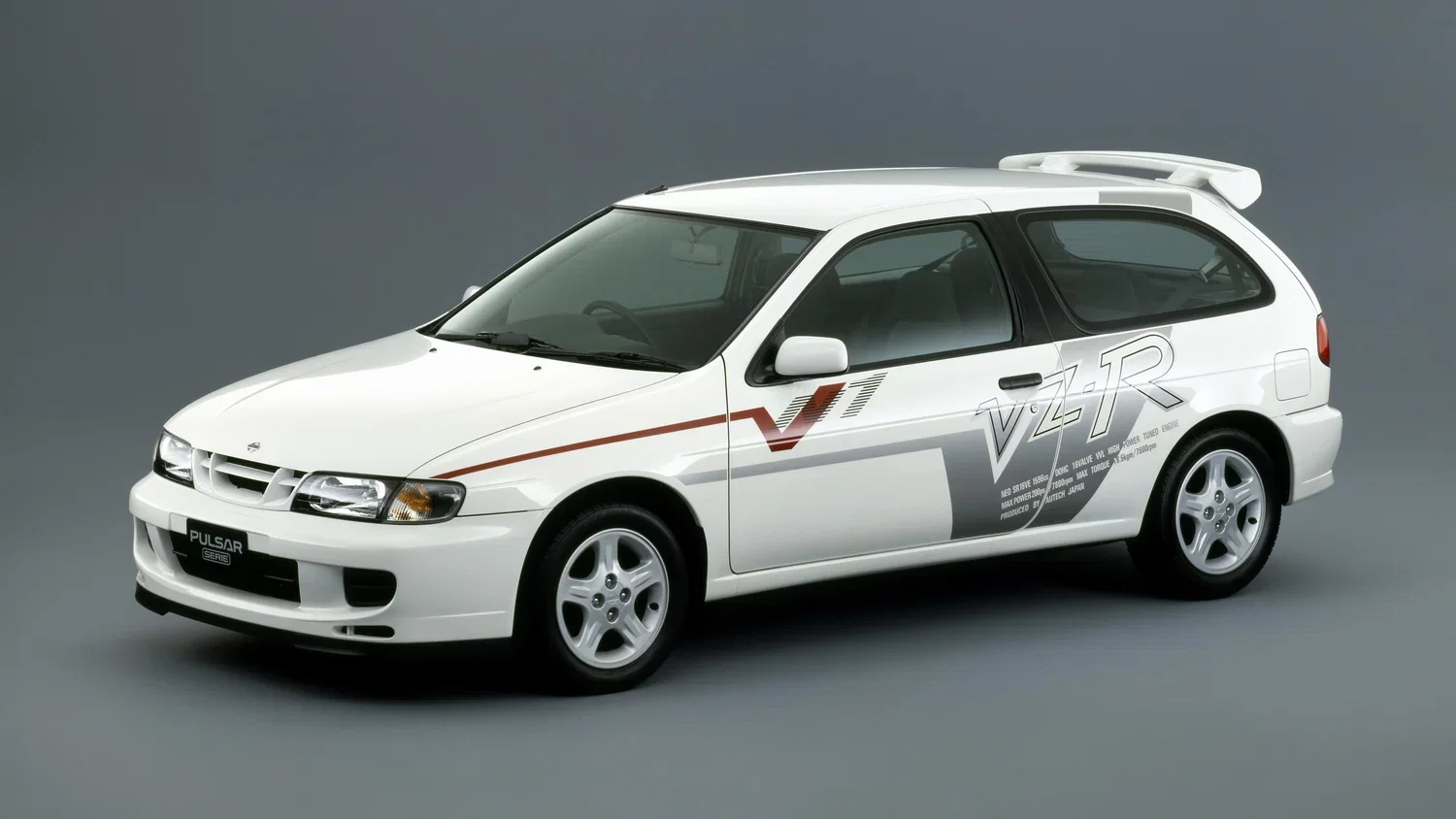
Nissan Pulsar VZ-R N1
Arriving shortly before the original EK9 Honda Civic Type R, the Nissan Pulsar VZ-R is far less fondly remembered than its big rival, despite both models being Japan-exclusive. Both cars had revvy 1.6-litre naturally aspirated four-pots, the Pulsar using Nissan’s 173bhp SR16VE, equipped with Nissan’s own variable valve timing system to challenge the Honda’s legendary VTEC setup.
This nevertheless put it around 9bhp down on the Civic – until the VZ-R N1 arrived in 1997. This racing homologation special used an uprated version of the SR16, now putting down 197bhp from the titchy 1.6-litre motor – the highest specific output of any naturally aspirated road car at the time. Just 500 examples of the rare N1 were made, and you can find out more about it here.
Rover 220 Turbo hatch
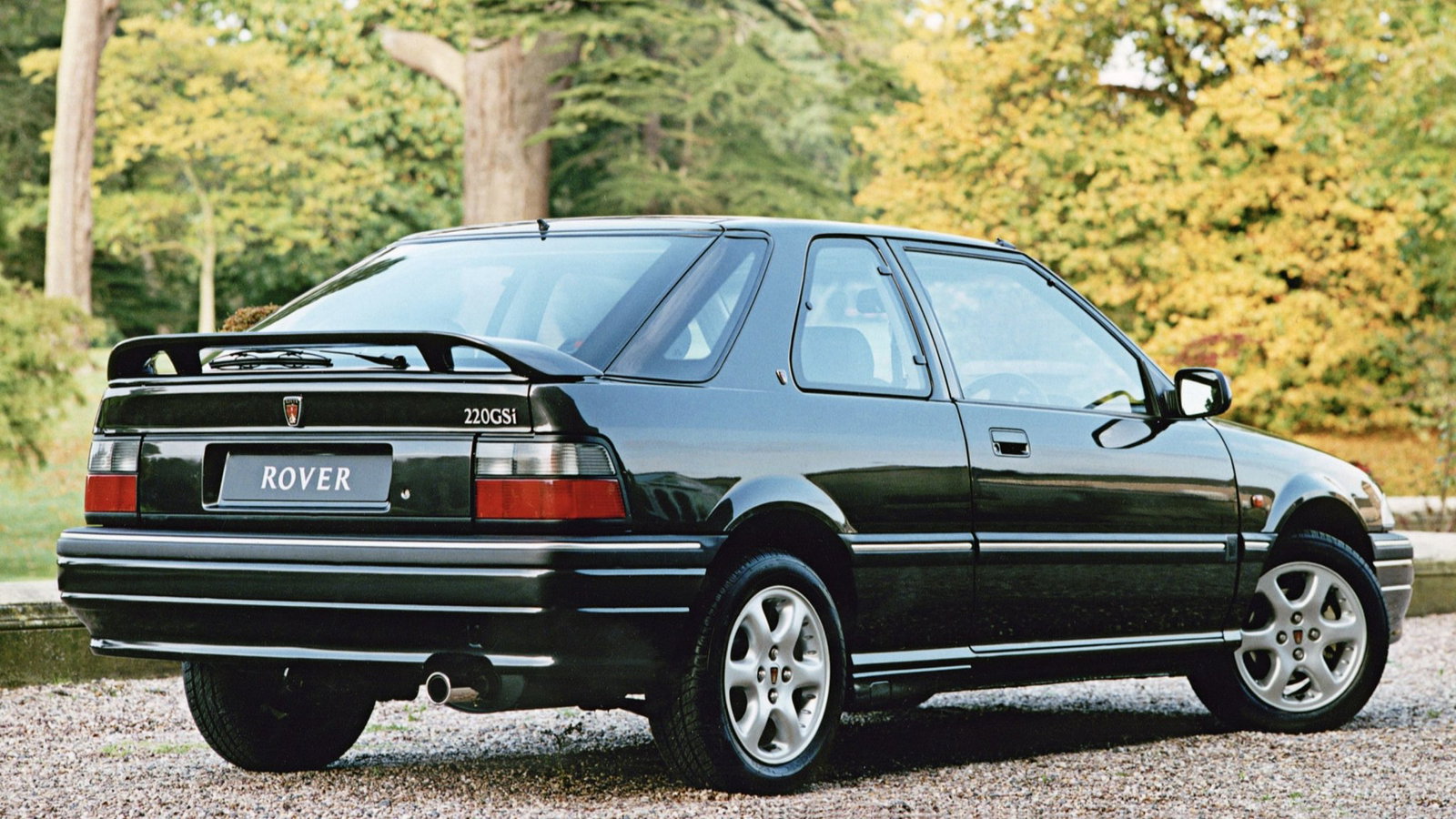
Rover 220 GSi Turbo hatch
‘Rover’ and ‘performance’ sound on the surface like two ingredients that go together as well as bacon and custard, but the British brand has offered more than its fair share of sporty models over the years. The ‘Tomcat’ 220 Turbo Coupe is a bit of a cult classic these days, but from 1993, you could also get its 2.0-litre turbo four-pot in the three-door 220 hatchback.
With 197bhp and a top speed north of 150mph, the 220 Turbo – sold in two distinct versions with largely identical specs, the GSi and GTi – was comfortably one of the fastest, most powerful hatchbacks around. This was an era, remember, when the most powerful Golf GTI could only muster 148bhp, and even a 2.8-litre Golf VR6 was only managing 174bhp. Despite its mighty performance, though (or perhaps because of the impact it had on insurance), the 220 Turbo hatch sold in tiny numbers, and is largely forgotten today next to its coupe counterpart.
Dodge Neon ACR and R/T
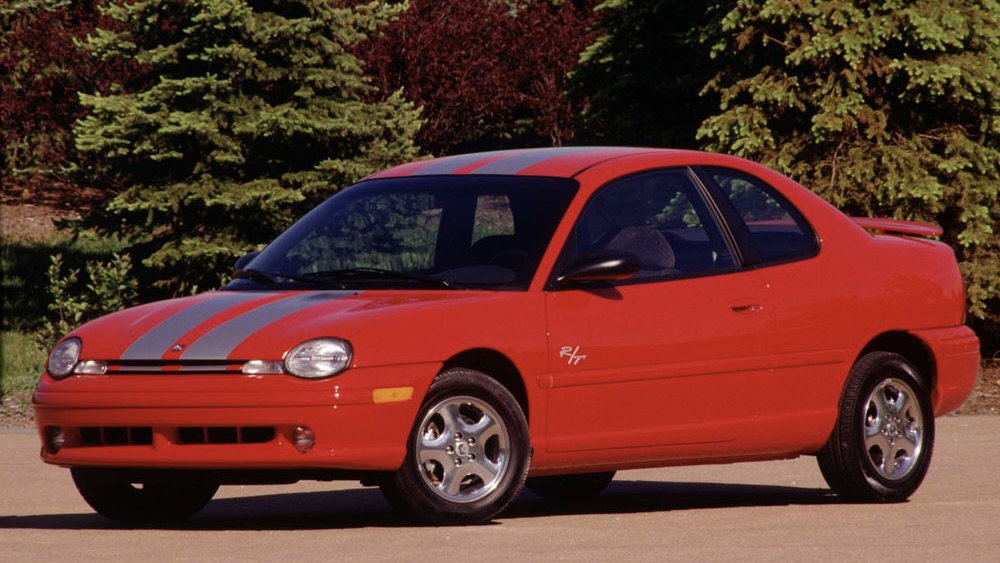
Dodge Neon R/T
Another attempt to capitalise on the ’90s showroom stock racing boom, the Dodge Neon ACR didn’t look like much, largely because the expectation was that owners would simply strip it out and sticker it up for racing. Fitted exclusively with the Neon’s top engine, a reasonably revvy 2.0-litre dual-overhead cam four making 148bhp, the ACR’s plain looks hid a new close-ratio five-speed manual, a pared-back interior, four-wheel disc brakes and a host of suspension changes which, from 1997, included a set of adjustable Koni dampers.
From 1998, a more street-oriented Neon R/T sat alongside the ACR. It featured the same engine and many of the same chassis tweaks, but lost the fancy dampers, gained more creature comforts and attempted to jazz up the looks with a spoiler and optional stripes. Both are increasingly being viewed as cult classics, but the stripped-back, factory racer ACR remains something unique.
Honda Integra Type R (DB8 four-door)
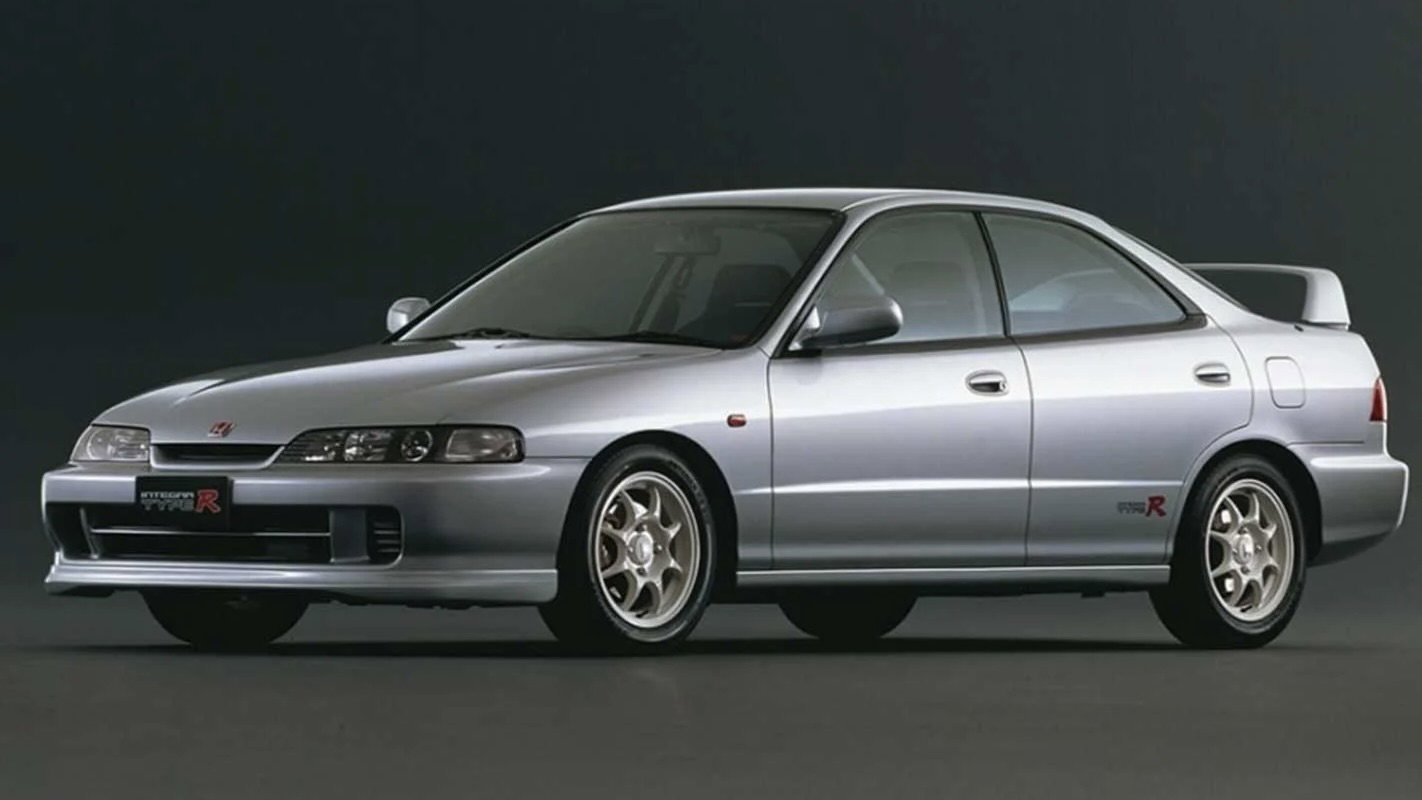
Honda Integra Type R (DB8)
Everyone and their dog knows about the Honda Integra Type R, in both its original DC2 and second-gen DC5 form. But what’s far less well known is the DB8, a rare Japan-only four-door version of the original Integra Type R. The Integra badge itself dates back to 1985, and until the fourth-gen car launched in 2001, saloon versions had always been part of the offering alongside the more fondly remembered coupes.
So when the two-door ’Teg was first given the Type R treatment in 1995, there was no reason that the Japan-only four-door model shouldn’t have followed. The DB8 had the exact same mechanical setup as the DC2 coupe, with its 195bhp 1.8-litre B18C engine still revving away angrily under the bonnet, and the same raft of chassis tweaks that led to the Type R still being regarded as one of the sweetest-handling FWD cars of all time.
At 1120kg, it weighed around 40kg more than the Type R coupe, but it’s hard to imagine this having too much of a noticeable impact on performance. At any rate, it’s thought that only around 5,000 were built, all for Japan, so it remains perhaps the most obscure Type R-badged Honda of all.
Peugeot 405 T16
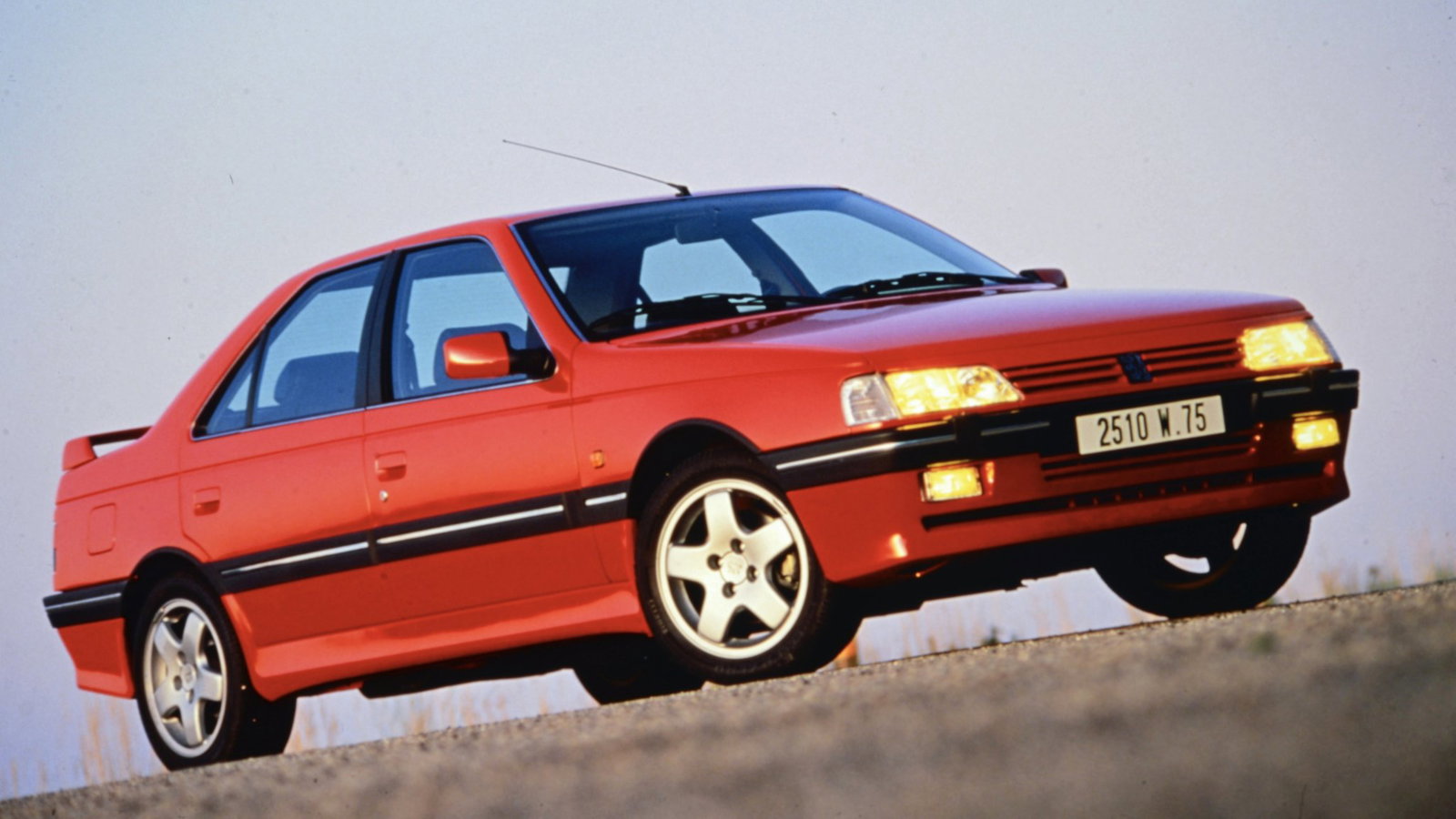
Peugeot 405 T16
The front-wheel drive, naturally aspirated Mi16 version of the Peugeot 405 is lauded to this day as one of the finest-handling sports saloons of its generation, but it wasn’t the punchiest version of the 405 by a long shot. Launched in 1993, fairly late into the 405’s original lifespan and only ever available in LHD European markets, that honour goes to the turbocharged, all-wheel drive T16 version.
Borrowing its name from the prototype racing versions of the 405 that had dominated Pikes Peak and the Dakar Rally in the late ’80s, the roadgoing T16 packed a 2.0-litre turbo four-cylinder producing 196bhp. Until you activated the overboost function, that is, at which point power was briefly upped to 220bhp. Capable of hitting 62mph in 7.0 seconds and maxing out at 146mph, it was a properly rapid car for its time, and with just 1,046 built, it’s in seriously high demand today.
Daihatsu Charade de Tomaso
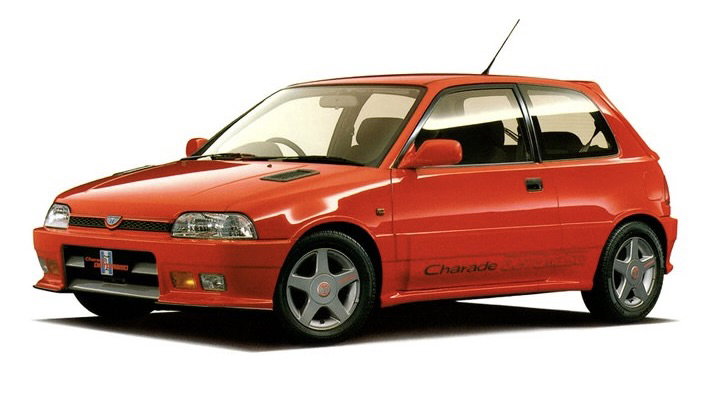
Daihatsu Charade de Tomaso
The story of how this hotted-up JDM version of the humble Daihatsu Charade hatchback ended up wearing the name of an esoteric Italian sports car maker is slightly complicated, stemming from a deal brokered by Alejandro de Tomaso in the late ’70s to start using Daihatsu engines in cars made by Italy’s Innocenti, a company he owned at the time.
That deal had long ended by the mid ’90s, but Daihatsu and de Tomaso continued to enjoy a strong relationship, and this version, launched in 1994, was in fact the third generation of Charade de Tomaso. Although it lost the turbocharger of previous versions, a 16-valve head and hot cams for its 1.6-litre engine still allowed it to produce a punchy 122bhp – not bad in something that weighed just 900kg.
It looked cracking too, with its chunky bodykit and jazzy graphics and inside, a Nardi wheel and Recaro seats. European markets got a version simply badged the Charade GTi, but it was detuned to just 104bhp. Boooo.
Read the full article here