






Concept cars. We love them for many reasons – a sneak preview of what’s to come from a manufacturer, a chance for designers to be freed from the boring realities of the car industry and let their imaginations run wild or, once their moment in the spotlight has been and gone, a fascinating alternative history glimpse at how the roads might have looked had they made production.
Unsurprisingly, as one of the oldest in the business, few car companies have enjoyed such a strong run of show-stopping concepts as Ford, so we’ve rounded up our 10 favourite from across the decades. In no particular order, here are Ford’s 10 greatest concept cars.
GT90
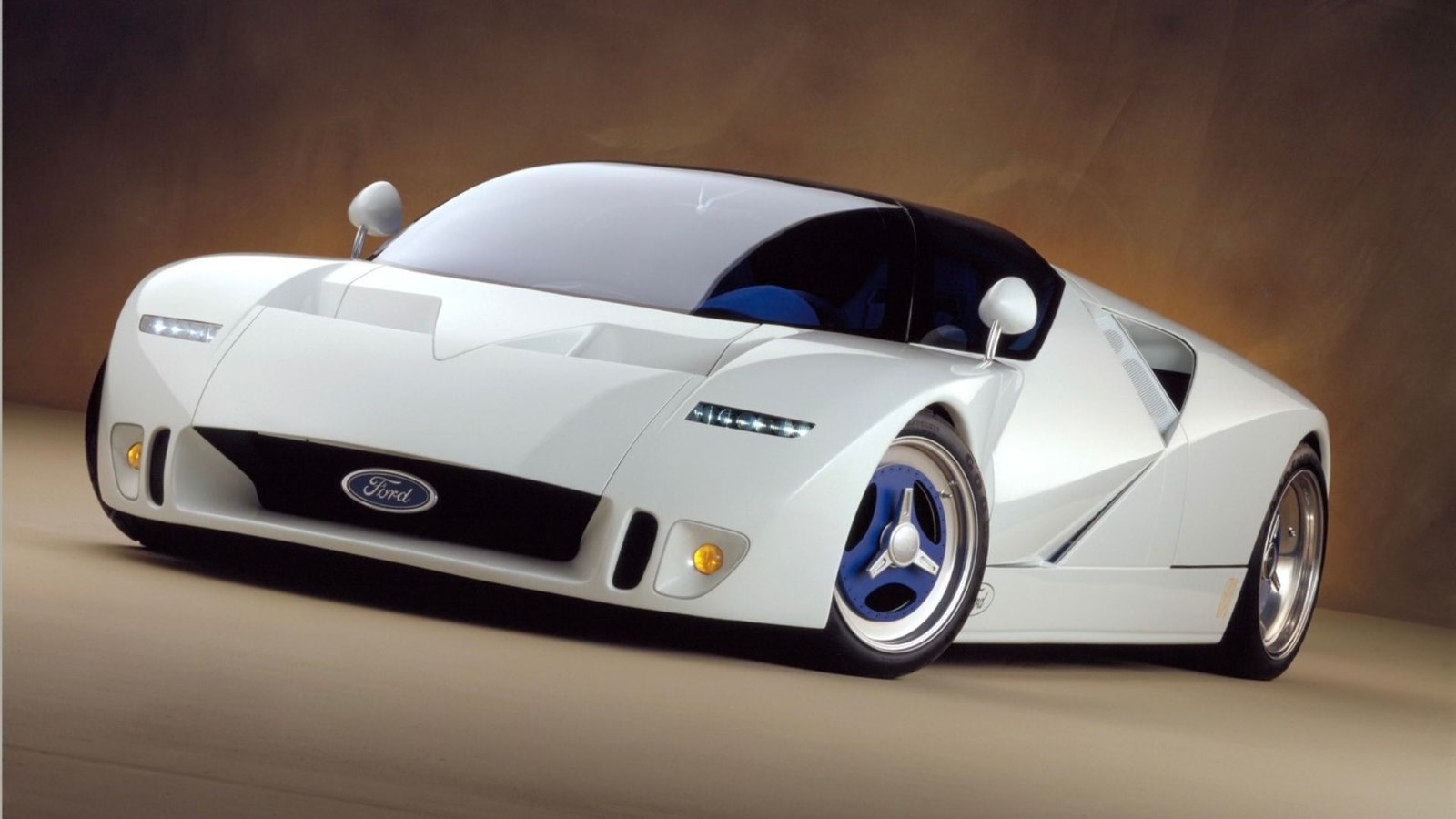
Ford GT90
Could we begin anywhere else? Had things been just a little different, this angular, 5.9-litre quad-turbo V12 sledgehammer could have stood among the McLaren F1, Ferrari F50, Bugatti EB110 and the rest as one of the most iconic supercars of the 1990s.
Shown to the world at the 1995 Detroit Auto Show with a projected 720bhp and 235mph top speed, it was a complete shock to the system at a time when Ford had spent several years churning out largely uncompetitive, phoned-in showroom fodder.
The GT90 concept, based on a Jaguar XJ220 chassis, was fully functional – if a little rudimentary in prototype form – but a concept it sadly remained. It still holds an important place in Ford’s history, though – its exterior debuted the ‘New Edge’ styling that would help underpin the company’s late ’90s renaissance, and it paved the way for Ford to eventually add a halo supercar to its range with 2004’s reborn GT.
Indigo

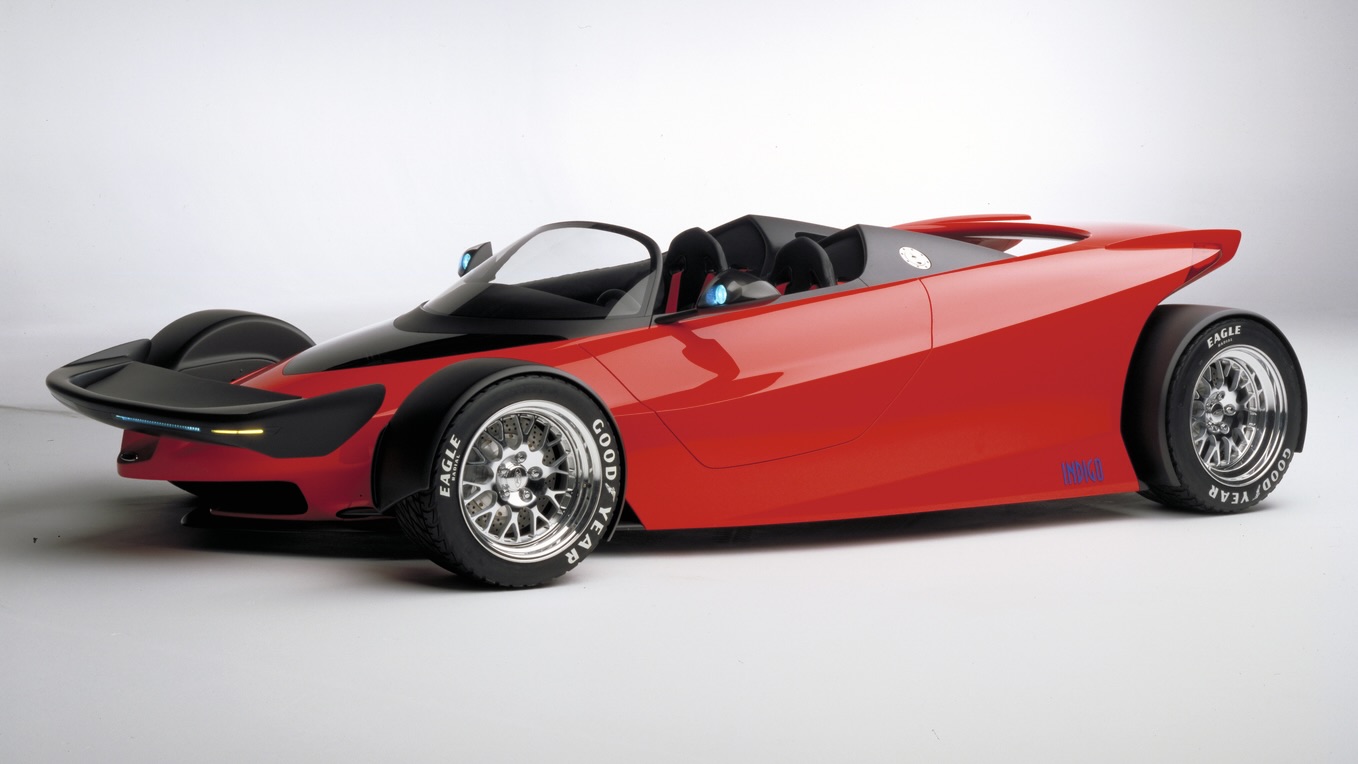
Ford Indigo
Ford wasn’t done with V12-powered concepts after the GT90. The following year, 1996, it rolled out the Indigo, a wild two-seater open-wheeler inspired by a Ford-powered car’s victory at the 1995 Indianapolis 500.
Packed with motorsport tech like a carbon monocoque and double-wishbone suspension bolted directly to the chassis, its party piece was its engine: also a stressed member, it was a newly-developed 6.0-litre V12, a cleverly engineered unit that saved on cost and time by using lots of parts from Ford’s existing Duratec V6. Despite its humble origins, it was making around 460bhp – plenty in a car that was said to tip the scales at barely over a tonne.
Sadly, the Indigo was destined to remain a concept car, with the sole working prototype still owned by Ford and the two non-functional show cars now in private hands. However, one important part of it made it into the real world. A few years earlier, Ford had taken full control of Aston Martin, and after first being installed in the DB7 in 1999, the V12 it had developed for the Indigo went on to underpin Aston’s range for the best part of two decades.
Shelby Cobra/Shelby GR-1

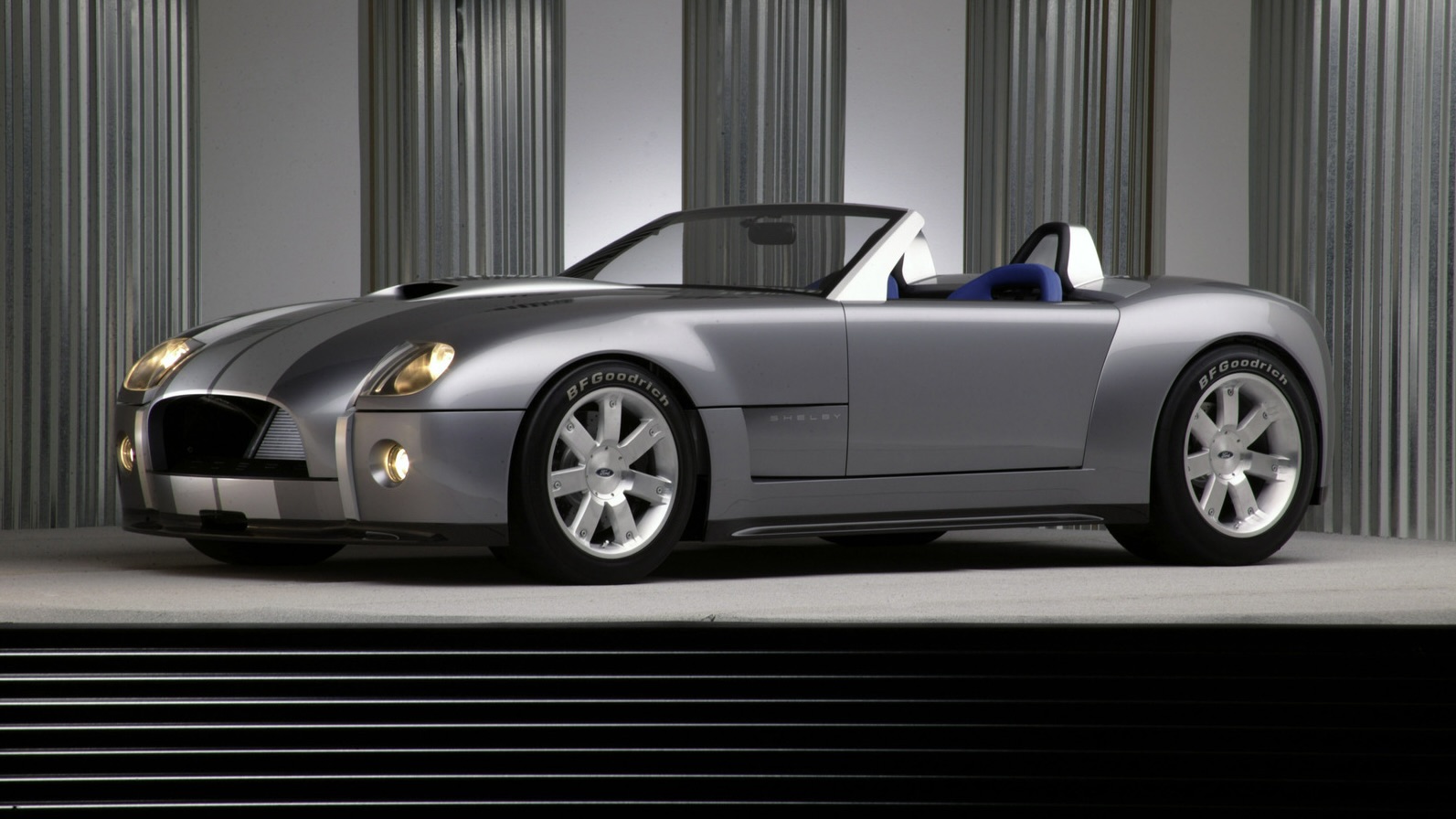
Ford Shelby Cobra concept
A two for one here, because these two 2004 concepts are very much kindred spirits. Their retro styling harked back to the original Ford V8-powered Shelby Cobra of the 1960s, the open-top Cobra concept referencing the standard Cobra roadster and the GR-1 a tribute to the coupe-bodied Cobra Daytona racer.
Built around a spaceframe chassis, where the pair really differed from the original was under the bonnet: rather than a V8, the Cobra concepts packed an all-aluminium, 6.4-litre V10 making around 605bhp. This felt like a clear dig at the Dodge Viper, which had launched just over a decade earlier, also unashamedly inspired by the original Shelby Cobra but upping the cylinder count by two.

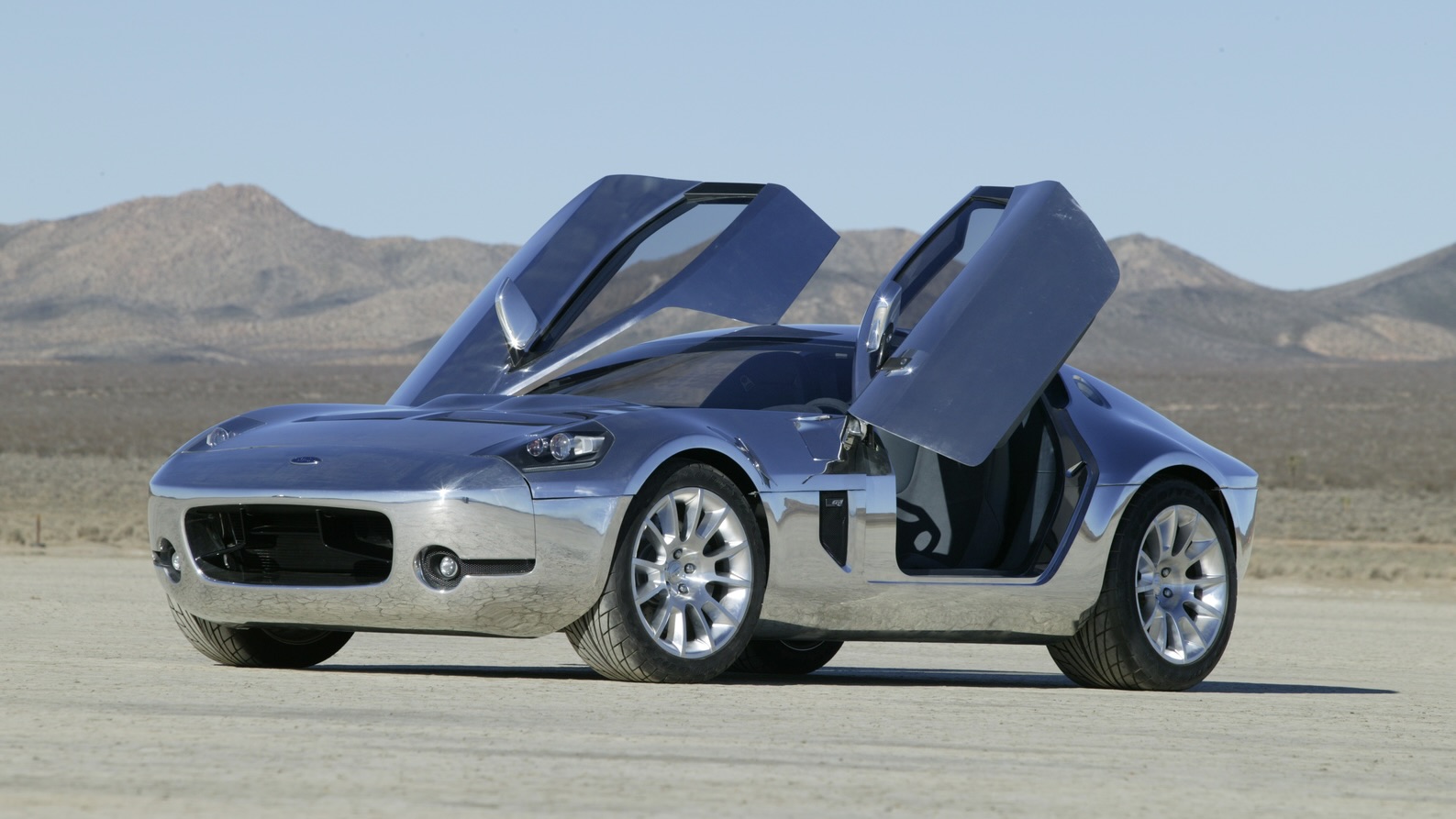
Ford Shelby GR-1 concept
Had the Shelby concepts gone into production, it would have set us up for an American V10 sports car duel for the ages in the noughties, but sadly, neither did, despite some apparent interest from Shelby itself in building the Cobra concept as a limited run production car. Instead, we’ll just have to break out our old copies of Test Drive Unlimited to get a taste of what they might have been like.
021C

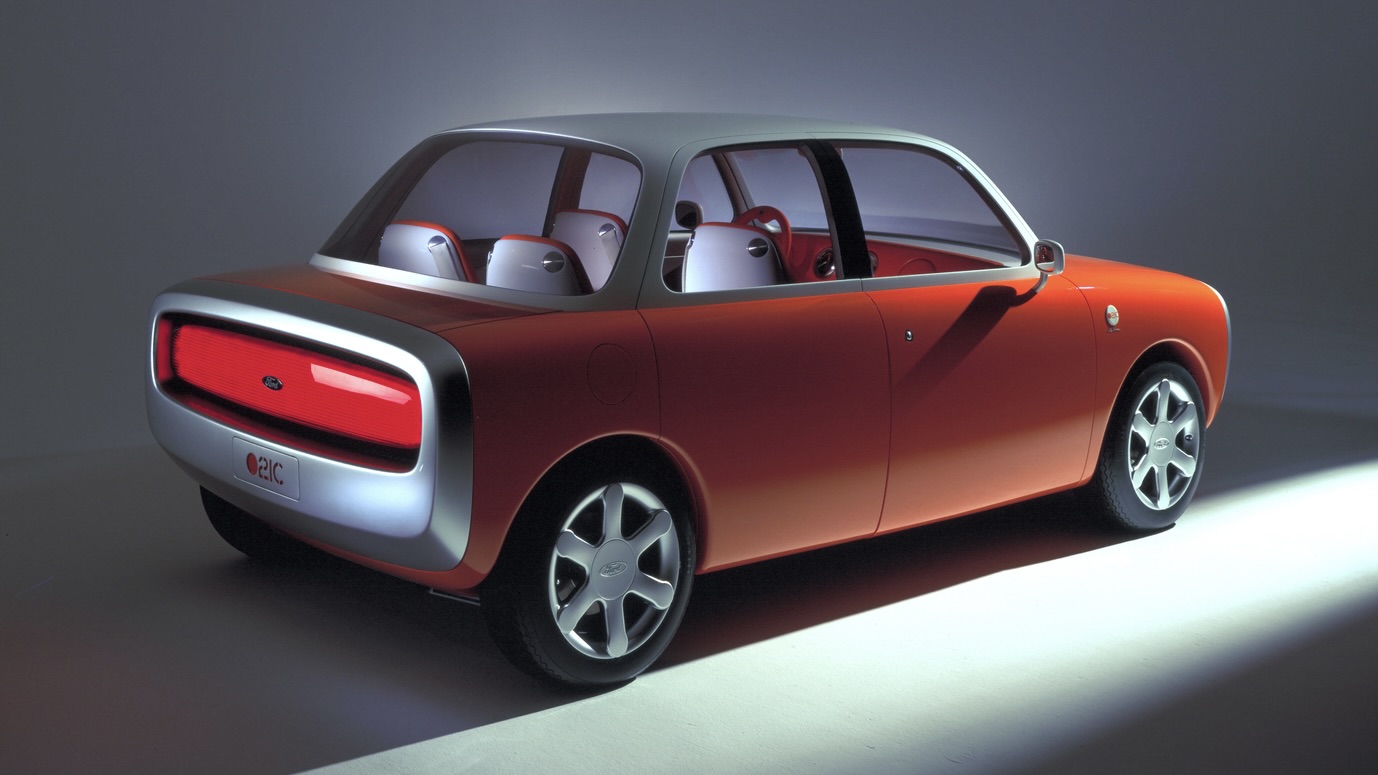
Ford 021C
The little Ford 021C was polarising at its 1999 launch but has since become celebrated as a design classic, not to mention for being rather ahead of its time. Its styling came not from someone with a background in car design, but from industrial designer Marc Newson, who recently returned to the car industry as the co-designer of the headline-generating interior of the upcoming Ferrari Luce EV.
For the 021C – named after the Pantone colour code for the shade of orange it made its debut in – Newson drew inspiration from the simple, blocky shape typically penned by children when drawing a car. It incorporated lots of interesting ideas, like a boot that slid out from the rear like a drawer, and a dashboard that could be moved up and down to suit different heights of driver.
Only ever intended as a styling exercise, Newson nevertheless managed to foresee multiple trends that would start to emerge years, sometimes decades later. Unashamedly boxy as the swoosh-obsessed ’90s drew to a close, it hinted at the blocky, angular styling that’s prominent in car design today, and look! It’s got full-width LED lightbars front and rear, just like so many cars launched over the last few years.
Evos

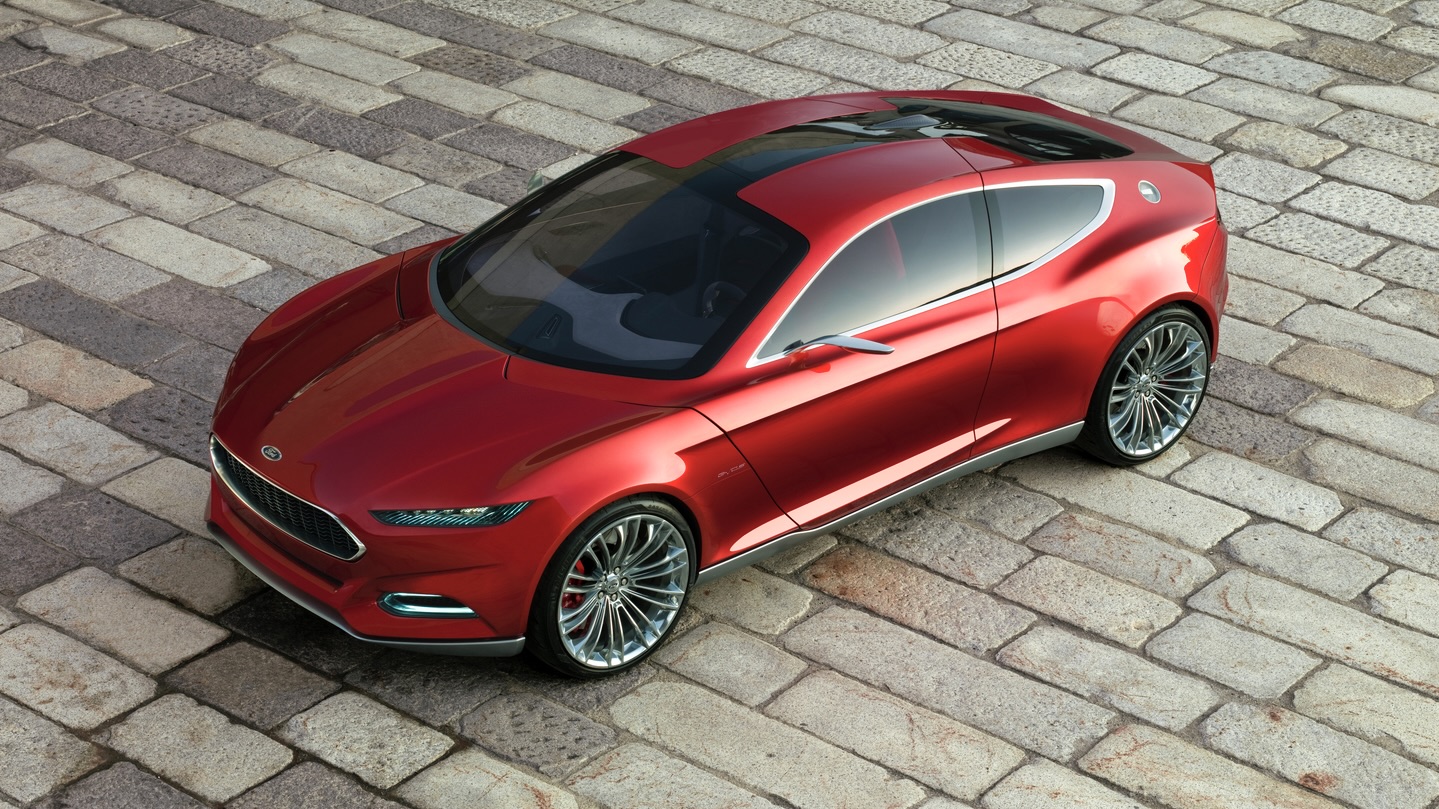
Ford Evos concept
Unveiled at the 2011 Frankfurt Motor Show, the Evos was a strikingly cab-forward low-slung four-seater, with its four butterfly doors arranged in a bonkers, pure concept car fashion. It was powered by a 2.0-litre four-cylinder plug-in hybrid setup, and there was much talk of cloud connectivity and the ability to seamlessly stream things to the car from your new-fangled smartphone. What a dead end that turned out to be…
Despite various rumours at the time that the Evos was previewing a rebirth of the Capri, its main purpose was only ever as a styling exercise to showcase Ford’s ‘Kinetic 2.0’ design language that it was preparing to roll out across its range of production cars. Indeed, you can see clear echoes of it in the facelifted third-gen Focus and seventh-gen Fiesta, and the fourth-gen Mondeo. Of course, we did eventually get a new Capri, but not quite in the form most people were hoping for…
The Evos name made it to production too in 2021… on a fastback crossover type thing for the Chinese market, which, in a move that’s particularly confusing through European eyes, has since been renamed the Mondeo Sport.
Forty-Nine

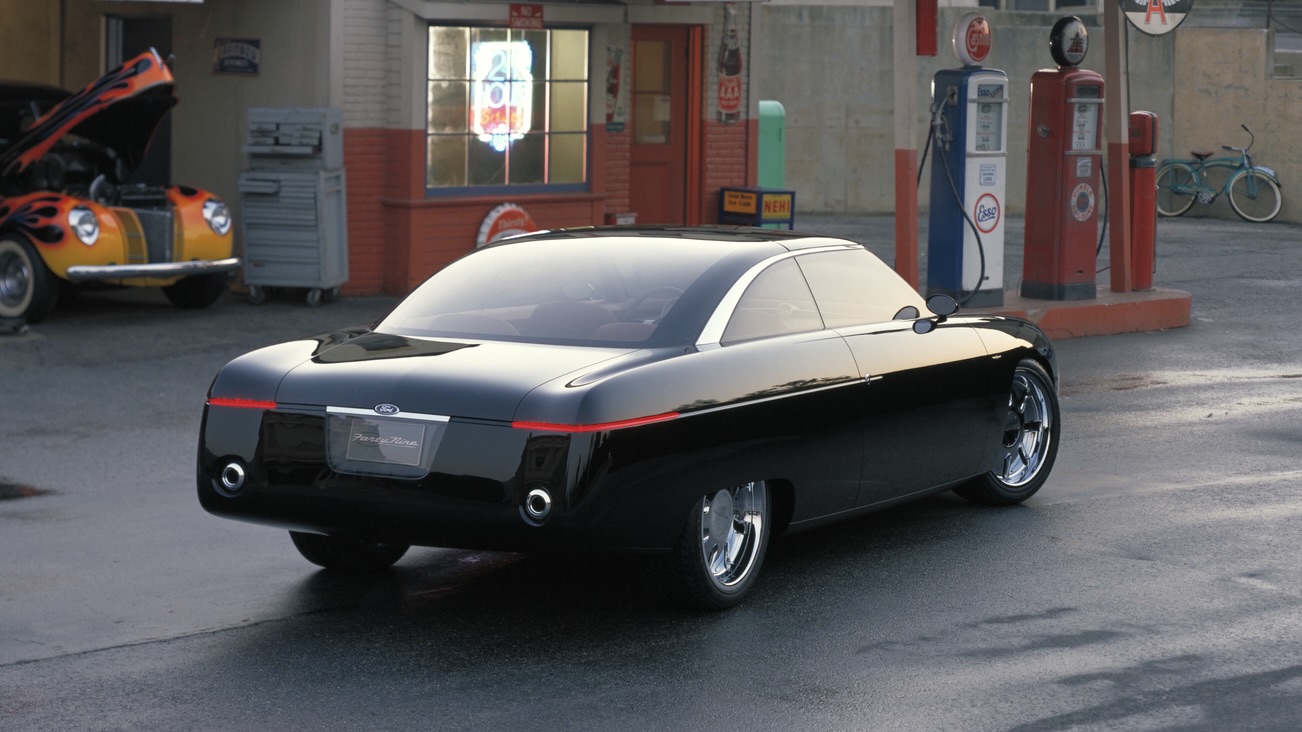
Ford Forty-Nine
Arriving at the 2001 Detroit Auto Show, as the first wave of retro car design was hitting its peak, the Ford Forty-Nine concept harked back to the 1949 Ford. That was a radical design in that it was one of the very first mass-produced cars to do away with old-timey design tropes like running boards and separate wheelarches and fully integrate the exterior into one continuous form.
The Forty-Nine concept repurposed that trailblazing styling – specifically, the two-door ‘Club Coupe’ – into a low, wide and menacing muscle car with a pleasingly retro interior. The styling reins were handed over to Chip Foose, then and now one of the leading names in latter-day hot rodding.
Underneath, it sat on a cut-down Jaguar S-Type chassis (Ford owned Jag at the time, remember), and it used a 3.9-litre version of Jag’s long-serving AJ-V8 engine. Just a few months after the Forty-Nine’s January 2001 debut, Ford would put a two-door, retro-styled car using this very same recipe into full production… but it was the gaudy and widely-mocked eleventh-gen Thunderbird. Sigh.
Mustang I

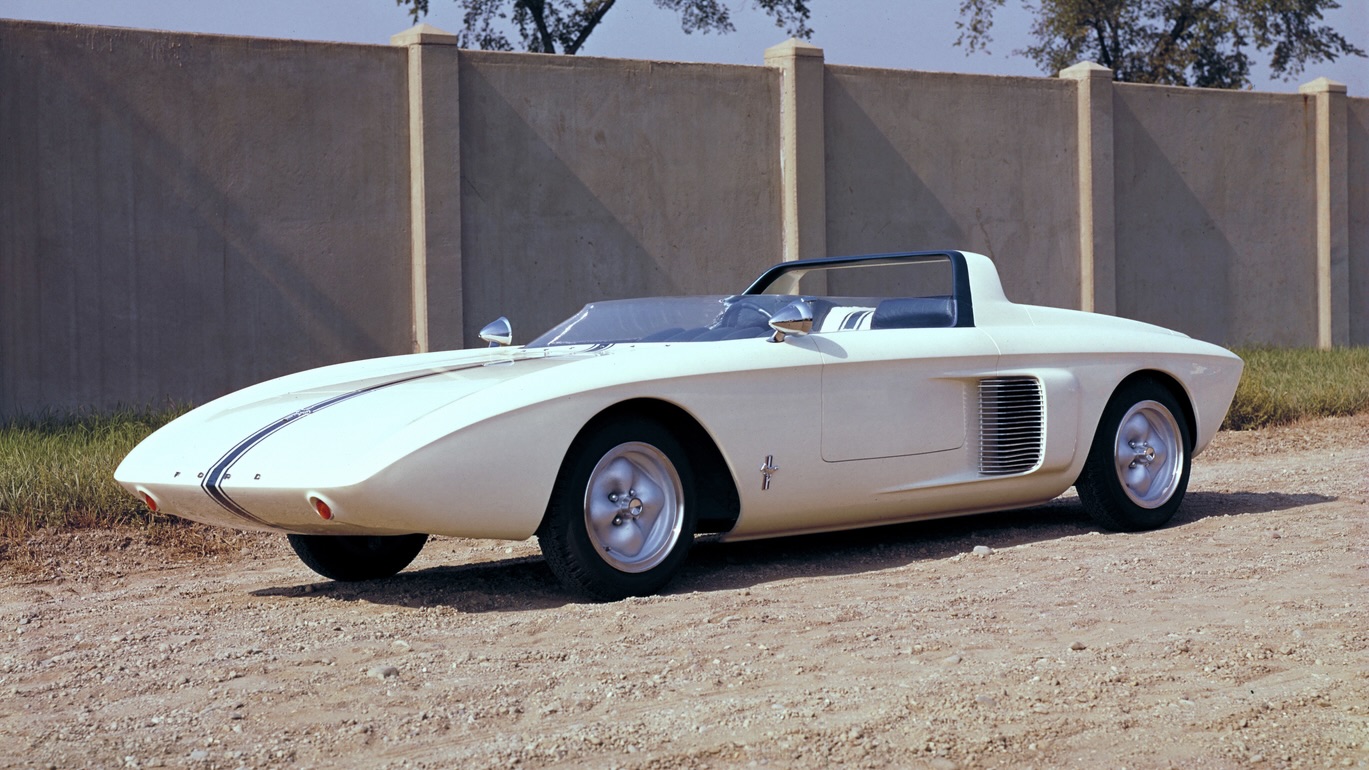
Ford Mustang I
Although the car we know and love as the Mustang today arrived to a rapturous reception in 1964, Ford had been toying with the name for a few years previously. In fact, the very first car to wear the name, 1962’s Mustang I concept, was radically different to the front-engined, six- or eight-cylinder Mustang that would hit production a couple of years later.
Aimed at the grassroots racing scene, it was a petite open-top two-seater with a spaceframe chassis and a dramatically wedgy aluminium body. Rather than the slice of pure ’60s Americana that was to come, the Mustang I resembled the little barchetta-style racers that were coming out of Italy at the time. In even more stark contrast to the eventual production Mustang was the engine. Mounted amidships, it was a little 1.5-litre V4 borrowed from the European-market Taunus.
Apparently, the name came about because one of the car’s designers John Najjar likened elements of it to a P-51 Mustang fighter plane, but while the Mustang I never went anywhere beyond a few show appearances and tentative press drives, Ford clearly liked the name enough to later recycle it for what would become one of its most enduring, iconic models.
Mach 2

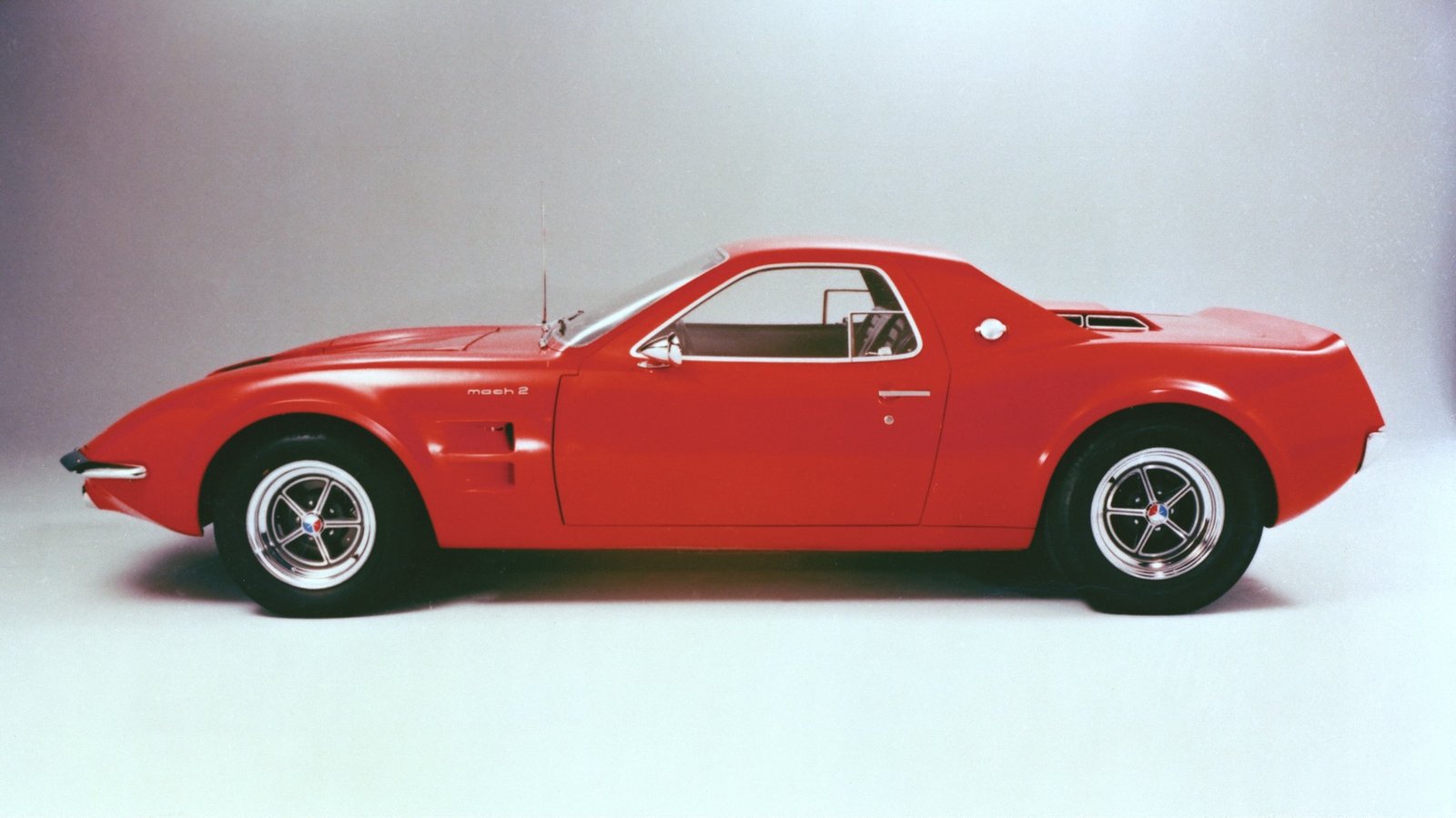
Ford Mach 2
Ford didn’t give up on the idea of a mid-engined sports car after the Mustang I, not least because the GT40 had begun tearing up the world’s racetracks in 1964. It was off the back of this success that it debuted the Mach 2 concept at the 1967 Chicago Auto Show.
With an eye on taking on the Chevrolet Corvette, the Mach 2 was a firmly forward-looking thing. Its pointy styling was a hint at what was to come in the wedge-obsessed ’70s, and its mid-engined layout was still a real rarity among road cars at this point – the Lamborghini Miura had arrived just a year earlier. Perhaps more impressively, it wasn’t a bespoke chassis – underneath was a Mustang floorplan, re-engineered for a mid-engined layout.
Unlike the compact European engine that had powered the Mustang I concept, the motor sitting in the middle of the Mach 2 was all-American – the 4.7-litre ‘HiPo’ V8 from the production Mustang, making around 271bhp. The car spent a few years on the motor show circuit and being tested by journalists while production was mooted, before it was ultimately shelved and the mid-engined Ford dream faded away again.
Maya

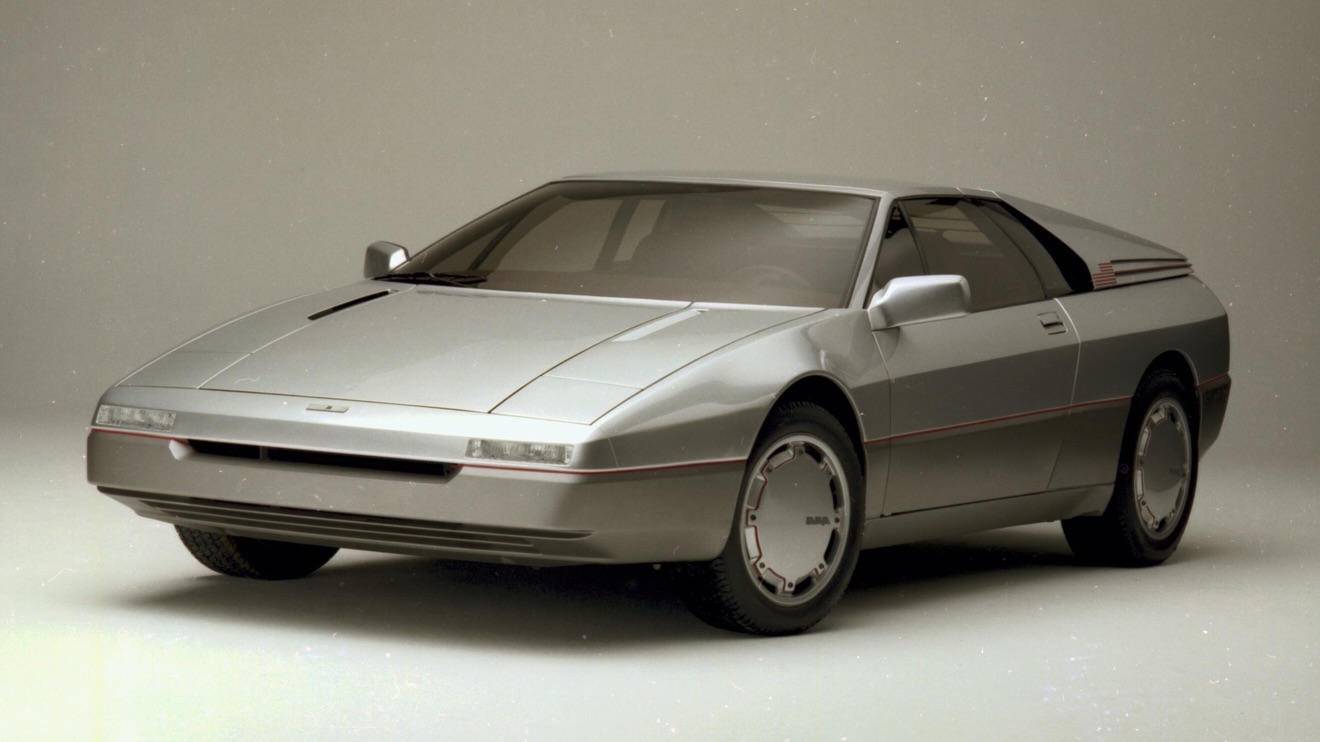
Ford Maya
That dream never really went away, though. 1984 was the year Ford actually put a mid-engined car into production, but it was the RS200, a vanishingly rare homologation special for Group B rallying. It had its eye on much-higher volume mid-engined production, though.
Also arriving in 1984, at the Turin Motor Show, the Maya concept was envisioned for the American market but had European DNA – its styling was handled by the great Giorgetto Giugiaro at Italdesign (indeed, it bore more than a passing resemblance to his Lotus Etna concept that debuted a few months later).
Its US market focus meant the Maya was able to neatly incorporate the federally-mandated 5mph impact bumpers that were spoiling the looks of so many imported cars at the time. The concept was powered by Ford’s fairly pedestrian off-the-shelf 3.0-litre, 140bhp V6, but the planned production version was to get another V6, co-developed with Yamaha and making somewhere around 250bhp. Sadly, despite two more iterations of the Maya concept arriving in quick succession, including one with a twin-turbo V6, that production car never materialised.
Interceptor
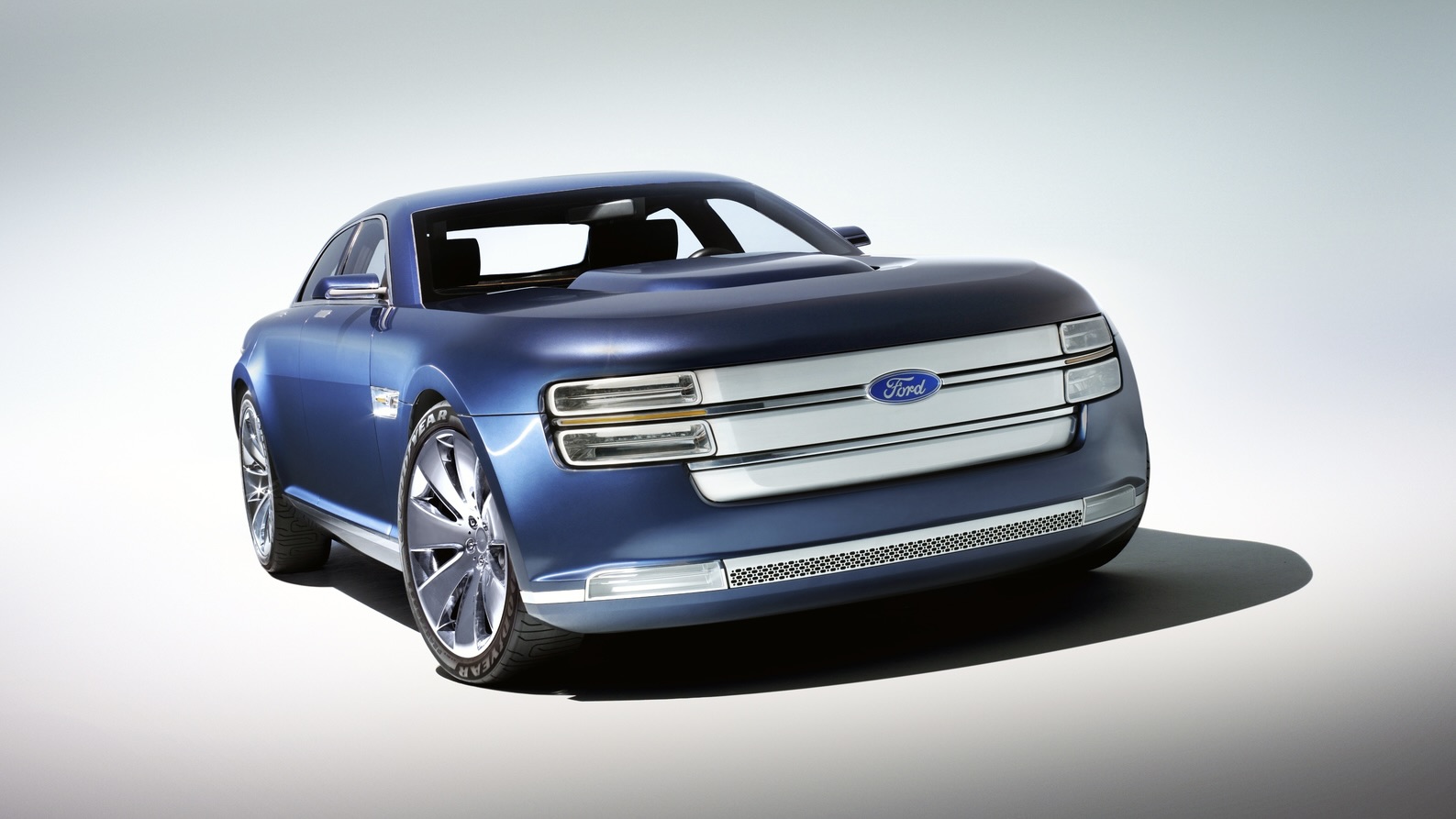
Ford Interceptor
There’s just something inherently cool about big, luxurious and powerful saloons, isn’t there? Especially when they have a name like Interceptor. Ford’s 2007 concept of that name was an unabashedly American take on the sports saloon recipe of the day – think Chrysler 300C SRT-8 but bigger, faster and even more imposing to have sitting in your rear view mirror.
Beneath its huge, monolithic bodywork sat the V8 from the Mustang, upped from 4.6 to 5.0 litres, an upgrade that would be applied to the ’Stang itself soon afterwards. No power figures were given, but Ford made a big deal about the fact it was capable of running on E85 biofuel, which would both boost power and cut emissions. That was considered green in those days. Against all odds for a car like this, that engine was hooked up to a six-speed manual.
Top speed was projected at somewhere around 170mph, giving it one over on those 155mph-limited German super saloons, while the interior was pure noughties concept car in the best possible way – swathes of gorgeous brushed aluminium, delightful retro clocks and, for some reason, the steering wheel from an Austin Allegro. Like so many of these past Ford concepts, the Interceptor was a fully-functional car, which makes it all the sadder it never hit production.
Read the full article here


