


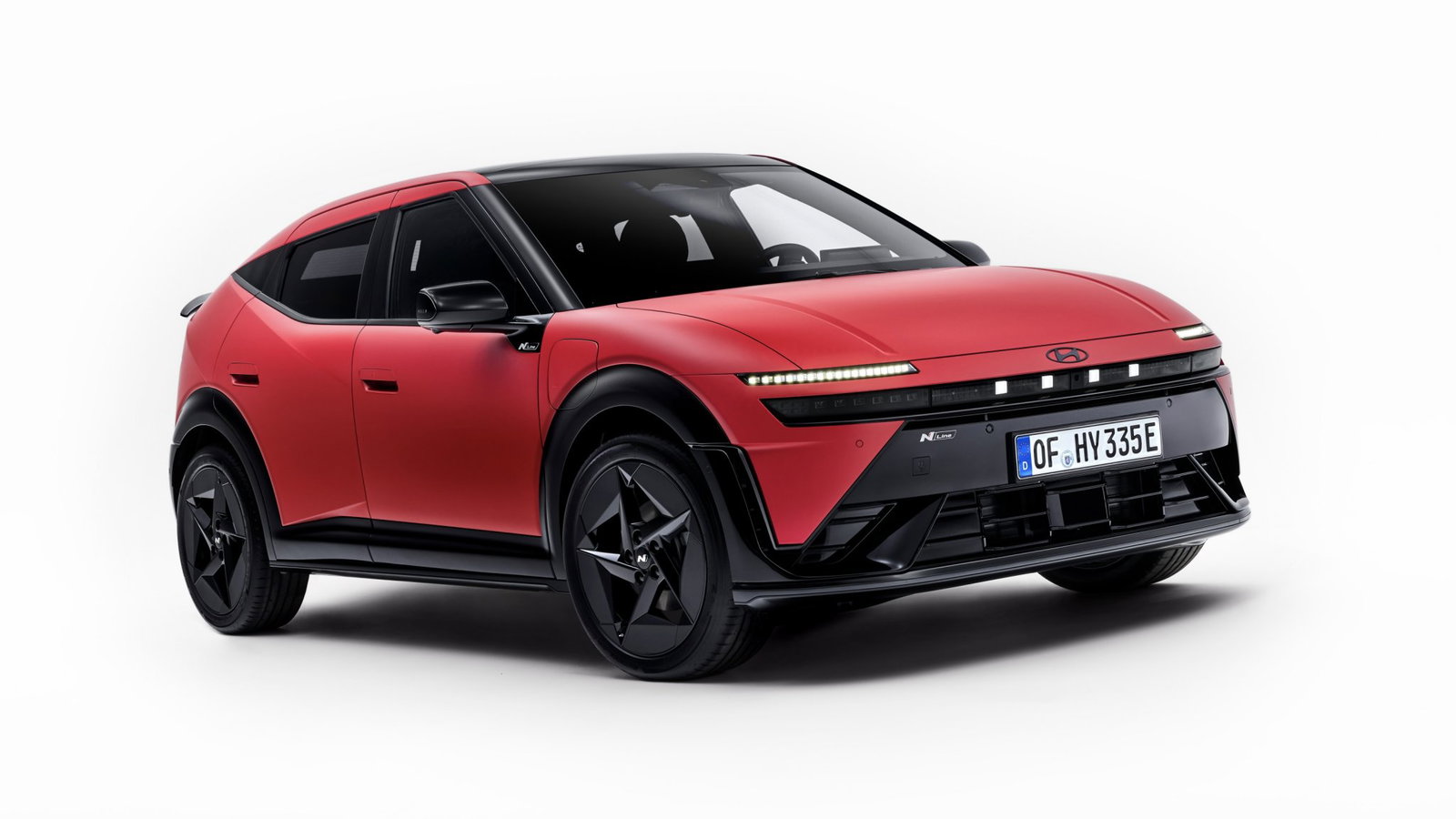
At last year’s Munich Motor Show, Hyundai wowed us with the stunning Concept Three, a look at a future small electric car geared towards the European market and featuring styling that blended the shape of the quirky old Veloster with lots of clean, funky lines to excellent effect.
Now, barely half a year afterwards, the production version of that car is here. It’s called the Hyundai Ioniq 3, and we’re pleased to report that, aside from the usual concept car flourishes being inevitably toned down, those excellent looks – a silhouette Hyundai refers to as an ‘aero hatch’ – are largely intact. That should help it stand out in an increasingly popular part of the European market – the sub-£30,000 small EV – when it goes on sale this summer, likely at an entry point around £25,000.
Hyundai Ioniq 3 – side
Poised to take on talented rivals like the Renault 4, Ford Puma Gen-E and reworked Volkswagen ID3 Neo, as well as its own close sibling, the Kia EV2, the Ioniq 3 will land with two battery and powertrain setups. The standard-range car gets a 42.2kWh battery paired with a 145bhp motor, good for 0-62mph in 9.0 seconds and a projected 214-mile range.
Meanwhile, the long-range version trades a little performance for a chunk more range – it makes do with a 132bhp motor, dropping the 0-62mph figure to 9.6 seconds but upping max range to an estimated 308 miles, among the best in its class. Both versions are front-wheel drive.
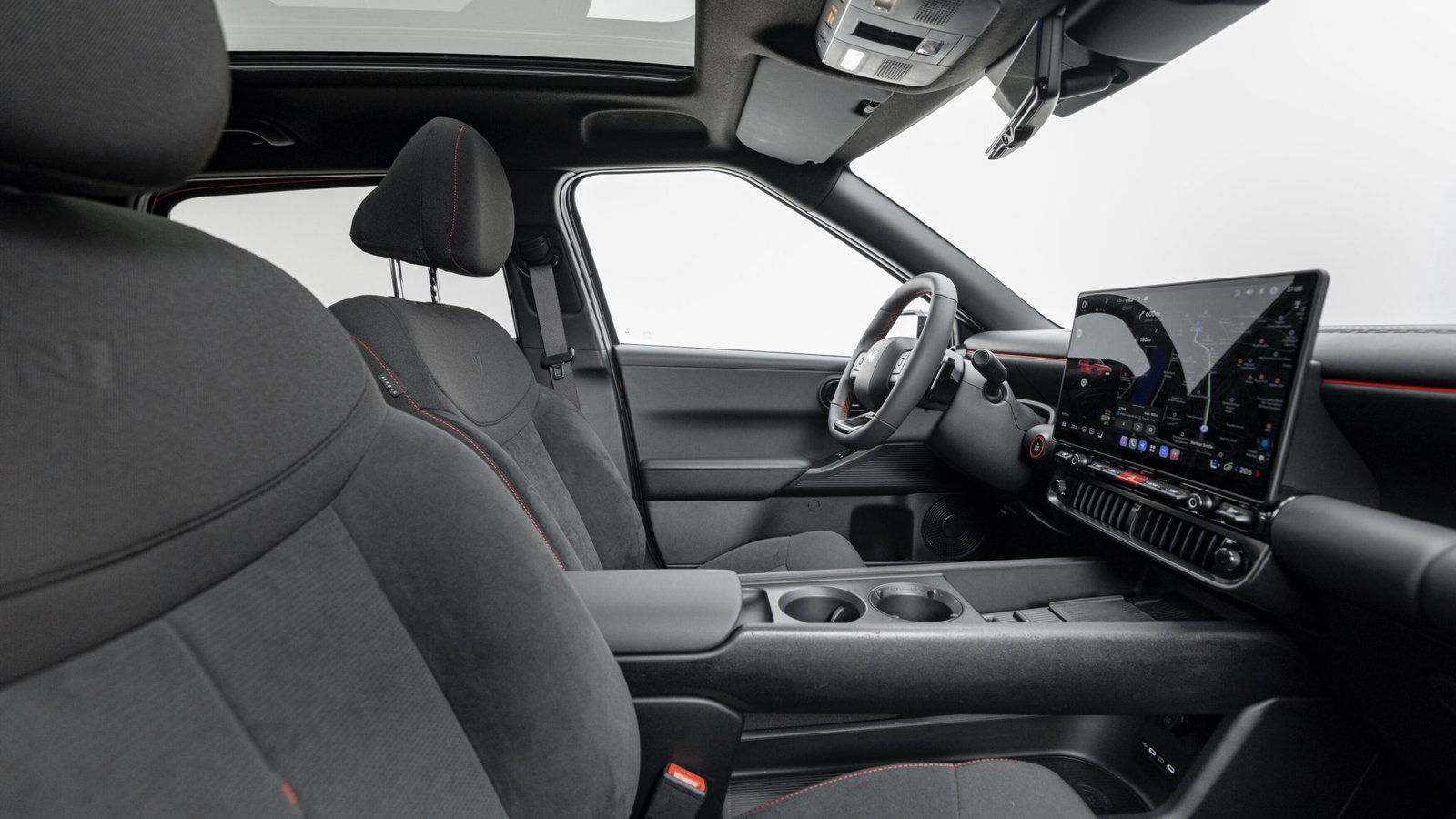
Hyundai Ioniq 3 – interior
Inside, the Ioniq 3 introduces a new generation of Hyundai cockpit. The screen, 12.9 inches as standard and optionally 14.6 inches, is the first in a European Hyundai to get the brand’s new Android-based Pleos operating system, but it’s not the be all and end all of the cabin – a row of physical buttons and dials beneath it handle key functions.
All well and good, but one question remains – will there be a hotted-up N version? After all, the Ioniq 5 N was, in our view, ‘the first truly great performance EV’, and early impressions of the closely-related Ioniq 6 N suggest it’s even better, so some of that magic distilled into the Ioniq 3 N’s smaller package sounds like a recipe for more success.
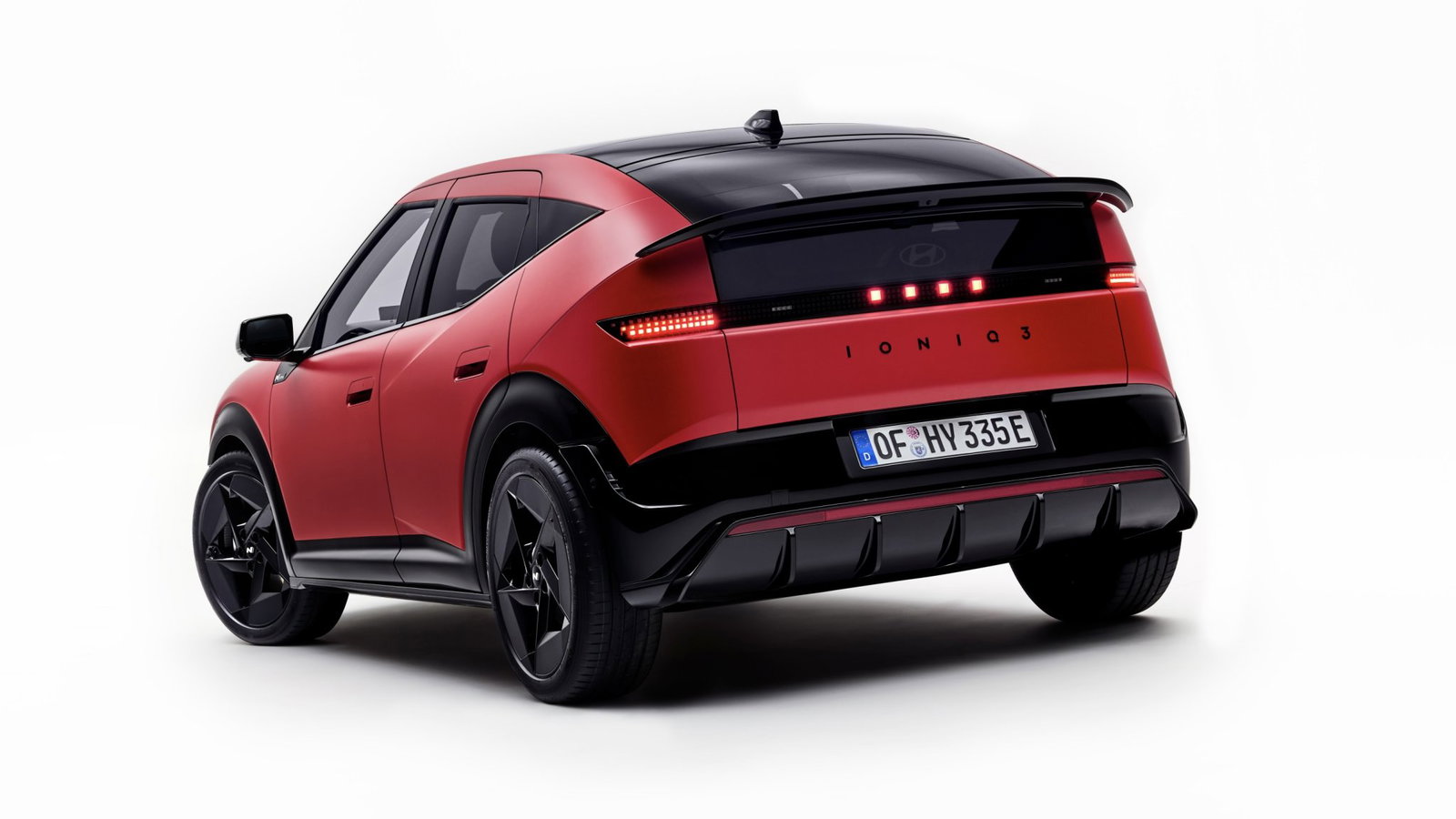
Hyundai Ioniq 3 – rear
Hyundai’s not officially confirmed anything, but there’s reason to be hopeful. Last year, Hyundai confirmed plans to expand its range of N models exponentially by the end of the decade, and a car like the Ioniq 3 feels ripe to get the treatment, especially as the small EV hot hatch market is growing rapidly with cars like the Alpine A290, Peugeot e-208 GTi and Cupra Raval VZ and VW ID Polo GTI twins.
With its N performance brand still riding high on success after success, we wouldn’t be at all surprised if Hyundai wants a slice of that pie too. It’s even debuted the Ioniq 3 in sporty-looking N-Line trim, complete with a ducktail spoiler and rear diffuser. We sincerely hope an N version is in the pipeline – the Ioniq 5 N has made plenty of enthusiasts sit up and pay attention to performance EVs, and some of that engineering know-how bundled into a smaller, more affordable hot hatch could open up that market even more.
Read the full article here